
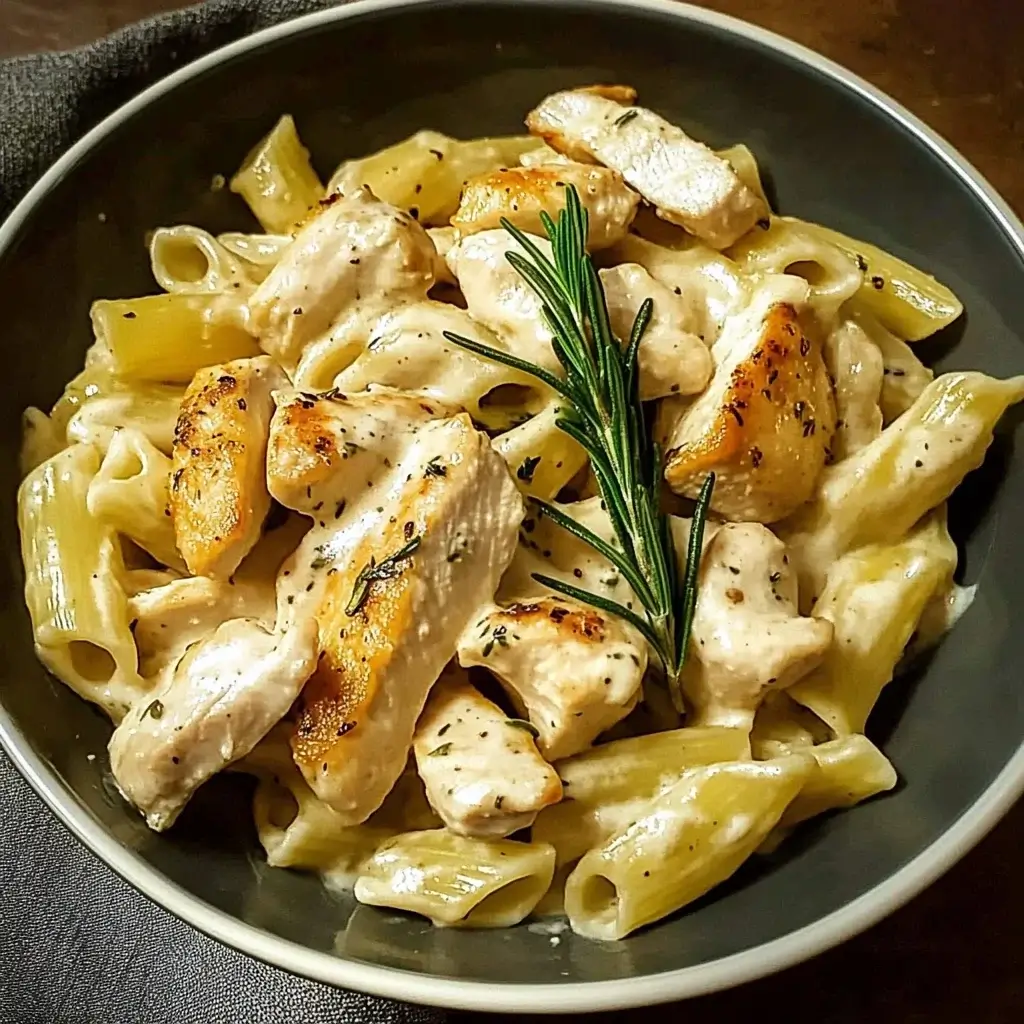

You know those weeknights when you crave something comforting, flavorful, but also relatively quick to whip up? For me, Creamy Rosemary Chicken Pasta has become my absolute go-to. It started as a bit of an experiment, really. I had some chicken breasts I needed to use, a sprig of rosemary begging to be incorporated into something delicious, and a general yearning for pasta (which, let’s be honest, is a constant state of being in my house). The result? Pure magic in a bowl. The creamy sauce, infused with the fragrant piney notes of rosemary, coats perfectly cooked pasta and tender chicken pieces. It’s a dish that manages to be both rich and comforting, yet surprisingly light and fresh thanks to the rosemary. My family? They adore it. It’s requested at least once a week, and even my pickiest eater cleans his plate. It’s become a staple in our dinner rotation, perfect for busy weeknights, but also elegant enough to serve to guests. If you’re looking for a pasta dish that’s bursting with flavor, incredibly satisfying, and surprisingly easy to make, you’ve found it. Get ready to fall in love with this Creamy Rosemary Chicken Pasta – it’s about to become your new weeknight hero!
Ingredients for Creamy Rosemary Chicken Pasta
Creating this delectable Creamy Rosemary Chicken Pasta starts with gathering the right ingredients. Each component plays a vital role in building the layers of flavor and achieving that perfect creamy texture. Let’s break down what you’ll need to make this culinary delight:
- Chicken Breasts (1.5 pounds, boneless, skinless): Chicken breast is the protein powerhouse of this pasta dish. Opt for boneless, skinless chicken breasts for convenience and quicker cooking. You can also use chicken thighs if you prefer a richer, more flavorful meat, though chicken breasts are more traditional for this recipe. Look for chicken breasts that are plump and pink.
- Variations: For a vegetarian option, you can substitute the chicken with sliced and sautéed mushrooms (cremini or portobello work well), or roasted vegetables like zucchini, bell peppers, or asparagus. For a seafood variation, consider using shrimp or scallops instead of chicken.
- Pasta (1 pound): The type of pasta you choose can significantly impact the overall experience of this dish.
- Fettuccine: Fettuccine, with its wide, flat strands, is a classic choice for creamy sauces as it holds the sauce beautifully.
- Penne: Penne, with its tubular shape and ridges, is also excellent for capturing creamy sauces and providing a satisfying bite.
- Linguine: Linguine, slightly thinner than fettuccine, is another great option that works well with creamy sauces.
- Other Options: You can also use spaghetti, tagliatelle, or even rotini or fusilli. Choose a pasta shape that you enjoy and that complements creamy sauces. For a gluten-free option, use your favorite gluten-free pasta.
- Fresh Rosemary (2 tablespoons, chopped): Fresh rosemary is the star aromatic in this dish, infusing the creamy sauce with its distinctive piney and slightly citrusy flavor. Fresh rosemary is highly recommended for the best flavor.
- Dried Rosemary (Substitution): If fresh rosemary is unavailable, you can substitute with 2 teaspoons of dried rosemary. However, fresh rosemary provides a much brighter and more vibrant flavor. If using dried rosemary, be mindful that dried herbs are more concentrated, so use slightly less than fresh.
- Heavy Cream (1 cup): Heavy cream is the key to the luxurious creaminess of the sauce. It provides richness and thickness that is essential for this dish.
- Half-and-Half (Substitution): For a slightly lighter version, you can substitute with half-and-half. However, the sauce will be less rich and may not thicken as much as with heavy cream. Avoid using milk alone, as it will result in a much thinner sauce that lacks richness.
- Chicken Broth (½ cup): Chicken broth adds depth of flavor and helps to thin the sauce to the perfect consistency. Use low-sodium chicken broth to control the salt level in the dish.
- Vegetable Broth (Substitution): For a vegetarian version, use vegetable broth instead of chicken broth.
- Parmesan Cheese (½ cup, grated, plus extra for serving): Parmesan cheese adds a salty, nutty, and umami-rich flavor to the sauce, enhancing its complexity and cheesy notes. Freshly grated Parmesan cheese is highly recommended for the best flavor and melting quality.
- Pecorino Romano (Substitution): For a sharper, saltier cheese flavor, you can substitute with Pecorino Romano cheese, or use a blend of Parmesan and Pecorino Romano.
- Garlic (3 cloves, minced): Garlic provides a pungent, aromatic base that complements the rosemary and chicken beautifully. Freshly minced garlic is crucial for the best flavor.
- Garlic Powder (Substitution): In a pinch, you can substitute with ½ teaspoon of garlic powder, but fresh garlic is always preferred for its superior flavor.
- Olive Oil (2 tablespoons): Olive oil is used for sautéing the chicken and garlic, adding a healthy fat and enhancing the flavors. Extra virgin olive oil is preferred for its flavor and health benefits.
- Butter (Substitution): For a richer flavor, you can use butter instead of olive oil, or a combination of olive oil and butter.
- Salt and Black Pepper (to taste): Salt and black pepper are essential for seasoning and enhancing all the flavors in the dish. Use sea salt or kosher salt and freshly ground black pepper for the best flavor.
- Optional: Red Pepper Flakes (¼ teaspoon, or to taste): For a touch of heat, red pepper flakes can be added to the sauce. Adjust the amount to your preference.
- Optional: Fresh Parsley (2 tablespoons, chopped, for garnish): Fresh parsley adds a pop of color and freshness as a garnish.
Instructions: Crafting Your Creamy Rosemary Chicken Pasta
Now that you have all your ingredients prepped and ready, it’s time to bring this Creamy Rosemary Chicken Pasta to life. Follow these step-by-step instructions for pasta perfection:
- Cook the Pasta: Bring a large pot of salted water to a boil. Add the pasta and cook according to package directions until al dente. Reserve about 1 cup of pasta water before draining. Drain the pasta and set aside. Reserving pasta water is crucial as it helps to create a silky smooth sauce that clings to the pasta.
- Prepare the Chicken: While the pasta is cooking, prepare the chicken. Pat the chicken breasts dry with paper towels. Season generously with salt and black pepper. You can also add a pinch of red pepper flakes if you like a little heat.
- Sauté the Chicken: Heat olive oil in a large skillet or Dutch oven over medium-high heat. Add the chicken breasts and cook for about 5-7 minutes per side, or until golden brown and cooked through. The internal temperature of the chicken should reach 165°F (74°C). Remove the chicken from the skillet and set aside on a plate to rest.
- Sauté Garlic and Rosemary: Reduce the heat to medium in the same skillet. Add the minced garlic and chopped fresh rosemary to the skillet. Sauté for about 1 minute, until fragrant, being careful not to burn the garlic.
- Make the Cream Sauce: Pour in the chicken broth and heavy cream into the skillet with the garlic and rosemary. Bring to a simmer and cook for about 5-7 minutes, or until the sauce has slightly thickened and reduced. Simmering the sauce allows it to thicken and the flavors to meld together beautifully.
- Add Parmesan Cheese: Reduce the heat to low. Stir in the grated Parmesan cheese until melted and smooth. Season the sauce with salt and black pepper to taste. You can also add a pinch of red pepper flakes if desired for extra heat.
- Slice the Chicken: While the sauce is simmering, slice the cooked chicken breasts into bite-sized pieces or strips.
- Combine Pasta, Chicken, and Sauce: Add the cooked and drained pasta to the skillet with the creamy rosemary sauce. Toss to coat the pasta evenly with the sauce. Add the sliced chicken to the skillet and toss to combine. If the sauce is too thick, add a little of the reserved pasta water, a tablespoon at a time, until the sauce reaches your desired consistency. The pasta water helps to emulsify the sauce and create a silky texture.
- Serve Immediately: Serve the Creamy Rosemary Chicken Pasta immediately, garnished with extra grated Parmesan cheese and fresh parsley, if desired. This dish is best enjoyed hot and fresh.
Nutrition Facts for Creamy Rosemary Chicken Pasta
This Creamy Rosemary Chicken Pasta is a satisfying and flavorful meal, but it’s also important to be aware of its nutritional content. Please note that these are estimated values and can vary based on specific ingredient brands, portion sizes, and variations made to the recipe.
- Servings: Approximately 6 servings
- Calories per Serving (Estimated): 550-700 calories (This is a rough estimate and can vary depending on serving size, type of pasta used, amount of cream, and cheese. Using lighter cream or less cheese will reduce the calorie count.)
Approximate Macronutrient Breakdown per Serving (Estimated – based on 6 servings and using full-fat ingredients):
- Protein: 40-50 grams (Excellent source of protein from chicken and cheese.)
- Fat: 25-35 grams (This includes healthy fats from olive oil, but also saturated fat from heavy cream and cheese. Using half-and-half instead of heavy cream can reduce fat content.)
- Carbohydrates: 50-60 grams (Includes complex carbohydrates from pasta.)
- Fiber: 3-4 grams (Moderate source of fiber, primarily from pasta. Using whole wheat pasta will increase fiber content.)
Important Notes:
- This pasta dish is a good source of protein, which is essential for muscle building and satiety.
- It is moderately high in fat due to the cream and cheese. Enjoy in moderation as part of a balanced diet.
- It provides carbohydrates for energy. Choosing whole wheat pasta can increase the fiber content and provide more sustained energy release.
- To lighten the recipe, consider using half-and-half instead of heavy cream, reducing the amount of cheese, or increasing the proportion of vegetables (e.g., adding spinach or mushrooms).
Preparation Time for Creamy Rosemary Chicken Pasta
One of the great things about this Creamy Rosemary Chicken Pasta is that it’s relatively quick and easy to make, perfect for weeknight dinners. Here’s a breakdown of the preparation and cooking times:
- Prep Time: Approximately 20-25 minutes (This includes chopping rosemary and parsley, mincing garlic, grating Parmesan cheese, slicing chicken if using larger breasts, and measuring ingredients.)
- Cook Time: Approximately 25-30 minutes (This includes cooking pasta, sautéing chicken, making the sauce, and combining everything.)
- Total Time (Approximate): 45-55 minutes
Tips to Speed Up Preparation:
- Use Pre-Grated Parmesan Cheese: While freshly grated is always best, using pre-grated Parmesan cheese can save a few minutes of prep time.
- Buy Pre-Sliced Chicken Breasts: Some grocery stores offer pre-sliced chicken breasts, which can eliminate the step of slicing the chicken.
- Prepare Ingredients Ahead of Time: You can chop the rosemary and parsley, mince the garlic, and grate the Parmesan cheese earlier in the day or even the day before. Store them in airtight containers in the refrigerator until ready to use.
- Cook Chicken and Pasta Simultaneously: Start cooking the pasta while you are prepping and sautéing the chicken. This will help to maximize your time in the kitchen.
How to Serve Creamy Rosemary Chicken Pasta
Creamy Rosemary Chicken Pasta is a complete and satisfying meal on its own, but pairing it with complementary side dishes, drinks, and serving it on appropriate occasions can elevate the dining experience. Here are some serving suggestions:
- Side Salads:
- Simple Green Salad: A light and refreshing green salad with a vinaigrette dressing provides a nice contrast to the richness of the pasta. Consider using mixed greens, romaine lettuce, or arugula.
- Caesar Salad: A classic Caesar salad with crisp romaine lettuce, croutons, Parmesan cheese, and Caesar dressing is a delicious and complementary side.
- Caprese Salad: The fresh flavors of tomatoes, mozzarella, and basil in a Caprese salad offer a lighter and refreshing counterpoint to the creamy pasta.
- Bread and Garlic Bread:
- Crusty Italian Bread: A simple loaf of crusty Italian bread is perfect for soaking up any extra sauce and complementing the pasta.
- Garlic Bread: Garlic bread or garlic knots are classic accompaniments to pasta dishes and add another layer of comforting flavor.
- Vegetables:
- Roasted Asparagus or Broccoli: Simple roasted vegetables like asparagus or broccoli add a healthy and vibrant side to the meal.
- Steamed Green Beans: Lightly steamed green beans with a drizzle of olive oil and lemon juice provide a fresh and crisp contrast.
- Sautéed Spinach: Sautéed spinach with garlic and olive oil complements the spinach already in the pasta and adds extra greens to the meal.
- Drinks:
- White Wine: A crisp white wine like Pinot Grigio, Sauvignon Blanc, or Chardonnay pairs well with creamy pasta dishes.
- Red Wine (Light-Bodied): A light-bodied red wine like Pinot Noir or a light-bodied Italian red wine can also complement the dish.
- Sparkling Water with Lemon: For a non-alcoholic option, sparkling water with a squeeze of lemon is refreshing and palate-cleansing.
- Iced Tea: Unsweetened iced tea is another good non-alcoholic choice.
- Serving Occasions:
- Weeknight Family Dinner: This pasta is a perfect comforting and satisfying meal for a busy weeknight.
- Casual Gatherings with Friends: Great for potlucks, casual dinner parties, or get-togethers with friends.
- Date Night at Home: Elegant enough for a cozy date night in, especially when paired with wine and candlelight.
- Comfort Food Cravings: Ideal for those evenings when you’re craving something creamy, comforting, and utterly delicious.
Additional Tips for Perfect Creamy Rosemary Chicken Pasta
To ensure your Creamy Rosemary Chicken Pasta is a culinary masterpiece every time, here are five helpful tips:
- Don’t Overcook the Chicken: Overcooked chicken can become dry and tough. Cook the chicken breasts until they are just cooked through and reach an internal temperature of 165°F (74°C). Using a meat thermometer is the best way to ensure perfectly cooked chicken. Resting the chicken after cooking also helps to keep it juicy.
- Use Fresh Rosemary for Best Flavor: Fresh rosemary provides a much brighter and more vibrant flavor than dried rosemary. If possible, always use fresh rosemary for this recipe. If you have extra fresh rosemary, you can store it wrapped in a damp paper towel in the refrigerator or freeze it for later use.
- Reserve Pasta Water: Don’t forget to reserve pasta water before draining the pasta! Pasta water is starchy and helps to emulsify the creamy sauce, creating a silky smooth texture that clings beautifully to the pasta. It’s a secret ingredient for perfect pasta sauces.
- Adjust Sauce Consistency with Pasta Water: If the sauce becomes too thick after adding the pasta, don’t hesitate to add a little more reserved pasta water, a tablespoon at a time, until the sauce reaches your desired consistency. You want a sauce that is creamy and coats the pasta without being too heavy or dry.
- Taste and Season as You Go: Taste the sauce at various stages of cooking and adjust seasoning as needed. Season the chicken with salt and pepper before cooking. Season the sauce with salt, pepper, and red pepper flakes (if using) to your liking. Taste again after adding the Parmesan cheese and adjust seasoning one final time before serving. Proper seasoning is key to bringing out all the delicious flavors in this dish.
Frequently Asked Questions (FAQ) About Creamy Rosemary Chicken Pasta
Here are some common questions people have when making Creamy Rosemary Chicken Pasta:
Q1: Can I use chicken thighs instead of chicken breasts?
A1: Yes, you can definitely use chicken thighs instead of chicken breasts. Chicken thighs are fattier and more flavorful than chicken breasts, and they will result in a richer and more flavorful pasta dish. Boneless, skinless chicken thighs are recommended for convenience. Cook time may need to be slightly adjusted to ensure thighs are cooked through.
Q2: Can I make this pasta dish vegetarian?
A2: Yes, you can easily make this pasta dish vegetarian by omitting the chicken and substituting with vegetables. Sautéed mushrooms (cremini, portobello, or shiitake) are an excellent vegetarian substitute for chicken. You can also add other roasted vegetables like zucchini, bell peppers, asparagus, or artichoke hearts. Use vegetable broth instead of chicken broth for a completely vegetarian version.
Q3: Can I make this pasta dish dairy-free or vegan?
A3: Making this Creamy Rosemary Chicken Pasta dairy-free or vegan requires some substitutions, but it is possible. To make it dairy-free, use full-fat coconut milk or cashew cream instead of heavy cream. For a vegan Parmesan cheese substitute, use nutritional yeast or a store-bought vegan Parmesan alternative. Ensure you are using plant-based butter or olive oil for sautéing. The flavor profile will be slightly different from the classic dairy-based version, but it can still be delicious.
Q4: How long does Creamy Rosemary Chicken Pasta last in the refrigerator?
A4: Properly stored in an airtight container in the refrigerator, Creamy Rosemary Chicken Pasta will last for 3-4 days. However, pasta dishes with creamy sauces are best enjoyed fresh, as the sauce may thicken and the pasta may become softer upon reheating. Reheat gently on the stovetop or in the microwave, adding a splash of milk or broth if needed to restore creaminess.
Q5: Can I add other vegetables to this pasta dish?
A5: Absolutely! Creamy Rosemary Chicken Pasta is very versatile and can be easily customized with other vegetables. Spinach, mushrooms, asparagus, peas, sun-dried tomatoes, artichoke hearts, and roasted red peppers all pair well with the creamy rosemary sauce and chicken. Add vegetables during the last few minutes of cooking to retain their texture and freshness.
Enjoy creating and savoring this comforting and flavorful Creamy Rosemary Chicken Pasta! It’s a dish that’s sure to become a new family favorite and a weeknight dinner staple.
Print
Creamy Rosemary Chicken Pasta recipe
Ingredients
- Chicken Breasts (1.5 pounds, boneless, skinless): Chicken breast is the protein powerhouse of this pasta dish. Opt for boneless, skinless chicken breasts for convenience and quicker cooking. You can also use chicken thighs if you prefer a richer, more flavorful meat, though chicken breasts are more traditional for this recipe. Look for chicken breasts that are plump and pink.
- Variations: For a vegetarian option, you can substitute the chicken with sliced and sautéed mushrooms (cremini or portobello work well), or roasted vegetables like zucchini, bell peppers, or asparagus. For a seafood variation, consider using shrimp or scallops instead of chicken.
- Pasta (1 pound): The type of pasta you choose can significantly impact the overall experience of this dish.
- Fettuccine: Fettuccine, with its wide, flat strands, is a classic choice for creamy sauces as it holds the sauce beautifully.
- Penne: Penne, with its tubular shape and ridges, is also excellent for capturing creamy sauces and providing a satisfying bite.
- Linguine: Linguine, slightly thinner than fettuccine, is another great option that works well with creamy sauces.
- Other Options: You can also use spaghetti, tagliatelle, or even rotini or fusilli. Choose a pasta shape that you enjoy and that complements creamy sauces. For a gluten-free option, use your favorite gluten-free pasta.
- Fresh Rosemary (2 tablespoons, chopped): Fresh rosemary is the star aromatic in this dish, infusing the creamy sauce with its distinctive piney and slightly citrusy flavor. Fresh rosemary is highly recommended for the best flavor.
- Dried Rosemary (Substitution): If fresh rosemary is unavailable, you can substitute with 2 teaspoons of dried rosemary. However, fresh rosemary provides a much brighter and more vibrant flavor. If using dried rosemary, be mindful that dried herbs are more concentrated, so use slightly less than fresh.
- Heavy Cream (1 cup): Heavy cream is the key to the luxurious creaminess of the sauce. It provides richness and thickness that is essential for this dish.
- Half-and-Half (Substitution): For a slightly lighter version, you can substitute with half-and-half. However, the sauce will be less rich and may not thicken as much as with heavy cream. Avoid using milk alone, as it will result in a much thinner sauce that lacks richness.
- Chicken Broth (½ cup): Chicken broth adds depth of flavor and helps to thin the sauce to the perfect consistency. Use low-sodium chicken broth to control the salt level in the dish.
- Vegetable Broth (Substitution): For a vegetarian version, use vegetable broth instead of chicken broth.
- Parmesan Cheese (½ cup, grated, plus extra for serving): Parmesan cheese adds a salty, nutty, and umami-rich flavor to the sauce, enhancing its complexity and cheesy notes. Freshly grated Parmesan cheese is highly recommended for the best flavor and melting quality.
- Pecorino Romano (Substitution): For a sharper, saltier cheese flavor, you can substitute with Pecorino Romano cheese, or use a blend of Parmesan and Pecorino Romano.
- Garlic (3 cloves, minced): Garlic provides a pungent, aromatic base that complements the rosemary and chicken beautifully. Freshly minced garlic is crucial for the best flavor.
- Garlic Powder (Substitution): In a pinch, you can substitute with ½ teaspoon of garlic powder, but fresh garlic is always preferred for its superior flavor.
- Olive Oil (2 tablespoons): Olive oil is used for sautéing the chicken and garlic, adding a healthy fat and enhancing the flavors. Extra virgin olive oil is preferred for its flavor and health benefits.
- Butter (Substitution): For a richer flavor, you can use butter instead of olive oil, or a combination of olive oil and butter.
- Salt and Black Pepper (to taste): Salt and black pepper are essential for seasoning and enhancing all the flavors in the dish. Use sea salt or kosher salt and freshly ground black pepper for the best flavor.
- Optional: Red Pepper Flakes (¼ teaspoon, or to taste): For a touch of heat, red pepper flakes can be added to the sauce. Adjust the amount to your preference.
- Optional: Fresh Parsley (2 tablespoons, chopped, for garnish): Fresh parsley adds a pop of color and freshness as a garnish.
Instructions
- Cook the Pasta: Bring a large pot of salted water to a boil. Add the pasta and cook according to package directions until al dente. Reserve about 1 cup of pasta water before draining. Drain the pasta and set aside. Reserving pasta water is crucial as it helps to create a silky smooth sauce that clings to the pasta.
- Prepare the Chicken: While the pasta is cooking, prepare the chicken. Pat the chicken breasts dry with paper towels. Season generously with salt and black pepper. You can also add a pinch of red pepper flakes if you like a little heat.
- Sauté the Chicken: Heat olive oil in a large skillet or Dutch oven over medium-high heat. Add the chicken breasts and cook for about 5-7 minutes per side, or until golden brown and cooked through. The internal temperature of the chicken should reach 165°F (74°C). Remove the chicken from the skillet and set aside on a plate to rest.
- Sauté Garlic and Rosemary: Reduce the heat to medium in the same skillet. Add the minced garlic and chopped fresh rosemary to the skillet. Sauté for about 1 minute, until fragrant, being careful not to burn the garlic.
- Make the Cream Sauce: Pour in the chicken broth and heavy cream into the skillet with the garlic and rosemary. Bring to a simmer and cook for about 5-7 minutes, or until the sauce has slightly thickened and reduced. Simmering the sauce allows it to thicken and the flavors to meld together beautifully.
- Add Parmesan Cheese: Reduce the heat to low. Stir in the grated Parmesan cheese until melted and smooth. Season the sauce with salt and black pepper to taste. You can also add a pinch of red pepper flakes if desired for extra heat.
- Slice the Chicken: While the sauce is simmering, slice the cooked chicken breasts into bite-sized pieces or strips.
- Combine Pasta, Chicken, and Sauce: Add the cooked and drained pasta to the skillet with the creamy rosemary sauce. Toss to coat the pasta evenly with the sauce. Add the sliced chicken to the skillet and toss to combine. If the sauce is too thick, add a little of the reserved pasta water, a tablespoon at a time, until the sauce reaches your desired consistency. The pasta water helps to emulsify the sauce and create a silky texture.
- Serve Immediately: Serve the Creamy Rosemary Chicken Pasta immediately, garnished with extra grated Parmesan cheese and fresh parsley, if desired. This dish is best enjoyed hot and fresh.
Nutrition
- Serving Size: one normal portion
- Calories: 550-700
- Fat: 25-35 grams
- Carbohydrates: 50-60 grams
- Fiber: 3-4 grams
- Protein: 40-50 grams