

I have to admit, for the longest time, my breakfast routine was stuck in a rut. Oatmeal, toast, maybe yogurt if I was feeling adventurous. Then, a friend mentioned millet porridge. Millet? I associated it more with birdseed than a comforting breakfast bowl! But intrigued by the promise of a naturally gluten-free, nutrient-packed alternative, I decided to give it a whirl. My first attempt was… okay. A bit plain, maybe slightly gritty. But I saw the potential. After a few tweaks – discovering the magic of rinsing, the perfect liquid ratio, and the transformative power of a splash of coconut milk – I landed on this recipe. The result? An unbelievably creamy, subtly nutty porridge that blew my old oatmeal routine out of the water. It’s become a staple in our house. The kids love customizing it with their favorite fruits and a drizzle of maple syrup, and I love knowing we’re starting the day with something genuinely wholesome and satisfying. It’s warm, comforting, endlessly adaptable, and feels like a hug in a bowl, especially on chilly mornings. If you’re looking for a delicious way to shake up your breakfast, trust me, this creamy millet porridge is a game-changer.
Creamy Millet Porridge: A Nourishing and Delicious Start to Your Day
Move over oatmeal, there’s a new grain in town ready to revolutionize your breakfast bowl! Millet, an ancient, naturally gluten-free grain, cooks up into a wonderfully creamy and comforting porridge. Often overshadowed by more common breakfast grains, millet deserves a prime spot in your pantry. It boasts a mild, slightly nutty flavor that pairs beautifully with a myriad of toppings, especially fresh or stewed fruit. This recipe focuses on achieving that perfect creamy texture, transforming humble millet grains into a luxurious, satisfying meal. Unlike some grains that can feel heavy, millet porridge feels nourishing yet light. It’s packed with essential nutrients, making it a fantastic choice for anyone seeking a healthy, wholesome, and easily digestible breakfast. Whether you’re gluten-intolerant, looking to diversify your diet, or simply searching for a delicious new breakfast staple, this Creamy Millet Porridge with Fruit recipe is sure to become a fast favorite. Get ready to discover the versatile delight of millet!
Ingredients You’ll Need
Gathering the ingredients for this creamy porridge is simple, and you might already have many of them on hand. Using quality ingredients will enhance the final flavour and texture.
- Hulled Millet: 1/2 cup (approx. 100g). It’s crucial to use hulled millet (often labeled simply as “millet” or specifying varieties like Foxtail, Proso, or Little Millet meant for cooking, not birdseed). Hulled millet cooks faster and becomes tender, suitable for porridge. Ensure it’s fresh; old millet can taste bitter.
- Liquid: 2 cups total. A combination yields the creamiest results:
- 1 cup Water
- 1 cup Milk (Dairy milk like whole or 2%, or Plant-Based Milk like unsweetened almond, soy, oat, or cashew milk work wonderfully. Oat milk and soy milk tend to contribute extra creaminess). For ultra-creamy porridge, consider using light coconut milk for part or all of the milk portion.
- Salt: 1/4 teaspoon. Enhances the flavours and balances the sweetness. Don’t skip it!
- Fat for Creaminess (Optional but Recommended):
- 1-2 tablespoons Coconut Cream or Full-Fat Coconut Milk (from a can, use the thick part) OR
- 1 teaspoon Butter (dairy or vegan) OR
- 1 tablespoon Nut Butter (like almond or cashew butter, stirred in at the end)
- Sweetener (Optional, Adjust to Taste): 1-2 tablespoons. Adjust based on your preference and the sweetness of your fruit toppings.
- Maple Syrup
- Honey (not vegan)
- Date Syrup or Finely Chopped Dates
- Coconut Sugar or Brown Sugar
- Stevia or Erythritol (for sugar-free)
- Flavor Enhancers (Optional):
- 1/2 teaspoon Vanilla Extract
- 1/4 – 1/2 teaspoon Ground Cinnamon
- Pinch of Ground Cardamom, Nutmeg, or Ginger
- Fruit for Serving: 1-2 cups total, variety is key!
- Fresh Berries: Strawberries (sliced), blueberries, raspberries, blackberries.
- Sliced Fruit: Banana, ripe pear, peach, nectarine, mango.
- Stewed Fruit: Apples or pears cooked with cinnamon until soft.
- Dried Fruit: Raisins, chopped apricots, cranberries, chopped dates (can be stirred in during the last few minutes of cooking to plump up).
- Optional Toppings:
- Chopped Nuts (walnuts, pecans, almonds)
- Seeds (chia seeds, flax seeds, pumpkin seeds, sunflower seeds)
- Shredded Coconut (toasted or untoasted)
- Extra drizzle of milk or cream
- A dollop of yogurt (dairy or coconut)
Having these components ready will make the cooking process smooth and enjoyable.
Step-by-Step Instructions
Making creamy millet porridge is straightforward, mostly involving simmering and occasional stirring. Follow these steps for perfect results every time:
- Rinse the Millet: This step is crucial! Place the 1/2 cup of hulled millet into a fine-mesh sieve. Rinse it thoroughly under cold running water for about a minute, swishing it around with your fingers. This removes any dust or potentially bitter saponins naturally present on the grain’s surface, ensuring a clean, pleasant flavour. Drain well.
- Optional Toasting (Enhances Nuttiness): For a deeper, nuttier flavour, you can toast the rinsed and drained millet. Heat a dry saucepan over medium heat. Add the drained millet and toast for 2-3 minutes, stirring constantly, until it becomes fragrant and a shade darker. Be careful not to burn it. Skip this step if you prefer a milder flavour or are short on time.
- Combine Ingredients: Whether you toasted the millet or not, add the rinsed (and possibly toasted) millet to a medium-sized saucepan. Pour in the 1 cup of water and 1 cup of your chosen milk (or 2 cups total liquid of your choice). Add the 1/4 teaspoon of salt. Stir everything together.
- Bring to a Boil: Place the saucepan over medium-high heat and bring the mixture to a gentle boil. Watch it closely at this stage, especially if using milk, as it can bubble up quickly.
- Simmer and Cover: As soon as it reaches a boil, immediately reduce the heat to low – low enough to maintain a gentle simmer. Stir it once, then cover the saucepan with a tight-fitting lid.
- Cook Gently: Let the millet simmer covered for approximately 20-25 minutes. It’s important to keep the heat low to prevent scorching on the bottom.
- Stir Occasionally: Lift the lid every 5-7 minutes to give the porridge a good stir. This prevents the millet from sticking to the bottom of the pan and helps release starches, contributing to the creamy texture. If it seems to be getting too thick too quickly, you can add a small splash (1-2 tablespoons) of extra water or milk.
- Check for Doneness: After 20-25 minutes, check the millet. The grains should be tender and plump, and most of the liquid should be absorbed, resulting in a thick, creamy porridge consistency. If it’s still too firm or watery, cover and cook for another 5 minutes, checking again. Cooking time can vary slightly depending on the specific type of millet and the heat level.
- Stir in Finishings: Once the millet is cooked and creamy, remove the saucepan from the heat. Now is the time to stir in your optional (but recommended!) additions for extra creaminess and flavour:
- Stir in the coconut cream/milk, butter, or nut butter (if using).
- Stir in your chosen sweetener (maple syrup, honey, etc.), starting with a smaller amount and adjusting to taste.
- Stir in the vanilla extract and any ground spices (cinnamon, cardamom, etc.) if desired. Mix well until everything is incorporated smoothly.
- Rest Briefly (Optional): Letting the porridge sit off the heat, covered, for 2-3 minutes allows the flavours to meld and the texture to thicken slightly more.
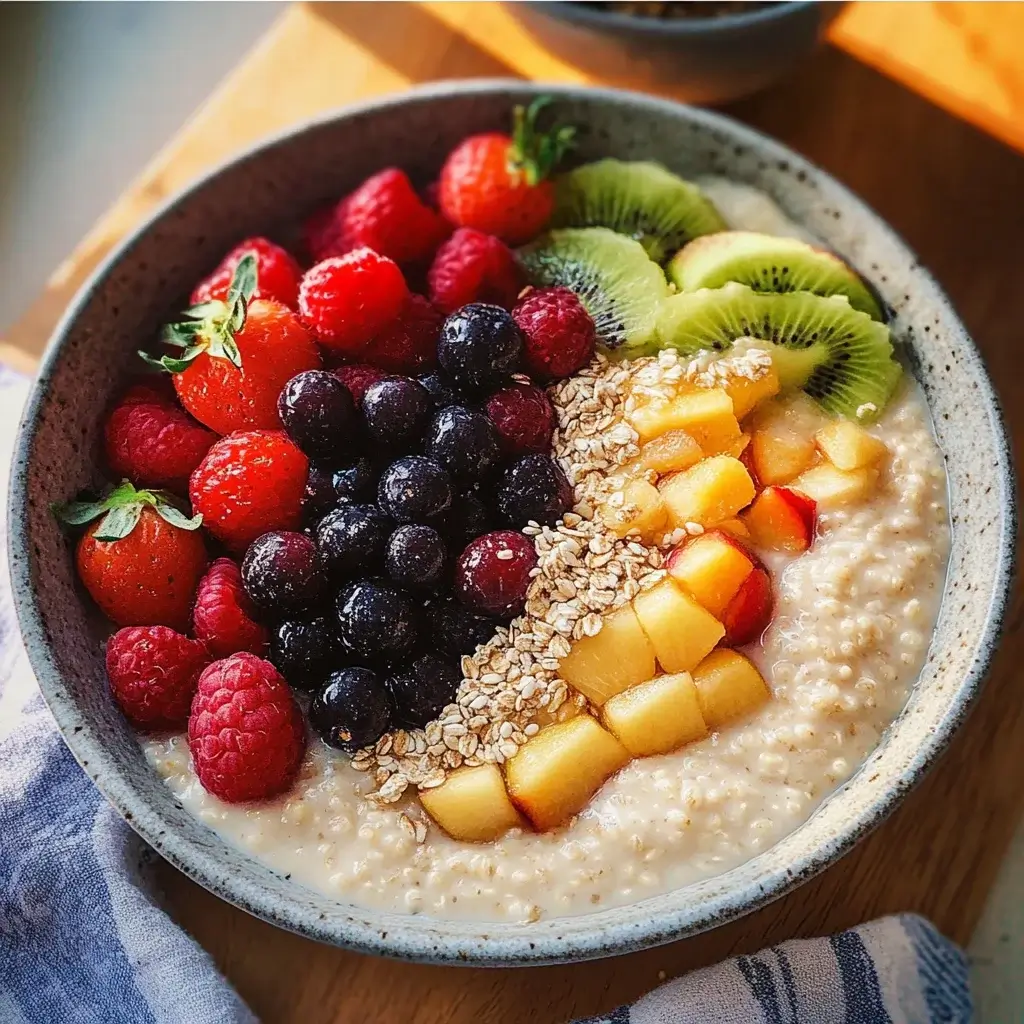
- Serve: Ladle the warm, creamy millet porridge into bowls. Now comes the fun part – adding the fruit and toppings! Arrange your chosen fresh, stewed, or dried fruits over the porridge. Sprinkle with nuts, seeds, or coconut if desired. Add an extra drizzle of milk or maple syrup if you like. Serve immediately and enjoy your nourishing breakfast!
Nutrition Facts (Approximate)
Millet porridge is a nutritious breakfast choice, offering complex carbohydrates, fibre, protein, and essential minerals. The exact nutritional profile will vary based on the specific type of milk used, the amount and type of sweetener added, and the toppings chosen. The following is an approximation for a basic serving made with 1/4 cup dry millet (yielding one serving), water/unsweetened almond milk, and no added sweetener or fat, before fruit/toppings.
- Servings: This recipe (using 1/2 cup dry millet) makes approximately 2 servings.
- Calories per Serving (Approximate Base Recipe): Around 200-250 calories per serving (before adding sweetener, extra fat like coconut cream, fruits, nuts, and seeds).
Breakdown of Nutritional Highlights (Based on Millet):
- Gluten-Free: Millet is naturally gluten-free, making it an excellent option for individuals with celiac disease or gluten sensitivity.
- Complex Carbohydrates: Provides sustained energy release, helping you stay full and focused throughout the morning.
- Dietary Fiber: Millet is a good source of fibre, particularly insoluble fibre, which aids digestion and promotes gut health. A serving can contribute significantly to your daily fibre needs.
- Plant-Based Protein: Contains a decent amount of protein compared to some other grains, contributing to satiety and muscle maintenance.
- Minerals: Millet is rich in essential minerals, notably:
- Magnesium: Important for muscle and nerve function, blood sugar control, and blood pressure regulation.
- Phosphorus: Crucial for bone health, energy metabolism, and cell membrane structure.
- Manganese: Involved in bone formation and metabolism.
- Also contains iron, potassium, and zinc in smaller amounts.
- B Vitamins: Provides some B vitamins, including niacin, folate, and B6, which are essential for energy production and overall metabolic health.
- Antioxidants: Contains phenolic compounds that act as antioxidants, helping protect your body against oxidative stress.
Important Considerations:
- Milk Choice: Using dairy milk will increase protein and calcium. Soy milk also boosts protein. Oat milk adds creaminess and some fibre. Coconut milk adds healthy fats and richness.
- Sweeteners: Added sugars (maple syrup, honey, sugar) will increase the calorie and carbohydrate count. Using fruit for sweetness is a healthier approach.
- Toppings: Fruits add vitamins, fibre, and natural sweetness. Nuts and seeds contribute healthy fats, protein, fibre, and additional minerals, but also increase the calorie density.
Disclaimer: These are estimated values. For precise nutritional information, use a recipe analysis tool with your specific ingredients and quantities. Overall, this creamy millet porridge forms a highly nutritious base for a balanced breakfast.
Preparation Time
This Creamy Millet Porridge comes together relatively quickly, especially on weekday mornings once you get the hang of it. Most of the time is hands-off simmering.
- Preparation Time (Active): 5 – 7 minutes
- This includes measuring ingredients, thoroughly rinsing the millet (essential!), and optional toasting (adds 2-3 minutes).
- Cooking Time: 20 – 30 minutes
- This is the simmering time required for the millet to become tender and the porridge to reach a creamy consistency. It involves bringing the mixture to a boil and then simmering gently on low heat, with occasional stirring.
- Finishing Time (Active): 2 – 3 minutes
- Stirring in sweeteners, fats (like coconut cream/butter), vanilla, spices, and allowing it to rest briefly.
- Total Active Time: Approximately 7 – 10 minutes
- Total Time (Start to Finish): Approximately 27 – 40 minutes
Optional Soaking: If you choose to soak the millet beforehand (e.g., for 30 minutes or even overnight in the refrigerator), it may slightly reduce the cooking time by 5-10 minutes and can potentially improve digestibility for some individuals. Factor this soaking time in separately if you opt for it.
Despite the ~30 minute total time, remember that about 20-25 minutes of that is passive simmering time where you only need to stir occasionally. This makes it manageable even on busier mornings – you can prepare other things while it gently bubbles away on the stove.
How to Serve Your Creamy Millet Porridge
Serving this porridge is where you can get truly creative! The mild, nutty base is a perfect canvas for a wide array of flavours and textures. Here are some delicious ways to serve it:
- Classic Fruit Combo:
- Top with a generous handful of mixed fresh berries (blueberries, raspberries, sliced strawberries).
- Add sliced banana for extra creaminess and natural sweetness.
- Finish with a drizzle of maple syrup or honey.
- Apple Cinnamon Delight:
- Stir in 1/4 tsp cinnamon and a pinch of nutmeg at the end of cooking.
- Top with warm, stewed apples (quickly sauté diced apples with a little water/butter and cinnamon until soft).
- Sprinkle with chopped walnuts or pecans for crunch.
- Tropical Escape:
- Use light coconut milk as part of your cooking liquid.
- Stir in 1-2 tbsp of coconut cream at the end.
- Top with diced fresh mango or pineapple.
- Sprinkle with toasted shredded coconut and maybe some lime zest.
- Peaches and Cream:
- Top with sliced fresh peaches (in season) or thawed frozen peaches.
- Add a dollop of plain or vanilla yogurt (dairy or plant-based).
- Sprinkle with slivered almonds.
- Nut Butter Swirl:
- After ladling into bowls, add a tablespoon of your favorite nut butter (almond, peanut, cashew).
- Use a spoon to gently swirl it into the porridge.
- Top with sliced bananas or berries.
- Dried Fruit and Spice:
- Stir in raisins, chopped dates, or dried cranberries during the last 5 minutes of cooking to plump them up.
- Add warming spices like cardamom and ginger along with cinnamon.
- Top with pumpkin seeds or sunflower seeds for texture.
- Simple & Elegant:
- Keep it minimal with just one type of perfectly ripe fruit, like beautiful pear slices.
- Add a small drizzle of high-quality maple syrup.
- A sprinkle of chia seeds or flax seeds for added nutrition.
- Make it a Bowl:
- Arrange toppings neatly in sections over the porridge for an Instagram-worthy “breakfast bowl” look. Combine fruits, nuts, seeds, and maybe a sprinkle of granola for extra crunch.
Key Serving Tips:
- Serve Warm: Porridge is generally best enjoyed warm, right after cooking.
- Bowls: Use your favorite cozy bowls!
- Texture Contrast: Always aim for a mix of textures – creamy porridge, soft fruit, crunchy nuts/seeds.
- Sweetness Control: Add toppings first, then taste before adding extra sweetener, as fruit provides natural sweetness.
Experiment and find your favorite combinations! The versatility is one of the best things about millet porridge.
Additional Tips for the Creamiest Millet Porridge
Achieving that coveted creamy texture makes all the difference. While the basic recipe works well, these five tips will help you nail the perfect consistency every time:
- Don’t Skip the Rinse: This isn’t just for flavour; rinsing hulled millet thoroughly under cold water removes powdery starch from the surface. While starch within the grain contributes to creaminess upon cooking, the surface starch/dust can sometimes lead to a slightly pasty or even subtly bitter result. A good rinse ensures a cleaner start and allows the natural creaminess to develop properly during cooking.
- Master the Liquid Ratio (and Adjust!): The suggested 1 part millet to 4 parts liquid (e.g., 1/2 cup millet to 2 cups liquid) is a great starting point for creamy porridge. However, millet absorption can vary slightly. Don’t be afraid to adjust! If the porridge looks too thick while cooking, add a splash more warm water or milk. If it seems too thin towards the end, let it simmer uncovered for the last few minutes, stirring frequently, to allow excess liquid to evaporate. Aim for a consistency slightly thinner than you desire in the bowl, as it will thicken upon standing.
- Embrace Fat for Richness: While millet can get creamy on its own, adding a source of fat significantly enhances the luxurious texture and mouthfeel. Stirring in a tablespoon or two of full-fat coconut milk (the thick cream from the top of the can), a small pat of butter (dairy or vegan), or even a spoonful of smooth cashew or almond butter right at the end of cooking makes a world of difference. This small addition emulsifies beautifully into the hot porridge, creating unparalleled richness.
- Low and Slow Simmer with Stirring: Resist the urge to cook millet porridge on high heat to speed things up. A gentle, low simmer is key. This allows the millet grains to slowly absorb the liquid, soften evenly, and release their starches gradually, which is essential for creaminess. Stirring every 5-7 minutes prevents sticking (especially crucial when using milk) and further encourages starch release, making the porridge smoother and creamier.
- Consider a Milk/Water Combo (Especially Oat Milk): While you can make millet porridge with just water, using at least part milk (dairy or plant-based) significantly boosts creaminess. Plant-based milks like oat milk and soy milk are particularly effective due to their naturally creamier consistency compared to, say, almond or rice milk. Even a 50/50 split between water and your chosen milk provides a good balance of hydration and richness without being overly heavy. Using all milk can sometimes increase the risk of scorching if not watched carefully.
By incorporating these tips, you’ll move beyond basic millet porridge and consistently create bowls of creamy, dreamy, and utterly delicious breakfast comfort.
Frequently Asked Questions (FAQ)
Here are answers to some frequently asked questions about making Creamy Millet Porridge:
- What specific type of millet should I buy for porridge?
You need to buy hulled millet intended for human consumption. Common varieties suitable for porridge include Foxtail Millet, Proso Millet, Little Millet, or packages simply labeled “Millet.” Avoid “pearl millet” (bajra) which has a stronger flavour and different cooking properties, and definitely avoid millet sold as birdseed, which is unhulled and not processed for eating. Look for it in the grains aisle of supermarkets, health food stores, or international markets. Hulled millet looks like small, round, typically yellow beads. - Is millet actually gluten-free? I need to be sure.
Yes, millet is naturally 100% gluten-free. It belongs to a different family of grasses than wheat, barley, and rye (the gluten-containing grains). This makes it an excellent and safe choice for individuals with celiac disease, non-celiac gluten sensitivity, or those choosing to follow a gluten-free diet. As with any packaged food, if severe allergy is a concern, check packaging for potential cross-contamination warnings if processed in a facility that also handles gluten grains. - Can I make this porridge ahead of time and reheat it?
Yes, you can make millet porridge ahead of time. Store cooled porridge in an airtight container in the refrigerator for up to 3-4 days. However, be aware that it will thicken considerably upon chilling, becoming quite dense. To reheat, gently warm it on the stovetop over low heat, adding a good splash of water or milk (start with 1/4 cup per serving and add more as needed) and stirring continuously until it loosens up and reaches your desired consistency and temperature. You can also reheat it in the microwave, stirring frequently and adding liquid as needed. The texture might be slightly different from freshly made, but it’s still delicious. - How can I make this recipe vegan?
This recipe is very easily made vegan! Simply ensure you follow these steps:- Liquid: Use a plant-based milk (oat, soy, almond, cashew, coconut) instead of dairy milk.
- Fat: Use coconut cream/milk, vegan butter, or nut butter instead of dairy butter.
- Sweetener: Use maple syrup, date syrup, coconut sugar, or other vegan sweeteners instead of honey.
- Toppings: Use plant-based yogurt if adding a dollop.
All other core ingredients (millet, water, salt, fruit, nuts, seeds, spices) are naturally vegan.
- My millet porridge didn’t turn out creamy. What might have gone wrong?
Several factors can affect creaminess:- Incorrect Liquid Ratio: You might not have used enough liquid. A 1:4 ratio of millet to liquid is generally recommended for creamy results. If it absorbed too quickly, it might be cooked but not creamy.
- Insufficient Cooking Time: Millet needs time to soften fully and release starches. Ensure it simmered gently for the full 20-30 minutes, or until tender.
- Heat Too High: Cooking too quickly on high heat can cause liquid to evaporate before the millet fully softens and breaks down slightly. Low and slow is better.
- Lack of Stirring: Occasional stirring helps prevent sticking and encourages starch release, contributing to creaminess.
- Skipped the Fat: While optional, adding a source of fat (coconut cream, butter, nut butter) at the end significantly boosts the creamy texture and richness.
- Wrong Type of Millet: Ensure you used hulled millet suitable for cooking, not unhulled birdseed or a variety like pearl millet which behaves differently.
- Not Rinsing: While mainly for flavour, excessive surface starch could theoretically interfere with the ideal creamy texture development.
Making the switch to this Creamy Millet Porridge with Fruit has truly transformed my breakfast routine, and I have a feeling it might just do the same for you. It’s more than just a recipe; it’s a template for a nourishing, comforting, and incredibly versatile start to the day. The subtle nutty flavour of the millet, enhanced by that sought-after creamy texture and brightened by your favorite fruits, is a combination that satisfies on so many levels. It’s proof that healthy eating can be absolutely delicious and deeply comforting. So go ahead, rinse that millet, let it simmer gently, and get creative with your toppings. Discover the simple joy of a perfectly cooked bowl of millet porridge – a wholesome embrace to power you through your morning. I hope you enjoy every spoonful!
Print
Creamy Millet Porridge with Fruit recipe
Ingredients
-
- Hulled Millet: 1/2 cup (approx. 100g). It’s crucial to use hulled millet (often labeled simply as “millet” or specifying varieties like Foxtail, Proso, or Little Millet meant for cooking, not birdseed). Hulled millet cooks faster and becomes tender, suitable for porridge. Ensure it’s fresh; old millet can taste bitter.
-
- Liquid: 2 cups total. A combination yields the creamiest results:
-
- 1 cup Water
-
- 1 cup Milk (Dairy milk like whole or 2%, or Plant-Based Milk like unsweetened almond, soy, oat, or cashew milk work wonderfully. Oat milk and soy milk tend to contribute extra creaminess). For ultra-creamy porridge, consider using light coconut milk for part or all of the milk portion.
-
- Liquid: 2 cups total. A combination yields the creamiest results:
-
- Salt: 1/4 teaspoon. Enhances the flavours and balances the sweetness. Don’t skip it!
-
- Fat for Creaminess (Optional but Recommended):
-
- 1–2 tablespoons Coconut Cream or Full-Fat Coconut Milk (from a can, use the thick part) OR
-
- 1 teaspoon Butter (dairy or vegan) OR
-
- 1 tablespoon Nut Butter (like almond or cashew butter, stirred in at the end)
-
- Fat for Creaminess (Optional but Recommended):
-
- Sweetener (Optional, Adjust to Taste): 1-2 tablespoons. Adjust based on your preference and the sweetness of your fruit toppings.
-
- Maple Syrup
-
- Honey (not vegan)
-
- Date Syrup or Finely Chopped Dates
-
- Coconut Sugar or Brown Sugar
-
- Stevia or Erythritol (for sugar-free)
-
- Sweetener (Optional, Adjust to Taste): 1-2 tablespoons. Adjust based on your preference and the sweetness of your fruit toppings.
-
- Flavor Enhancers (Optional):
-
- 1/2 teaspoon Vanilla Extract
-
- 1/4 – 1/2 teaspoon Ground Cinnamon
-
- Pinch of Ground Cardamom, Nutmeg, or Ginger
-
- Flavor Enhancers (Optional):
-
- Fruit for Serving: 1-2 cups total, variety is key!
-
- Fresh Berries: Strawberries (sliced), blueberries, raspberries, blackberries.
-
- Sliced Fruit: Banana, ripe pear, peach, nectarine, mango.
-
- Stewed Fruit: Apples or pears cooked with cinnamon until soft.
-
- Dried Fruit: Raisins, chopped apricots, cranberries, chopped dates (can be stirred in during the last few minutes of cooking to plump up).
-
- Fruit for Serving: 1-2 cups total, variety is key!
-
- Optional Toppings:
-
- Chopped Nuts (walnuts, pecans, almonds)
-
- Seeds (chia seeds, flax seeds, pumpkin seeds, sunflower seeds)
-
- Shredded Coconut (toasted or untoasted)
-
- Extra drizzle of milk or cream
-
- A dollop of yogurt (dairy or coconut)
-
- Optional Toppings:
Having these components ready will make the cooking process smooth and enjoyable.
Instructions
-
- Rinse the Millet: This step is crucial! Place the 1/2 cup of hulled millet into a fine-mesh sieve. Rinse it thoroughly under cold running water for about a minute, swishing it around with your fingers. This removes any dust or potentially bitter saponins naturally present on the grain’s surface, ensuring a clean, pleasant flavour. Drain well.
-
- Optional Toasting (Enhances Nuttiness): For a deeper, nuttier flavour, you can toast the rinsed and drained millet. Heat a dry saucepan over medium heat. Add the drained millet and toast for 2-3 minutes, stirring constantly, until it becomes fragrant and a shade darker. Be careful not to burn it. Skip this step if you prefer a milder flavour or are short on time.
-
- Combine Ingredients: Whether you toasted the millet or not, add the rinsed (and possibly toasted) millet to a medium-sized saucepan. Pour in the 1 cup of water and 1 cup of your chosen milk (or 2 cups total liquid of your choice). Add the 1/4 teaspoon of salt. Stir everything together.
-
- Bring to a Boil: Place the saucepan over medium-high heat and bring the mixture to a gentle boil. Watch it closely at this stage, especially if using milk, as it can bubble up quickly.
-
- Simmer and Cover: As soon as it reaches a boil, immediately reduce the heat to low – low enough to maintain a gentle simmer. Stir it once, then cover the saucepan with a tight-fitting lid.
-
- Cook Gently: Let the millet simmer covered for approximately 20-25 minutes. It’s important to keep the heat low to prevent scorching on the bottom.
-
- Stir Occasionally: Lift the lid every 5-7 minutes to give the porridge a good stir. This prevents the millet from sticking to the bottom of the pan and helps release starches, contributing to the creamy texture. If it seems to be getting too thick too quickly, you can add a small splash (1-2 tablespoons) of extra water or milk.
-
- Check for Doneness: After 20-25 minutes, check the millet. The grains should be tender and plump, and most of the liquid should be absorbed, resulting in a thick, creamy porridge consistency. If it’s still too firm or watery, cover and cook for another 5 minutes, checking again. Cooking time can vary slightly depending on the specific type of millet and the heat level.
-
- Stir in Finishings: Once the millet is cooked and creamy, remove the saucepan from the heat. Now is the time to stir in your optional (but recommended!) additions for extra creaminess and flavour:
-
- Stir in the coconut cream/milk, butter, or nut butter (if using).
-
- Stir in your chosen sweetener (maple syrup, honey, etc.), starting with a smaller amount and adjusting to taste.
-
- Stir in the vanilla extract and any ground spices (cinnamon, cardamom, etc.) if desired. Mix well until everything is incorporated smoothly.
-
- Stir in Finishings: Once the millet is cooked and creamy, remove the saucepan from the heat. Now is the time to stir in your optional (but recommended!) additions for extra creaminess and flavour:
-
- Rest Briefly (Optional): Letting the porridge sit off the heat, covered, for 2-3 minutes allows the flavours to meld and the texture to thicken slightly more.
-
- Serve: Ladle the warm, creamy millet porridge into bowls. Now comes the fun part – adding the fruit and toppings! Arrange your chosen fresh, stewed, or dried fruits over the porridge. Sprinkle with nuts, seeds, or coconut if desired. Add an extra drizzle of milk or maple syrup if you like. Serve immediately and enjoy your nourishing breakfast!
Nutrition
- Serving Size: one normal portion
- Calories: 200-250 calories