
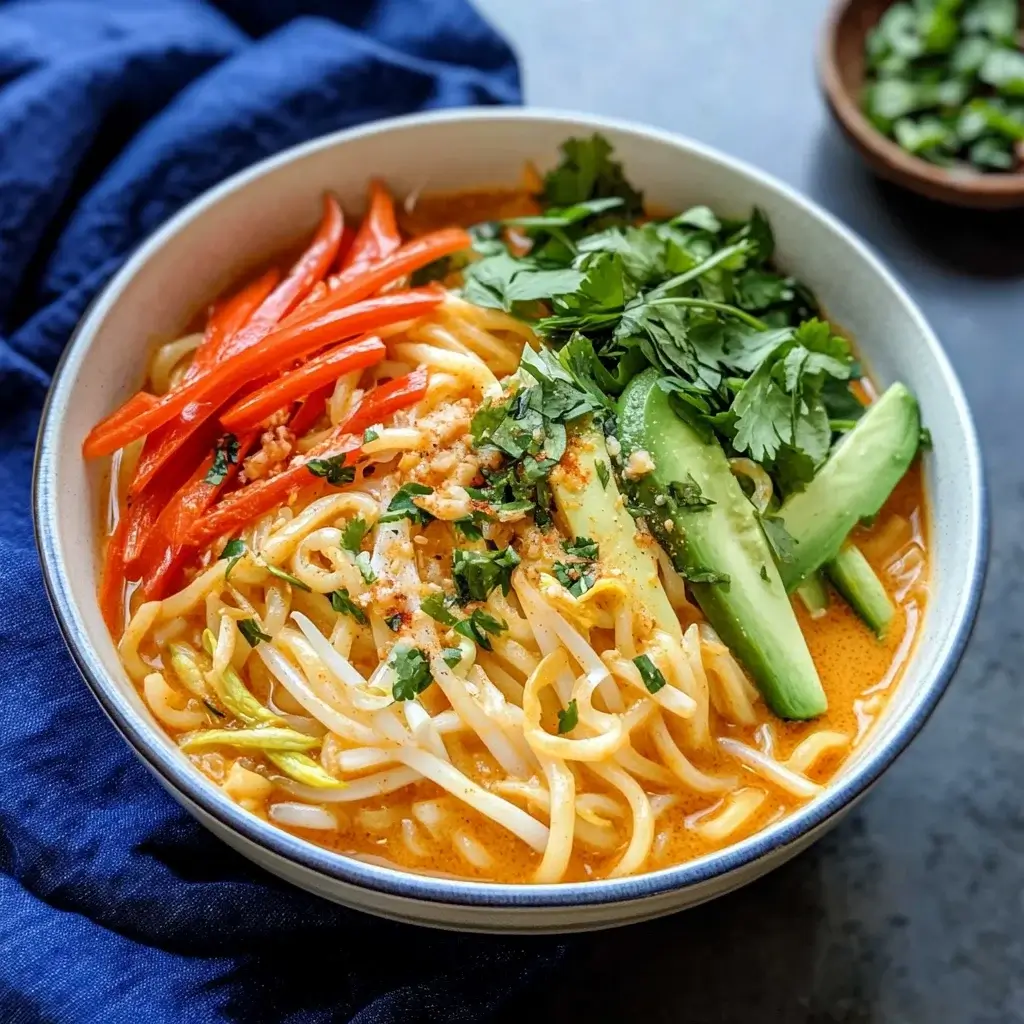
Weeknights can be a whirlwind, and finding a dinner that’s both quick, healthy, and exciting can feel like a mission impossible. That was until I stumbled upon the magic of the Coconut Curry Noodle Bowl. Honestly, this recipe has been a game-changer in our house. The first time I made it, I was a bit skeptical – could something so simple really be that flavorful? Boy, was I wrong! The aroma alone, as the coconut milk simmered with ginger and garlic, was intoxicating. And the taste? A symphony of creamy coconut, warm spices, and perfectly cooked noodles, all topped with fresh, vibrant veggies. Even my kids, who are usually picky about anything beyond pasta and tomato sauce, devoured it. They loved twirling the noodles and slurping up the flavorful broth. Since then, this Coconut Curry Noodle Bowl has become a regular feature on our dinner table. It’s incredibly versatile – you can customize it with whatever vegetables you have on hand, add your favorite protein, and adjust the spice level to your liking. It’s comforting, nourishing, and surprisingly easy to make, making it perfect for busy weeknights or a cozy weekend meal. If you’re looking for a flavorful, adaptable, and utterly delicious dish that will become a new family favorite, look no further than this Coconut Curry Noodle Bowl.
Ingredients
To create this vibrant and flavorful Coconut Curry Noodle Bowl, you’ll need a combination of fresh vegetables, aromatic spices, creamy coconut milk, and your choice of noodles. Here’s a detailed breakdown of the ingredients you’ll need for both the curry sauce and the noodle bowl itself:
For the Coconut Curry Sauce:
- Coconut Milk: 2 cans (13.5 oz each), full-fat recommended for the richest flavor and creamiest texture. Full-fat coconut milk provides a luxurious richness and body to the curry sauce. You can use light coconut milk to reduce calories, but the sauce will be less creamy. Ensure you are using coconut milk from a can, not coconut milk beverage found in cartons, as they are different products.
- Vegetable Broth: 1 cup, low sodium. Vegetable broth forms the liquid base of the curry sauce, adding depth of flavor. Low sodium broth allows you to control the salt content better. You can also use chicken broth or stock if you are not making a vegetarian or vegan version.
- Red Curry Paste: 2-3 tablespoons, adjust to taste based on your spice preference and the brand of curry paste. Red curry paste is the heart of the curry flavor, providing a complex blend of chilies, lemongrass, galangal, and other aromatic spices. Start with 2 tablespoons and add more to reach your desired level of spiciness. Different brands vary in heat, so taste and adjust accordingly. For a milder curry, use 1-2 tablespoons or opt for yellow or green curry paste, which are generally milder than red.
- Ginger: 1 tablespoon, freshly grated or minced. Fresh ginger adds a warm, pungent, and slightly spicy note that is essential to authentic curry flavor. Freshly grated or minced ginger is always preferred over powdered for its brighter and more intense flavor.
- Garlic: 2-3 cloves, minced. Garlic provides a savory and aromatic base to the curry sauce. Minced garlic infuses the sauce with its pungent flavor. Freshly minced garlic is best, but you can use garlic paste in a pinch.
- Soy Sauce (or Tamari for gluten-free): 2 tablespoons, low sodium. Soy sauce adds umami and saltiness, balancing the sweetness of the coconut milk and enhancing the overall flavor. Low sodium soy sauce is recommended to control the salt level. Tamari is a gluten-free alternative to soy sauce, offering a similar umami flavor. Coconut aminos can be used for a soy-free and slightly sweeter option.
- Brown Sugar (or Maple Syrup for vegan): 1 tablespoon, packed. Brown sugar adds a touch of sweetness that balances the spiciness and saltiness of the curry. Packed brown sugar provides a molasses-like depth of flavor. For a vegan option, maple syrup or agave nectar can be used as a natural sweetener.
- Lime Juice: 1 tablespoon, freshly squeezed. Lime juice adds a bright, acidic note that cuts through the richness of the coconut milk and enhances the freshness of the curry. Freshly squeezed lime juice is crucial for its vibrant flavor.
For the Noodle Bowl:
- Noodles: 8-10 ounces, your choice of noodles. This recipe is versatile with noodle types. Some excellent options include:
- Rice Noodles: Flat rice noodles (like pad thai noodles) or thin vermicelli rice noodles are gluten-free and soak up the curry sauce beautifully. Choose wide or thin based on your preference.
- Egg Noodles: For a richer, chewier texture, egg noodles are a great choice. They are not gluten-free.
- Udon Noodles: Thick and chewy udon noodles are fantastic for soaking up the flavorful broth.
- Soba Noodles: Buckwheat soba noodles offer a nutty flavor and are a healthier option. Check labels for 100% buckwheat for gluten-free soba, as many contain wheat.
- Spaghetti or Linguine: In a pinch, regular spaghetti or linguine pasta can also work, though they are not traditional in Asian cuisine.
- Vegetables: Approximately 4-5 cups, a mix of your favorite vegetables, cut into bite-sized pieces. The beauty of this recipe is its adaptability. Consider a variety of textures and colors. Great options include:
- Bell Peppers: Red, yellow, or orange bell peppers add sweetness and crunch.
- Broccoli Florets: Broccoli adds a hearty and slightly bitter element.
- Carrots: Sliced or julienned carrots provide sweetness and color.
- Snap Peas or Snow Peas: Add a crisp sweetness and vibrant green color.
- Mushrooms: Sliced mushrooms like cremini, shiitake, or oyster mushrooms add umami and earthy flavor.
- Spinach or Bok Choy: Leafy greens wilt down beautifully into the hot broth and add nutrients.
- Edamame (shelled): Adds protein and a pleasant texture.
- Zucchini or Yellow Squash: Adds a mild flavor and soft texture.
- Bamboo Shoots or Water Chestnuts (canned): For added crunch and Asian flavor.
- Protein (Optional): If desired, add protein to make it a more substantial meal. Options include:
- Tofu or Tempeh: Cubed and pan-fried or baked tofu or tempeh are excellent vegan protein choices.
- Chicken or Shrimp: Cooked chicken breast or shrimp can be added for non-vegetarian options.
- Hard-boiled Eggs: Sliced hard-boiled eggs add protein and richness.
- Toppings (Optional but highly recommended): Fresh toppings elevate the dish with flavor and texture.
- Fresh Cilantro or Thai Basil: Chopped fresh herbs add freshness and aroma.
- Lime Wedges: Extra lime wedges for squeezing over the bowls add brightness.
- Chopped Peanuts or Cashews: Adds crunch and nutty flavor.
- Sesame Seeds: Adds a nutty flavor and visual appeal.
- Sliced Green Onions (scallions): Adds a mild oniony flavor and freshness.
- Sriracha or Chili Garlic Sauce: For extra heat, if desired.
Instructions
Making this Coconut Curry Noodle Bowl is surprisingly simple and quick. Follow these step-by-step instructions to create a delicious and satisfying meal:
- Prepare the Noodles: Cook your chosen noodles according to package directions. Most rice noodles require soaking in hot water rather than boiling. Egg noodles and other pasta types will need to be boiled. Once cooked, drain the noodles and set aside. To prevent rice noodles from sticking, you can rinse them briefly with cold water after draining.
- Sauté Aromatics: Heat a large pot or Dutch oven over medium heat. Add a tablespoon of cooking oil (coconut oil, olive oil, or vegetable oil) and let it heat up. Add the minced garlic and grated ginger to the pot and sauté for 1-2 minutes, until fragrant. Be careful not to burn the garlic and ginger; reduce heat if needed. This step is crucial for building the flavor base of the curry.
- Add Curry Paste: Add the red curry paste to the pot and sauté for another 1-2 minutes, stirring constantly. This step helps to bloom the spices in the curry paste, intensifying their flavor. The curry paste should become fragrant and slightly darker in color.
- Pour in Liquids: Pour in the coconut milk and vegetable broth into the pot. Stir well to combine the curry paste and aromatics with the liquids. Bring the mixture to a simmer, then reduce the heat to low and let it gently simmer for 10-15 minutes, stirring occasionally. Simmering allows the flavors to meld and deepen.
- Season the Sauce: Stir in the soy sauce (or tamari), brown sugar (or maple syrup), and lime juice into the simmering curry sauce. Taste the sauce and adjust seasoning as needed. You may want to add more red curry paste for more spice, more soy sauce for saltiness, more brown sugar for sweetness, or more lime juice for acidity.
- Add Vegetables (and Protein if using): Add your chosen vegetables to the simmering curry sauce. Start with harder vegetables like carrots and broccoli first, and then add softer vegetables like bell peppers, mushrooms, and zucchini a few minutes later. If you are adding protein like tofu, tempeh, chicken, or shrimp, add it at this stage as well. Simmer for 5-10 minutes, or until the vegetables are tender-crisp and the protein is cooked through (if using). For leafy greens like spinach or bok choy, add them in the last minute or two of cooking, as they wilt quickly.
- Assemble the Noodle Bowls: Divide the cooked noodles among bowls. Ladle the coconut curry sauce and vegetables (and protein, if used) over the noodles.
- Garnish and Serve: Garnish each bowl generously with your desired toppings, such as fresh cilantro or Thai basil, lime wedges, chopped peanuts or cashews, sesame seeds, and sliced green onions. Serve immediately and enjoy!
Nutrition Facts
(Please note that these are estimated values and can vary greatly based on the specific ingredients used, portion sizes, and noodle type. This is an estimate for a serving with approximately 1.5 cups of noodle bowl, using rice noodles and a variety of vegetables, without added protein.)
Servings: Approximately 4-6 servings
Serving Size: Approximately 1.5-2 cups of noodle bowl
Approximate Nutrition per Serving (estimated, without added protein):
- Calories: 400-550 kcal
- Protein: 8-12g
- Fat: 25-35g
- Saturated Fat: 20-30g (primarily from coconut milk)
- Cholesterol: 0-10mg
- Sodium: 500-800mg (can vary based on broth and soy sauce)
- Carbohydrates: 40-60g
- Fiber: 5-8g
- Sugar: 10-15g (naturally occurring and added sugars)
Important Note: These nutrition facts are estimates. For precise nutritional information, use a nutrition calculator with the exact brands and quantities of ingredients you use. Consider that adding protein (like tofu, chicken, or shrimp) will significantly increase the protein content and may slightly alter other nutritional values. Using light coconut milk will reduce the fat and calorie content, but may affect the creaminess of the dish.
Preparation Time
- Prep Time: 20-25 minutes (chopping vegetables, preparing aromatics, etc.)
- Cook Time: 20-25 minutes (cooking noodles, making sauce, simmering vegetables)
- Total Time: 40-50 minutes
This Coconut Curry Noodle Bowl is a relatively quick meal to prepare, making it perfect for weeknights. The majority of the time is spent on vegetable preparation and simmering the sauce to develop flavors.
How to Serve
This Coconut Curry Noodle Bowl is incredibly versatile and can be served in a variety of ways. Here are some serving suggestions to make the most of this delicious dish:
- Serving Styles:
- Family Style: Serve the noodles and curry sauce separately in large bowls, allowing everyone to build their own bowls and customize toppings. This is great for accommodating different preferences and dietary needs.
- Pre-Assembled Bowls: Assemble individual bowls with noodles, sauce, and vegetables in the kitchen for a quicker and more streamlined serving process, especially for weeknight dinners.
- Buffet Style: For gatherings or parties, set up a buffet with noodles, curry sauce, a variety of vegetables and protein options (cooked separately), and a wide array of toppings. This allows guests to create their perfect noodle bowl.
- Topping Variations:
- Fresh Herbs: Cilantro, Thai basil, mint, or a combination add freshness and aroma.
- Nuts and Seeds: Chopped peanuts, cashews, sesame seeds, or sunflower seeds provide crunch and nutty flavor.
- Spicy Elements: Sriracha, chili garlic sauce, red pepper flakes, or sliced fresh chilies for those who like extra heat.
- Acidic Touch: Lime wedges are essential for squeezing over the bowl to brighten the flavors. Rice vinegar or a splash of fish sauce (for non-vegetarian versions) can also add complexity.
- Crispy Elements: Crispy fried shallots or onions can add texture and savory flavor.
- Protein Pairings (Beyond Optional Add-ins):
- Grilled or Roasted Protein: Serve alongside grilled chicken skewers, roasted tofu, or pan-seared shrimp for a heartier meal.
- Plant-Based Protein Boost: Add chickpeas, lentils, or edamame directly into the curry for extra plant-based protein.
- Egg-cellent Addition: Top with a soft-boiled or fried egg for added richness and protein.
- Side Dish Suggestions:
- Spring Rolls or Summer Rolls: Fresh spring rolls or summer rolls with peanut sauce complement the noodle bowl beautifully.
- Green Salad with Asian Dressing: A simple green salad with a sesame ginger or peanut dressing provides a refreshing contrast.
- Steamed Edamame: Steamed edamame pods are a healthy and easy side dish.
- Kimchi or Pickled Vegetables: A small side of kimchi or pickled vegetables can add a tangy and spicy element.
Additional Tips for a Perfect Coconut Curry Noodle Bowl
To ensure your Coconut Curry Noodle Bowl is a resounding success, here are five additional tips to elevate your dish:
- Bloom the Curry Paste Properly: Don’t rush the step of sautéing the curry paste. Sautéing it in oil for a minute or two before adding liquids is crucial. This process, known as “blooming,” releases the aromatic oils and intensifies the flavor of the curry paste, resulting in a richer and more complex curry sauce.
- Adjust Spice Level to Your Preference: Red curry paste can vary significantly in spiciness between brands. Start with a smaller amount (like 2 tablespoons) and taste as you go. You can always add more curry paste or a pinch of red pepper flakes to increase the heat. For a milder curry, use less red curry paste or opt for yellow or green curry paste, which are generally milder. You can also add a touch of coconut sugar or honey to balance the spice if it becomes too intense.
- Don’t Overcook the Vegetables: Aim for vegetables that are tender-crisp, not mushy. Add vegetables in order of their cooking time, starting with harder vegetables first and adding softer ones later. Overcooked vegetables lose their texture and flavor. Stir-frying or lightly steaming vegetables before adding them to the curry can help maintain their crispness.
- Customize with Seasonal Vegetables: Take advantage of seasonal vegetables for the freshest and most flavorful noodle bowl. In spring, asparagus and peas are great additions. In summer, zucchini, bell peppers, and corn are excellent choices. In fall, butternut squash and sweet potatoes can add warmth and sweetness. In winter, root vegetables like carrots and parsnips are hearty and delicious.
- Make it Ahead for Meal Prep: The coconut curry sauce can be made ahead of time and stored in the refrigerator for up to 3 days. Cook the noodles separately and store them as well. When ready to eat, simply reheat the sauce, cook or reheat the vegetables, and assemble the bowls. This makes it a great option for meal prepping lunches or quick weeknight dinners. For best results, add fresh toppings just before serving.
FAQ Section
Here are some frequently asked questions about making Coconut Curry Noodle Bowls:
Q1: Can I make this Coconut Curry Noodle Bowl vegan?
A: Yes, absolutely! This recipe is easily adaptable to be vegan. Ensure you are using vegetable broth and not chicken broth. Use maple syrup or agave nectar instead of brown sugar for sweetener. Choose vegan protein options like tofu, tempeh, or edamame. Double-check that your red curry paste is vegan-friendly, as some brands may contain fish sauce; vegan curry pastes are widely available.
Q2: What kind of noodles are best for this dish?
A: The best noodles are a matter of personal preference! Rice noodles (flat or vermicelli) are classic and gluten-free. Egg noodles offer a richer texture. Udon noodles are thick and chewy. Soba noodles provide a nutty flavor. Even spaghetti or linguine can work in a pinch. Experiment with different types to find your favorite!
Q3: Can I add protein to make it a heartier meal?
A: Yes, you can definitely add protein! Tofu, tempeh, chicken, shrimp, or hard-boiled eggs are all excellent additions. For tofu or tempeh, pan-fry or bake them separately before adding to the curry. Chicken or shrimp can be cooked directly in the curry sauce until done. Sliced hard-boiled eggs can be added as a topping.
Q4: How can I store leftover Coconut Curry Noodle Bowl?
A: Store leftover noodle bowl in airtight containers in the refrigerator for up to 3 days. It’s best to store the noodles and the curry sauce/vegetables separately if possible, to prevent the noodles from becoming too soggy. Reheat the sauce and vegetables in a pot or microwave until heated through. Reheat the noodles separately by briefly soaking them in hot water or microwaving them with a splash of water. Assemble the bowls fresh when reheating for the best texture.
Q5: Can I adjust the level of spice in this recipe?
A: Yes, easily! The spice level is primarily determined by the amount of red curry paste you use. Start with 2 tablespoons for a medium spice level and adjust from there. Add more curry paste for a spicier dish, or use less for a milder version. You can also add a pinch of red pepper flakes or a dash of sriracha for extra heat. For a milder flavor, consider using yellow or green curry paste instead of red, as they are generally less spicy. You can also add a touch of coconut sugar or honey to balance out the spiciness if needed.
Print
Coconut Curry Noodle Bowl recipe
Ingredients
For the Coconut Curry Sauce:
- Coconut Milk: 2 cans (13.5 oz each), full-fat recommended for the richest flavor and creamiest texture. Full-fat coconut milk provides a luxurious richness and body to the curry sauce. You can use light coconut milk to reduce calories, but the sauce will be less creamy. Ensure you are using coconut milk from a can, not coconut milk beverage found in cartons, as they are different products.
- Vegetable Broth: 1 cup, low sodium. Vegetable broth forms the liquid base of the curry sauce, adding depth of flavor. Low sodium broth allows you to control the salt content better. You can also use chicken broth or stock if you are not making a vegetarian or vegan version.
- Red Curry Paste: 2-3 tablespoons, adjust to taste based on your spice preference and the brand of curry paste. Red curry paste is the heart of the curry flavor, providing a complex blend of chilies, lemongrass, galangal, and other aromatic spices. Start with 2 tablespoons and add more to reach your desired level of spiciness. Different brands vary in heat, so taste and adjust accordingly. For a milder curry, use 1-2 tablespoons or opt for yellow or green curry paste, which are generally milder than red.
- Ginger: 1 tablespoon, freshly grated or minced. Fresh ginger adds a warm, pungent, and slightly spicy note that is essential to authentic curry flavor. Freshly grated or minced ginger is always preferred over powdered for its brighter and more intense flavor.
- Garlic: 2-3 cloves, minced. Garlic provides a savory and aromatic base to the curry sauce. Minced garlic infuses the sauce with its pungent flavor. Freshly minced garlic is best, but you can use garlic paste in a pinch.
- Soy Sauce (or Tamari for gluten-free): 2 tablespoons, low sodium. Soy sauce adds umami and saltiness, balancing the sweetness of the coconut milk and enhancing the overall flavor. Low sodium soy sauce is recommended to control the salt level. Tamari is a gluten-free alternative to soy sauce, offering a similar umami flavor. Coconut aminos can be used for a soy-free and slightly sweeter option.
- Brown Sugar (or Maple Syrup for vegan): 1 tablespoon, packed. Brown sugar adds a touch of sweetness that balances the spiciness and saltiness of the curry. Packed brown sugar provides a molasses-like depth of flavor. For a vegan option, maple syrup or agave nectar can be used as a natural sweetener.
- Lime Juice: 1 tablespoon, freshly squeezed. Lime juice adds a bright, acidic note that cuts through the richness of the coconut milk and enhances the freshness of the curry. Freshly squeezed lime juice is crucial for its vibrant flavor.
For the Noodle Bowl:
- Noodles: 8-10 ounces, your choice of noodles. This recipe is versatile with noodle types. Some excellent options include:
- Rice Noodles: Flat rice noodles (like pad thai noodles) or thin vermicelli rice noodles are gluten-free and soak up the curry sauce beautifully. Choose wide or thin based on your preference.
- Egg Noodles: For a richer, chewier texture, egg noodles are a great choice. They are not gluten-free.
- Udon Noodles: Thick and chewy udon noodles are fantastic for soaking up the flavorful broth.
- Soba Noodles: Buckwheat soba noodles offer a nutty flavor and are a healthier option. Check labels for 100% buckwheat for gluten-free soba, as many contain wheat.
- Spaghetti or Linguine: In a pinch, regular spaghetti or linguine pasta can also work, though they are not traditional in Asian cuisine.
- Vegetables: Approximately 4-5 cups, a mix of your favorite vegetables, cut into bite-sized pieces. The beauty of this recipe is its adaptability. Consider a variety of textures and colors. Great options include:
- Bell Peppers: Red, yellow, or orange bell peppers add sweetness and crunch.
- Broccoli Florets: Broccoli adds a hearty and slightly bitter element.
- Carrots: Sliced or julienned carrots provide sweetness and color.
- Snap Peas or Snow Peas: Add a crisp sweetness and vibrant green color.
- Mushrooms: Sliced mushrooms like cremini, shiitake, or oyster mushrooms add umami and earthy flavor.
- Spinach or Bok Choy: Leafy greens wilt down beautifully into the hot broth and add nutrients.
- Edamame (shelled): Adds protein and a pleasant texture.
- Zucchini or Yellow Squash: Adds a mild flavor and soft texture.
- Bamboo Shoots or Water Chestnuts (canned): For added crunch and Asian flavor.
- Protein (Optional): If desired, add protein to make it a more substantial meal. Options include:
- Tofu or Tempeh: Cubed and pan-fried or baked tofu or tempeh are excellent vegan protein choices.
- Chicken or Shrimp: Cooked chicken breast or shrimp can be added for non-vegetarian options.
- Hard-boiled Eggs: Sliced hard-boiled eggs add protein and richness.
- Toppings (Optional but highly recommended): Fresh toppings elevate the dish with flavor and texture.
- Fresh Cilantro or Thai Basil: Chopped fresh herbs add freshness and aroma.
- Lime Wedges: Extra lime wedges for squeezing over the bowls add brightness.
- Chopped Peanuts or Cashews: Adds crunch and nutty flavor.
- Sesame Seeds: Adds a nutty flavor and visual appeal.
- Sliced Green Onions (scallions): Adds a mild oniony flavor and freshness.
- Sriracha or Chili Garlic Sauce: For extra heat, if desired.
Instructions
- Prepare the Noodles: Cook your chosen noodles according to package directions. Most rice noodles require soaking in hot water rather than boiling. Egg noodles and other pasta types will need to be boiled. Once cooked, drain the noodles and set aside. To prevent rice noodles from sticking, you can rinse them briefly with cold water after draining.
- Sauté Aromatics: Heat a large pot or Dutch oven over medium heat. Add a tablespoon of cooking oil (coconut oil, olive oil, or vegetable oil) and let it heat up. Add the minced garlic and grated ginger to the pot and sauté for 1-2 minutes, until fragrant. Be careful not to burn the garlic and ginger; reduce heat if needed. This step is crucial for building the flavor base of the curry.
- Add Curry Paste: Add the red curry paste to the pot and sauté for another 1-2 minutes, stirring constantly. This step helps to bloom the spices in the curry paste, intensifying their flavor. The curry paste should become fragrant and slightly darker in color.
- Pour in Liquids: Pour in the coconut milk and vegetable broth into the pot. Stir well to combine the curry paste and aromatics with the liquids. Bring the mixture to a simmer, then reduce the heat to low and let it gently simmer for 10-15 minutes, stirring occasionally. Simmering allows the flavors to meld and deepen.
- Season the Sauce: Stir in the soy sauce (or tamari), brown sugar (or maple syrup), and lime juice into the simmering curry sauce. Taste the sauce and adjust seasoning as needed. You may want to add more red curry paste for more spice, more soy sauce for saltiness, more brown sugar for sweetness, or more lime juice for acidity.
- Add Vegetables (and Protein if using): Add your chosen vegetables to the simmering curry sauce. Start with harder vegetables like carrots and broccoli first, and then add softer vegetables like bell peppers, mushrooms, and zucchini a few minutes later. If you are adding protein like tofu, tempeh, chicken, or shrimp, add it at this stage as well. Simmer for 5-10 minutes, or until the vegetables are tender-crisp and the protein is cooked through (if using). For leafy greens like spinach or bok choy, add them in the last minute or two of cooking, as they wilt quickly.
- Assemble the Noodle Bowls: Divide the cooked noodles among bowls. Ladle the coconut curry sauce and vegetables (and protein, if used) over the noodles.
- Garnish and Serve: Garnish each bowl generously with your desired toppings, such as fresh cilantro or Thai basil, lime wedges, chopped peanuts or cashews, sesame seeds, and sliced green onions. Serve immediately and enjoy!
Nutrition
- Serving Size: one normal portion
- Calories: 400-550 kcal
- Sugar: 10-15g
- Sodium: 500-800mg
- Fat: 25-35g
- Saturated Fat: 20-30g
- Carbohydrates: 40-60g
- Fiber: 5-8g
- Protein: 8-12g
- Cholesterol: 0-10mg