
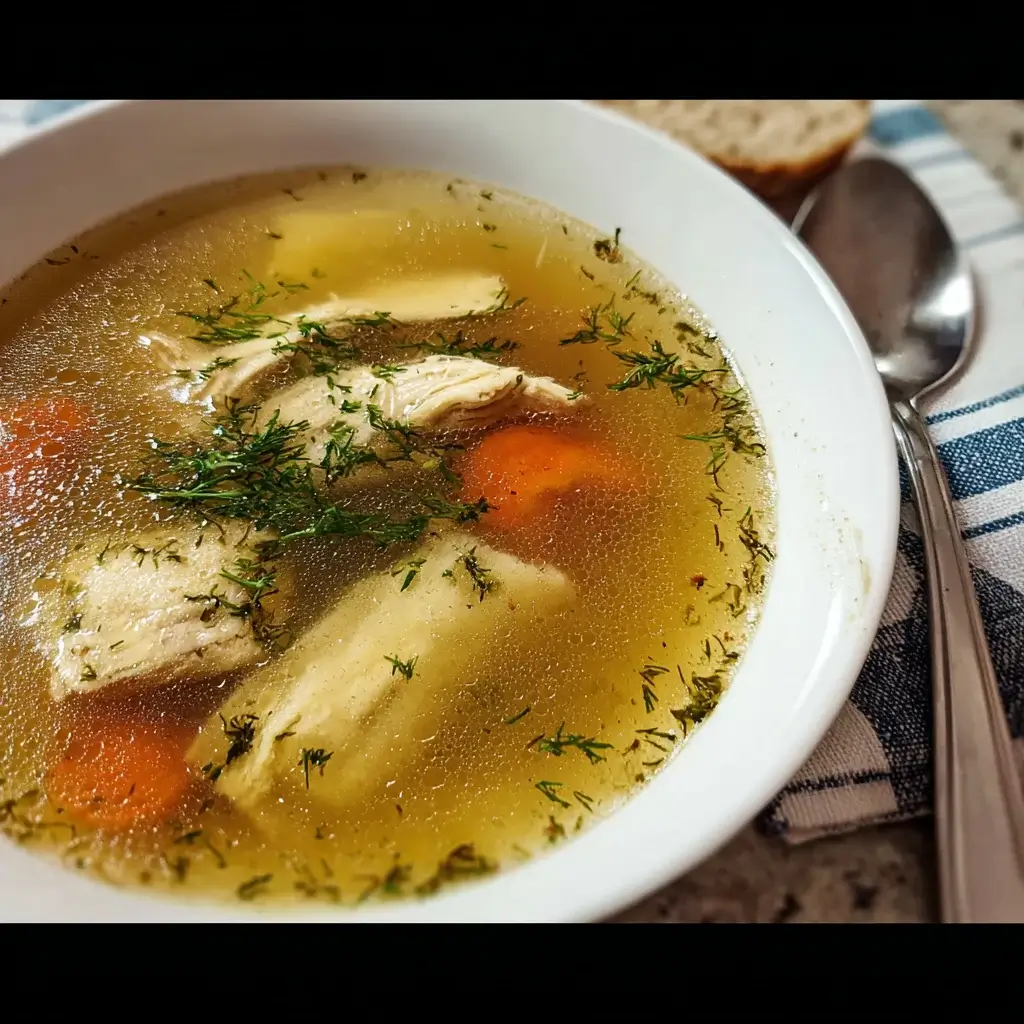
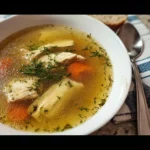
There is no aroma in the world more comforting than that of chicken soup simmering on the stove. For me, that scent is a direct portal to my grandmother’s kitchen, a place where a single pot held the cure for everything—a winter cold, a scraped knee, a tough day at school. She called it “Golden Broth,” and it was her answer to all of life’s ailments. I remember being tucked under a blanket, feeling miserable with a fever, and she would appear with a steaming bowl. The broth was so clear you could see the bottom, shimmering with little golden droplets of schmaltz. Nestled inside were tender pieces of chicken, perfectly soft carrot coins, and two impossibly fluffy matzo balls that bobbed like happy little clouds. That first spoonful felt like a warm hug from the inside out. This recipe is my tribute to her, a culmination of years spent watching, learning, and finally understanding that the magic wasn’t just in the ingredients, but in the slow, patient process. It’s more than a recipe; it’s a tradition, an act of love, and the undisputed king of comfort food. Making it today fills my own home with that same magical aroma, and watching my family’s faces light up as they take their first sip is a tradition I am so proud to continue.
Complete Ingredients for Classic Jewish Chicken Soup
This recipe is about building layers of deep, savory flavor from simple, wholesome ingredients. The key is quality and patience. We will break down the ingredients into three parts: the soup itself, the aromatics that build the foundational flavor, and of course, the iconic matzo balls.
For the Golden Chicken Broth:
- Whole Chicken: 1 (about 3-4 lbs / 1.5 kg). A whole chicken is non-negotiable for the best flavor. The combination of meat, bones, skin, and fat creates a rich, full-bodied broth with beneficial collagen. A free-range or organic chicken will yield an even more flavorful result.
- Chicken Wings or Backs: 1 lb (450g). This is the secret weapon! Wings, necks, and backs are packed with collagen-rich connective tissue and bone, which breaks down during the long simmer to create a gelatinous, mouth-coating broth that is the hallmark of a truly great soup.
- Cold Water: 4-5 quarts (16-20 cups). It’s crucial to start with cold water. This allows the proteins from the chicken to slowly release, coagulate, and rise to the surface as “scum,” which can then be easily skimmed off for a crystal-clear broth.
For the Aromatic Vegetables and Seasonings:
- Yellow Onions: 2 large, unpeeled and halved. Leaving the skins on is a traditional trick that imparts a beautiful, deep golden color to the broth. Simply wash the outside well.
- Carrots: 4-5 medium, peeled. We’ll use 2-3 whole carrots to flavor the broth (they will be discarded later as they give all their flavor to the soup) and 2 carrots finely diced to be added to the finished soup.
- Celery Stalks: 3-4, with leaves if possible, cut into large chunks. The leaves add a lovely, slightly peppery, herbaceous note.
- Parsnip: 1 large, peeled and cut into large chunks. This is a classic ingredient in Jewish chicken soup, lending a unique, earthy sweetness that balances the other savory flavors. Do not skip this!
- Turnip: 1 small, peeled and quartered (optional, but recommended). A turnip adds a subtle, peppery depth that complements the parsnip’s sweetness.
- Garlic: 1 whole head, top sliced off. Keeping the head mostly intact allows the garlic to infuse a mellow, sweet flavor without becoming overpowering or bitter.
- Fresh Dill: 1 large bunch. This is the signature herb of Jewish chicken soup. We will use the stems in the simmering broth for a deep flavor infusion and reserve the delicate fronds for garnishing the finished soup.
- Fresh Parsley: 1 large bunch (preferably flat-leaf). Like the dill, the stems will go into the pot for simmering, and the leaves will be chopped for garnish.
- Whole Black Peppercorns: 1 tablespoon. Using whole peppercorns provides a gentle, nuanced heat without making the broth cloudy with specks of ground pepper.
- Kosher Salt: To taste. It’s important to salt the soup at the end of the cooking process. Salting too early can result in an overly salty broth as the liquid reduces.
For the Fluffy Matzo Balls (“Floaters”):
- Matzo Meal: 1 cup.
- Large Eggs: 4, lightly beaten.
- Schmaltz (Rendered Chicken Fat) or Vegetable Oil: ¼ cup. For the most authentic and delicious matzo balls, schmaltz is essential. You can render your own or buy it. If unavailable, a neutral vegetable oil or canola oil will work.
- Seltzer Water or Soup Broth: 2-4 tablespoons, cold. The carbonation in seltzer is a secret trick that helps create light, airy, “floater” style matzo balls.
- Salt: 1 teaspoon.
- Black Pepper: ½ teaspoon.
Step-by-Step Instructions
Patience is the most important ingredient here. Follow these steps methodically for a soup that tastes like it came straight from a Bubbe’s kitchen.
Part 1: Creating the Crystal-Clear Golden Broth
- Prepare the Chicken: Rinse the whole chicken and the extra parts (wings, backs) under cold water. Pat them dry and place them in a very large stockpot (at least 8-12 quarts).
- Start with Cold Water: Cover the chicken completely with 4-5 quarts of cold water. The water should be at least a few inches above the chicken.
- The Slow Simmer and the Crucial Skim: Place the pot over medium-high heat and bring it slowly to a simmer. Do not let it come to a rolling boil. As the water heats up, a layer of grayish foam or “scum” (these are coagulated proteins) will rise to the surface. This is the most critical step for a clear broth: use a large spoon or a fine-mesh skimmer to diligently skim off this foam and discard it. Continue skimming until no more foam appears. This process can take 15-20 minutes.
- Add the Aromatics: Once the broth is clear and gently simmering, add the halved onions (skin-on), the whole carrots for the broth, celery chunks, parsnip, turnip, the head of garlic, the stems from the dill and parsley bunches, and the whole peppercorns.
- The Long, Slow Simmer: Reduce the heat to the lowest possible setting where the soup still maintains a very gentle simmer—you should only see a few tiny bubbles breaking the surface. Cover the pot partially, leaving the lid slightly ajar to allow steam to escape. Let the soup simmer for a minimum of 3 hours, but preferably 4-6 hours. The longer it simmers, the richer and more flavorful the broth will be. Do not stir the soup during this time, as it can agitate the ingredients and make the broth cloudy.
Part 2: Making the Light-as-a-Cloud Matzo Balls
(Start this about 1 hour before the soup is finished simmering.)
- Combine Ingredients: In a medium bowl, whisk together the 4 lightly beaten eggs and the ¼ cup of melted schmaltz (or oil). Add the 1 cup of matzo meal, 1 teaspoon of salt, and ½ teaspoon of pepper, and mix with a fork until just combined.
- Add Liquid: Gently stir in 2 tablespoons of cold seltzer water or soup broth. The mixture should be loose but not watery.
- Chill the Mixture: Cover the bowl with plastic wrap and place it in the refrigerator for at least 30 minutes. This step is essential. It allows the matzo meal to fully hydrate and firm up, making the balls easier to shape.
- Cook Separately: Bring a large, separate pot of generously salted water to a rolling boil. Cooking the matzo balls in a separate pot is key—if cooked in your beautiful soup, they will release starch and make your clear broth cloudy.
- Form and Cook: Wet your hands with cold water to prevent sticking. Scoop out a portion of the chilled mixture (about the size of a walnut) and gently roll it between your palms to form a smooth ball. Don’t pack them too tightly. Carefully drop the matzo balls one by one into the boiling salted water.
- Simmer the Matzo Balls: Once all the balls are in the pot, reduce the heat to a steady simmer, cover the pot, and cook for 30-40 minutes. They will puff up to at least double their original size and will be light and fully cooked through. To check for doneness, you can remove one and slice it in half; it should be the same color all the way through, with no dark, dry center.
Part 3: Finishing and Assembling the Soup
- Strain the Broth: After the long simmer, carefully remove the chicken and the large vegetable pieces from the pot with tongs or a slotted spoon. Set the chicken aside to cool. Discard all the spent vegetables and herb stems (they have given all their flavor to the broth).
- The Double-Strain Method: For an exceptionally clear broth, strain it through a fine-mesh sieve lined with a few layers of cheesecloth into a large, clean pot or bowl. This will catch any remaining small solids.
- De-fat the Broth (Optional): Let the strained broth settle for a few minutes. The golden chicken fat (schmaltz) will rise to the top. You can skim off as much or as little as you like with a ladle. For the richest flavor, leave some in. For a quicker method, you can chill the broth completely in the fridge, which will cause the fat to solidify on top for easy removal.
- Prepare the Meat and Veggies: Once the cooked chicken is cool enough to handle, remove the skin and bones (discard them) and shred the meat into bite-sized pieces. Finely dice the 2 remaining raw carrots.
- Final Simmer: Bring the beautiful, strained broth back to a gentle simmer. Add the shredded chicken and the diced raw carrots. Cook for another 10-15 minutes, or until the carrots are tender.
- Season to Perfection: Now is the time to season the soup. Add kosher salt, starting with a teaspoon and tasting after each addition until the flavor is rich, savory, and well-balanced.
- Serve: To serve, place 2-3 cooked matzo balls in the bottom of each soup bowl. Ladle the hot golden broth, shredded chicken, and carrots over the top. Garnish generously with freshly chopped dill and parsley.
Nutrition Facts
Please note that these values are an estimate and can vary based on the size of the chicken, the amount of fat skimmed, and the serving size.
- Servings: This recipe makes a large batch, approximately 12-14 servings.
- Calories per Serving (approx. 1.5 cups soup with 2 matzo balls): 250-350 calories.
A rough nutritional breakdown per serving:
- Protein: ~20g (From the chicken and eggs in the matzo balls)
- Fat: ~12g (Primarily from the chicken fat/schmaltz)
- Carbohydrates: ~15g (From the matzo meal and vegetables)
- This soup is incredibly nourishing, providing hydration, electrolytes (from the salt), protein, and easily digestible nutrients.
Preparation Time
This recipe is a labor of love, but most of the time is hands-off.
- Prep Time: 30 minutes (Preparing chicken, chopping vegetables, mixing matzo balls).
- Cook Time: 4-7 hours (Includes the long, slow simmer for the broth and cooking the matzo balls).
- Total Time: Approximately 4.5 to 7.5 hours.
How to Serve Classic Jewish Chicken Soup
Serving this soup is about honoring tradition while adding your own touch. Here are the best ways to present this bowl of liquid gold:
- The Quintessential Bowl:
- Place two or three warm matzo balls at the bottom of a wide, shallow soup bowl.
- Ladle the shimmering broth over them, ensuring each bowl gets a generous amount of shredded chicken and tender carrot coins.
- Finish with a liberal sprinkle of finely chopped fresh dill. The fresh dill is not just a garnish; its bright, aromatic flavor is essential to the final taste.
- With “Lokshen” (Egg Noodles):
- For a heartier version, or for those who prefer noodles, add fine egg noodles.
- Important: Cook the noodles separately according to package directions, just like the matzo balls.
- Add a small nest of cooked noodles to the bottom of the bowl before ladling the soup over them. This keeps the main pot of broth clear and starch-free.
- With “Kreplach” (Dumplings):
- Kreplach are small, triangular dumplings typically filled with ground meat or potato.
- Adding a few of these alongside or instead of matzo balls turns the soup into a truly special occasion meal, often served during Jewish holidays like Yom Kippur or Purim.
- Serve with Challah:
- No Jewish soup experience is complete without a side of soft, fluffy challah bread.
- Serve thick slices on the side, perfect for tearing and dipping into the savory golden broth to soak up every last drop.
Additional Tips for Success
Follow these five time-tested tips to elevate your chicken soup from good to unforgettable.
- Never, Ever Boil Your Broth: This is the golden rule. A rolling boil will emulsify the fats and agitate the proteins, resulting in a cloudy, greasy soup. Your mantra should be “low and slow.” A lazy, gentle simmer with just a few bubbles breaking the surface is all you need.
- Embrace the Schmaltz: Do not fear the chicken fat! Schmaltz is liquid gold and is responsible for much of the soup’s rich flavor and satisfying mouthfeel. It is also the key ingredient for tender, flavorful matzo balls. If you skim the fat from the cooled broth, save it in a jar in the fridge. It’s fantastic for roasting potatoes or sautéing onions.
- The Double Strain is Worth It: For that truly professional, crystal-clear broth that looks as good as it tastes, don’t skip the double-straining method. The first strain through a colander gets the big pieces, but the second strain through a fine-mesh sieve lined with cheesecloth catches all the tiny particles that cause cloudiness.
- Season at the End: It can be tempting to salt the soup at the beginning, but as the broth simmers and reduces over several hours, the flavor will concentrate. Salting at the end gives you complete control and prevents an accidentally over-salted final product.
- Let it Rest: Like many stews and braises, chicken soup is often even better the next day. Letting it cool and rest overnight in the refrigerator allows the flavors to meld, deepen, and become even more complex.
Frequently Asked Questions (FAQ)
1. Why is my chicken soup cloudy, and how can I fix it?
Cloudiness is the most common chicken soup problem and is usually caused by one of three things: boiling the soup too hard instead of simmering, not skimming the “scum” diligently at the beginning, or cooking starches (like noodles or matzo balls) directly in the broth. Unfortunately, you can’t easily “un-cloud” a broth, but you can prevent it by following the tips above. If it happens, don’t worry—it will still taste delicious!
2. Can I use chicken pieces instead of a whole chicken?
You can, but the flavor and body of the broth will not be as rich. If you must use pieces, opt for bone-in, skin-on parts like thighs, legs, and especially wings and backs. A combination of these will yield a much better result than using boneless, skinless breasts, which have very little fat or collagen to contribute.
3. How do I properly store and freeze this soup?
This soup freezes beautifully! For best results, store the components separately. Let the broth cool completely, then freeze it in airtight containers or freezer bags for up to 3 months. Freeze the shredded chicken in a separate bag. Matzo balls can also be frozen; place them on a baking sheet in a single layer to freeze individually, then transfer them to a freezer bag. This prevents them from sticking together. Thaw everything in the refrigerator overnight before gently reheating on the stove.
4. What is the difference between “floaters” and “sinkers” in the matzo ball world?
This is a great debate in Jewish cuisine! “Floaters” are light, fluffy, and airy matzo balls that float on top of the soup (this recipe is for floaters). “Sinkers” are dense, heavier, and have a bit more chew, sinking to the bottom of the bowl. The difference often comes down to the amount of fat and leavening; sinker recipes typically use less fat and no seltzer, resulting in a denser ball. Both are delicious—it’s purely a matter of personal preference!
5. Is Jewish chicken soup really a cure for the common cold?
While it might not be a “cure” in the medical sense, it has scientifically-backed benefits that make it the perfect food when you’re sick. The hot, steamy broth helps to hydrate the body and can act as a natural decongestant, clearing nasal passages. Chicken contains an amino acid called cysteine, which can help thin mucus. The vegetables provide vitamins, and the salt helps replace lost electrolytes. Most importantly, it’s a comforting, easily digestible, and psychologically satisfying food that makes you feel cared for—and that is a powerful medicine in itself.
Classic Jewish Chicken Soup recipe
Ingredients
For the Golden Chicken Broth:
-
Whole Chicken: 1 (about 3-4 lbs / 1.5 kg). A whole chicken is non-negotiable for the best flavor. The combination of meat, bones, skin, and fat creates a rich, full-bodied broth with beneficial collagen. A free-range or organic chicken will yield an even more flavorful result.
-
Chicken Wings or Backs: 1 lb (450g). This is the secret weapon! Wings, necks, and backs are packed with collagen-rich connective tissue and bone, which breaks down during the long simmer to create a gelatinous, mouth-coating broth that is the hallmark of a truly great soup.
-
Cold Water: 4-5 quarts (16-20 cups). It’s crucial to start with cold water. This allows the proteins from the chicken to slowly release, coagulate, and rise to the surface as “scum,” which can then be easily skimmed off for a crystal-clear broth.
For the Aromatic Vegetables and Seasonings:
-
Yellow Onions: 2 large, unpeeled and halved. Leaving the skins on is a traditional trick that imparts a beautiful, deep golden color to the broth. Simply wash the outside well.
-
Carrots: 4-5 medium, peeled. We’ll use 2-3 whole carrots to flavor the broth (they will be discarded later as they give all their flavor to the soup) and 2 carrots finely diced to be added to the finished soup.
-
Celery Stalks: 3-4, with leaves if possible, cut into large chunks. The leaves add a lovely, slightly peppery, herbaceous note.
-
Parsnip: 1 large, peeled and cut into large chunks. This is a classic ingredient in Jewish chicken soup, lending a unique, earthy sweetness that balances the other savory flavors. Do not skip this!
-
Turnip: 1 small, peeled and quartered (optional, but recommended). A turnip adds a subtle, peppery depth that complements the parsnip’s sweetness.
-
Garlic: 1 whole head, top sliced off. Keeping the head mostly intact allows the garlic to infuse a mellow, sweet flavor without becoming overpowering or bitter.
-
Fresh Dill: 1 large bunch. This is the signature herb of Jewish chicken soup. We will use the stems in the simmering broth for a deep flavor infusion and reserve the delicate fronds for garnishing the finished soup.
-
Fresh Parsley: 1 large bunch (preferably flat-leaf). Like the dill, the stems will go into the pot for simmering, and the leaves will be chopped for garnish.
-
Whole Black Peppercorns: 1 tablespoon. Using whole peppercorns provides a gentle, nuanced heat without making the broth cloudy with specks of ground pepper.
-
Kosher Salt: To taste. It’s important to salt the soup at the end of the cooking process. Salting too early can result in an overly salty broth as the liquid reduces.
For the Fluffy Matzo Balls (“Floaters”):
-
Matzo Meal: 1 cup.
-
Large Eggs: 4, lightly beaten.
-
Schmaltz (Rendered Chicken Fat) or Vegetable Oil: ¼ cup. For the most authentic and delicious matzo balls, schmaltz is essential. You can render your own or buy it. If unavailable, a neutral vegetable oil or canola oil will work.
-
Seltzer Water or Soup Broth: 2-4 tablespoons, cold. The carbonation in seltzer is a secret trick that helps create light, airy, “floater” style matzo balls.
-
Salt: 1 teaspoon.
-
Black Pepper: ½ teaspoon.
Instructions
Part 1: Creating the Crystal-Clear Golden Broth
-
Prepare the Chicken: Rinse the whole chicken and the extra parts (wings, backs) under cold water. Pat them dry and place them in a very large stockpot (at least 8-12 quarts).
-
Start with Cold Water: Cover the chicken completely with 4-5 quarts of cold water. The water should be at least a few inches above the chicken.
-
The Slow Simmer and the Crucial Skim: Place the pot over medium-high heat and bring it slowly to a simmer. Do not let it come to a rolling boil. As the water heats up, a layer of grayish foam or “scum” (these are coagulated proteins) will rise to the surface. This is the most critical step for a clear broth: use a large spoon or a fine-mesh skimmer to diligently skim off this foam and discard it. Continue skimming until no more foam appears. This process can take 15-20 minutes.
-
Add the Aromatics: Once the broth is clear and gently simmering, add the halved onions (skin-on), the whole carrots for the broth, celery chunks, parsnip, turnip, the head of garlic, the stems from the dill and parsley bunches, and the whole peppercorns.
-
The Long, Slow Simmer: Reduce the heat to the lowest possible setting where the soup still maintains a very gentle simmer—you should only see a few tiny bubbles breaking the surface. Cover the pot partially, leaving the lid slightly ajar to allow steam to escape. Let the soup simmer for a minimum of 3 hours, but preferably 4-6 hours. The longer it simmers, the richer and more flavorful the broth will be. Do not stir the soup during this time, as it can agitate the ingredients and make the broth cloudy.
Part 2: Making the Light-as-a-Cloud Matzo Balls
(Start this about 1 hour before the soup is finished simmering.)
-
Combine Ingredients: In a medium bowl, whisk together the 4 lightly beaten eggs and the ¼ cup of melted schmaltz (or oil). Add the 1 cup of matzo meal, 1 teaspoon of salt, and ½ teaspoon of pepper, and mix with a fork until just combined.
-
Add Liquid: Gently stir in 2 tablespoons of cold seltzer water or soup broth. The mixture should be loose but not watery.
-
Chill the Mixture: Cover the bowl with plastic wrap and place it in the refrigerator for at least 30 minutes. This step is essential. It allows the matzo meal to fully hydrate and firm up, making the balls easier to shape.
-
Cook Separately: Bring a large, separate pot of generously salted water to a rolling boil. Cooking the matzo balls in a separate pot is key—if cooked in your beautiful soup, they will release starch and make your clear broth cloudy.
-
Form and Cook: Wet your hands with cold water to prevent sticking. Scoop out a portion of the chilled mixture (about the size of a walnut) and gently roll it between your palms to form a smooth ball. Don’t pack them too tightly. Carefully drop the matzo balls one by one into the boiling salted water.
-
Simmer the Matzo Balls: Once all the balls are in the pot, reduce the heat to a steady simmer, cover the pot, and cook for 30-40 minutes. They will puff up to at least double their original size and will be light and fully cooked through. To check for doneness, you can remove one and slice it in half; it should be the same color all the way through, with no dark, dry center.
Part 3: Finishing and Assembling the Soup
-
Strain the Broth: After the long simmer, carefully remove the chicken and the large vegetable pieces from the pot with tongs or a slotted spoon. Set the chicken aside to cool. Discard all the spent vegetables and herb stems (they have given all their flavor to the broth).
-
The Double-Strain Method: For an exceptionally clear broth, strain it through a fine-mesh sieve lined with a few layers of cheesecloth into a large, clean pot or bowl. This will catch any remaining small solids.
-
De-fat the Broth (Optional): Let the strained broth settle for a few minutes. The golden chicken fat (schmaltz) will rise to the top. You can skim off as much or as little as you like with a ladle. For the richest flavor, leave some in. For a quicker method, you can chill the broth completely in the fridge, which will cause the fat to solidify on top for easy removal.
-
Prepare the Meat and Veggies: Once the cooked chicken is cool enough to handle, remove the skin and bones (discard them) and shred the meat into bite-sized pieces. Finely dice the 2 remaining raw carrots.
-
Final Simmer: Bring the beautiful, strained broth back to a gentle simmer. Add the shredded chicken and the diced raw carrots. Cook for another 10-15 minutes, or until the carrots are tender.
-
Season to Perfection: Now is the time to season the soup. Add kosher salt, starting with a teaspoon and tasting after each addition until the flavor is rich, savory, and well-balanced.
-
Serve: To serve, place 2-3 cooked matzo balls in the bottom of each soup bowl. Ladle the hot golden broth, shredded chicken, and carrots over the top. Garnish generously with freshly chopped dill and parsley.
Nutrition
- Serving Size: one normal portion
- Calories: 250-350
- Fat: 12g
- Carbohydrates: 15g
- Protein: 20g