
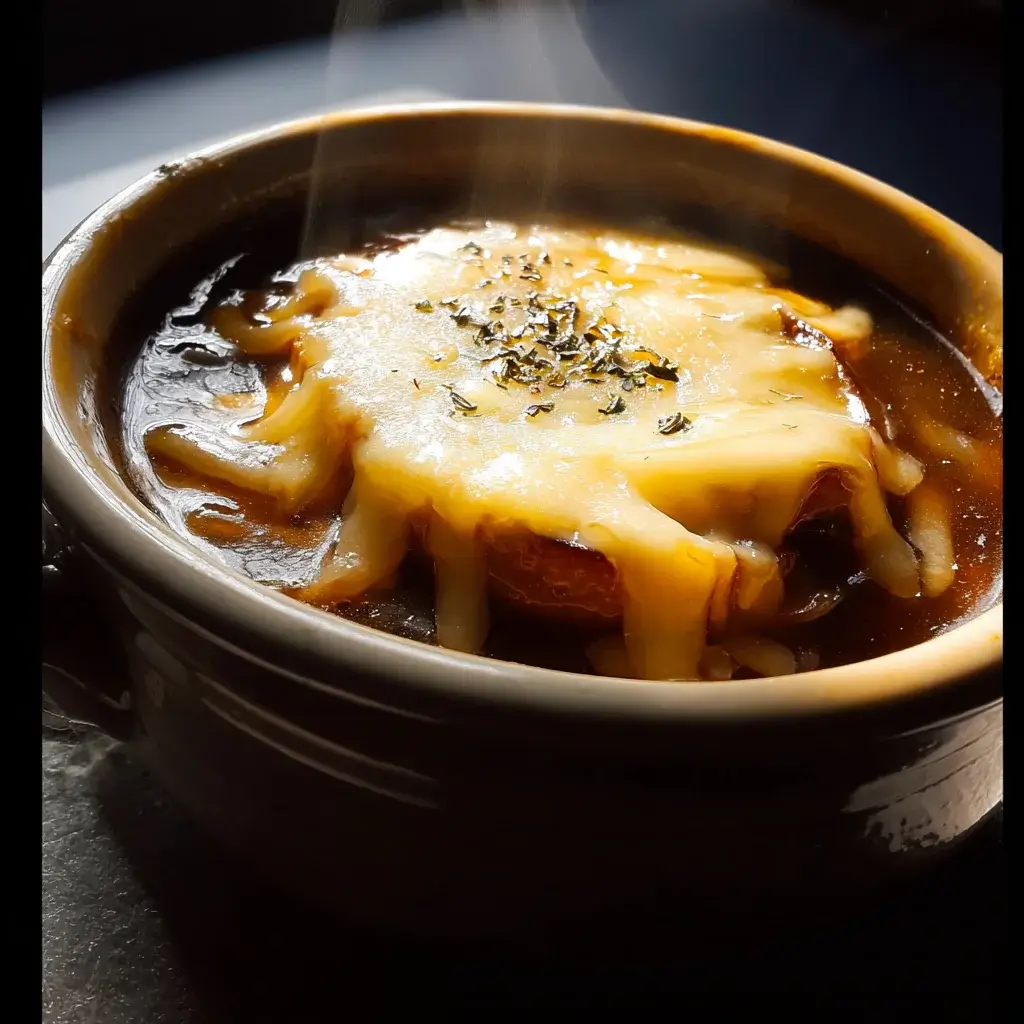

There are few dishes in the culinary world that I consider a true labor of love, a process that is as rewarding as the final, soul-warming result. Classic French Onion Soup is, without a doubt, at the very top of that list. I remember the first time I decided to make it from scratch. It was a bitterly cold Sunday, and the thought of a rich, savory broth and a glorious, molten cap of cheese was too tempting to resist. I spent the better part of an hour patiently stirring a mountain of onions, watching them transform from sharp and pungent to meltingly soft, sweet, and a stunning shade of deep mahogany. The aroma that filled my kitchen was intoxicating. When I finally pulled those bubbling, golden-brown crocks from the oven and my spoon broke through the crispy, cheesy crust with an audible crackle, I knew I had created something truly special. Serving it to my family, and seeing their faces light up as they took that first perfect bite—a little bit of cheese, some broth-soaked bread, and the sweet onions—was one of the most satisfying moments I’ve ever had in the kitchen. This isn’t a quick weeknight soup; it’s an event, a project that turns the humblest of ingredients into the epitome of comfort and elegance.
The Ultimate Classic French Onion Soup: Ingredients
The beauty of this iconic soup lies in its simplicity. It doesn’t rely on a long list of exotic ingredients, but rather on the quality of a few key components and the technique used to bring them together. Each ingredient plays a crucial role in building the layers of deep, complex flavor that define an authentic French Onion Soup.
The Foundation: Onions and Fat
- Yellow Onions: 2 pounds (about 4 large or 6 medium), thinly sliced.
- Why it’s important: Yellow onions are the undisputed champion for this soup. They have a high sugar content, which is essential for achieving a deep, rich caramelization. They also have a robust structure that allows them to hold their shape during the long cooking process, melting into silky strands rather than turning to mush. Uniformly slicing them ensures they cook evenly.
- Unsalted Butter: 4 tablespoons (1/2 stick or 57g).
- Why it’s important: Butter provides a rich, nutty flavor that forms the initial layer of taste for our soup. Using unsalted butter gives you complete control over the final saltiness of the dish, which is crucial as both the broth and cheese will add significant amounts of salt.
- Olive Oil: 2 tablespoons.
- Why it’s important: We use a combination of butter and oil for a reason. Butter has a low smoke point and can burn during the long caramelization process. The olive oil has a higher smoke point, which helps to prevent the butter from browning too quickly, allowing the onions to caramelize low and slow to perfection.
The Soul of the Soup: Broth and Aromatics
- High-Quality Beef Broth or Stock: 8 cups (2 quarts or about 2 liters).
- Why it’s important: If the onions are the foundation, the broth is the soul. Using a high-quality, rich beef broth is non-negotiable for an authentic flavor. Homemade beef stock is the gold standard, but a good store-bought beef bone broth or a low-sodium, high-quality beef stock will also yield excellent results. This is where the deep, savory, umami flavor comes from.
- Dry White Wine: 1 cup (240ml).
- Why it’s important: The wine serves two purposes. First, it’s used to deglaze the pot, lifting all those precious browned bits (the “fond”) from the bottom after the onions have caramelized. This fond is pure flavor. Second, the acidity of a dry wine like a Sauvignon Blanc, Pinot Grigio, or even a dry vermouth cuts through the richness of the soup and adds a crucial layer of complexity.
- Brandy or Cognac: 1/4 cup (60ml) (optional, but highly recommended).
- Why it’s important: A splash of brandy or cognac at the end adds a subtle warmth, depth, and hint of sweetness that elevates the soup from great to truly exceptional.
- Garlic: 3 cloves, minced.
- Fresh Thyme: 4 sprigs.
- Bay Leaf: 1.
- Why they’re important: These are the classic French aromatics that infuse the broth with herbaceous, earthy notes. Using fresh thyme is far superior to dried for this recipe.
The Finishing Touches: The “Gratinée”
- All-Purpose Flour: 3 tablespoons.
- Why it’s important: Flour acts as a thickening agent. It’s cooked with the onions to create a light roux, which gives the final soup a slightly thicker, more luxurious body and prevents it from being watery.
- Sturdy Baguette: 1 loaf, cut into 1-inch thick slices.
- Why it’s important: The bread, often called a “crouton” or “croûte,” is a crucial component. You need a sturdy, slightly stale, or toasted baguette that can stand up to the hot broth without immediately dissolving into mush.
- Gruyère Cheese: 2 cups (about 8 ounces or 225g), freshly grated.
- Why it’s important: Gruyère is the traditional and, arguably, the best cheese for French Onion Soup. It has a wonderful nutty, slightly salty flavor and melts into a perfectly gooey, bubbly, and beautifully browned crust. For the best melting results, always buy a block of cheese and grate it yourself.
- Salt and Freshly Ground Black Pepper: To taste.
Step-by-Step Instructions for Culinary Perfection
Patience is the secret ingredient in this recipe. Follow these detailed phases to build your soup from the ground up, ensuring every layer of flavor is perfectly developed.
Phase 1: The Art of Caramelizing the Onions
- Melt the Fats: In a large, heavy-bottomed pot or Dutch oven, melt the 4 tablespoons of butter with the 2 tablespoons of olive oil over medium-high heat.
- Add the Onions: Add all of the sliced onions to the pot. They will likely fill it to the brim. Stir them well to coat them in the butter and oil mixture. Let them cook for about 5-10 minutes, stirring occasionally, until they begin to soften and release their water.
- The Low and Slow Process: Reduce the heat to medium-low. This is the most crucial part of the entire recipe. Cook the onions, stirring every 5-10 minutes, for 45 to 60 minutes. You cannot rush this process. The onions will go through several stages:
- Softening (First 15 mins): They will become translucent and wilt down significantly.
- Lightly Golden (15-30 mins): They will start to turn a pale yellow and then a light golden brown.
- Deeply Caramelized (30-60 mins): They will continue to darken, turning a beautiful amber and finally a rich, deep mahogany brown. They will be incredibly soft, sweet, and jammy. Be sure to scrape the bottom of the pot as you stir to prevent sticking and burning. This is where patience pays off.
Phase 2: Building the Soup Base
- Add Aromatics and Flour: Once the onions are deeply caramelized, add the 3 cloves of minced garlic and cook for just one minute more, until fragrant. Sprinkle the 3 tablespoons of all-purpose flour over the onions and stir constantly for another minute. This step cooks out the raw flour taste and creates a thickening agent for the soup.
- Deglaze the Pot: Pour in the 1 cup of dry white wine. As it sizzles, use a wooden spoon or spatula to scrape up all of the browned bits (the fond) stuck to the bottom of the pot. This is concentrated flavor! Let the wine cook for 2-3 minutes, until it has reduced by about half.
- Add the Broth and Herbs: Pour in the 8 cups of high-quality beef broth. Add the fresh thyme sprigs and the bay leaf. Stir everything together.
Phase 3: Simmering and Finishing
- Simmer and Meld Flavors: Bring the soup to a boil, then immediately reduce the heat to low. Let the soup simmer gently, partially covered, for at least 30 minutes, or up to an hour, to allow all the flavors to meld together beautifully.
- Final Flavor Boost: After simmering, remove the thyme sprigs and the bay leaf. Stir in the 1/4 cup of brandy or cognac (if using).
- Taste and Season: Now is the time to taste your soup. Add salt and freshly ground black pepper as needed. Remember that the beef broth and Gruyère cheese are both salty, so be conservative with your initial seasoning.
Phase 4: The Final Assembly (The “Gratinée”)
- Prepare for Broiling: Preheat your oven’s broiler to high and arrange an oven rack about 6 inches from the heat source.
- Toast the Baguette: While the broiler heats up, arrange the 1-inch thick baguette slices on a baking sheet and toast them for 1-2 minutes per side, until they are dry and lightly golden.
- Assemble the Crocks: Place four to six oven-safe soup bowls or crocks on a sturdy baking sheet (this makes them much easier and safer to handle). Ladle the hot soup into the bowls, filling them about three-quarters full.
- Top with Bread and Cheese: Place one or two slices of the toasted baguette on top of the soup in each bowl. Be generous and completely cover the top of each bowl with a heaping mound of the freshly grated Gruyère cheese, letting it drape over the edges.
- Broil to Perfection: Carefully place the baking sheet under the broiler. Broil for 2-4 minutes, watching it like a hawk. The cheese should be completely melted, bubbly, and beautifully browned in spots. Do not walk away during this step, as the cheese can go from perfect to burnt in a matter of seconds.
- Serve Carefully: Using oven mitts, carefully remove the baking sheet from the oven. Let the bowls rest for a few minutes before serving, as they will be extremely hot.
Nutrition Facts
Please note these are estimates and can vary based on specific ingredients. French Onion Soup is an indulgence to be savored.
- Servings: 4-6 main course servings
- Calories per serving: Approximately 500-650 kcal
Preparation Time
This is not a quick meal, but a rewarding culinary project.
- Active Prep Time: 20 minutes (slicing onions, grating cheese)
- Caramelizing Time: 45-60 minutes
- Simmering Time: 30-60 minutes
- Final Broiling Time: 5 minutes
- Total Time: Approximately 1 hour 45 minutes to 2 hours 30 minutes
How to Serve This Iconic Soup
Serving French Onion Soup is an experience in itself. Here’s how to do it right for maximum enjoyment.
- Choose the Right Bowls:
- It is absolutely essential to use oven-proof and broiler-safe bowls or crocks. Traditional lion-headed bowls are classic, but any ceramic or porcelain bowl that can withstand the intense heat of a broiler will work.
- Handle with Care:
- The bowls will be dangerously hot when they come out of the broiler. Always place them on a small plate or saucer before setting them in front of your guests to protect both your table and their hands.
- Garnish Simply:
- The cheesy crust is the star, so it doesn’t need much garnish. A simple sprig of fresh thyme placed on top of the melted cheese before serving adds a touch of elegance and a fresh aroma.
- Perfect Pairings:
- Because the soup is so rich and decadent, it is best paired with something simple and acidic to cut through the richness.
- Salad: A simple green salad with a sharp, tangy Dijon vinaigrette is the perfect accompaniment.
- Wine: A glass of the same dry white wine you used in the soup, like a Sauvignon Blanc or a crisp, unoaked Chardonnay, is an excellent pairing.
Additional Tips for A Flawless French Onion Soup
Elevate your soup from homemade to restaurant-quality with these five expert tips.
- The Secret to Slicing Onions: For the best texture, slice your onions “pole-to-pole” (from the root end to the stem end) rather than across the equator. This cut follows the fibers of the onion, helping the slices hold their shape better during the long cooking process, resulting in silky strands rather than mush. Uniformity in thickness is key to even caramelization.
- Don’t Fear the Fond: As your onions caramelize, a dark brown crust, known as the “fond,” will form on the bottom of the pot. Do not panic and think it’s burning! This fond is a treasure trove of concentrated flavor. As you stir, scrape it up gently. The moisture from the onions will help release it. This is precisely what will be fully lifted by the wine during the deglazing step, forming the deep, savory backbone of your soup.
- Boost Your Broth: If you’re using store-bought beef broth, you can easily boost its flavor to get closer to a homemade taste. Before starting the soup, simmer the store-bought broth for 20-30 minutes with a few extra aromatic vegetables (like a chunk of carrot, celery, and a few mushroom stems) and perhaps even some beef soup bones if you can find them. Strain it before using it in the recipe.
- The Double Cheese Technique: For the ultimate cheese pull and flavor, use a mix of two cheeses. Use Gruyère as your primary cheese for its superior melting quality and nutty flavor, but mix in a small amount of a sharper cheese like Parmesan or Asiago. Sprinkle a little of the sharper cheese directly on the bread before topping with the Gruyère. This adds an extra layer of salty, savory goodness.
- Make It Ahead for Easy Entertaining: French Onion Soup is a perfect make-ahead dish. You can prepare the soup base (up to Step 9) one to three days in advance and store it in an airtight container in the refrigerator. The flavors will actually meld and deepen overnight. When you’re ready to serve, simply reheat the soup on the stove until it’s piping hot, then proceed with the final bread and cheese broiling step.
Frequently Asked Questions (FAQ)
Here are answers to some of the most common questions about making Classic French Onion Soup.
1. Can I make this soup vegetarian?
Yes, you can make a delicious vegetarian version. The flavor profile will be different, but still wonderful. For the broth, use a high-quality, dark vegetable broth. To replicate the umami depth of beef broth, add 1-2 tablespoons of soy sauce or miso paste, and consider simmering the broth with a handful of dried mushrooms (like porcini) for an earthy, savory flavor. Use a vegetarian Worcestershire sauce for another layer of complexity.
2. What is the best non-alcoholic substitute for the wine and brandy?
If you prefer to omit the alcohol, you can still make a fantastic soup. For the wine, simply deglaze the pot with an equal amount of your beef broth. To mimic the acidity, you can add a tablespoon of balsamic vinegar or red wine vinegar to the soup. For the brandy, you can simply leave it out, or add a teaspoon of apple cider vinegar or a splash of non-alcoholic vanilla extract for a hint of complexity.
3. Why did my soup come out too sweet?
French Onion Soup should be savory with a background of sweetness from the onions, not cloyingly sweet. If it tastes too sweet, it’s likely because the onions were cooked too quickly over high heat, or a sweet wine (like a Riesling or Moscato) was used. To balance excess sweetness, you can add a small splash of a sharp vinegar, like red wine vinegar or sherry vinegar, at the very end.
4. Can I use a different type of cheese?
Absolutely. While Gruyère is classic, several other cheeses work beautifully. Comté is a very similar French cheese that is an excellent substitute. Swiss cheese (Emmental), Jarlsberg, or even a good quality provolone will melt well and provide a lovely flavor. You can also use a mix of mozzarella (for the cheese pull) and provolone or parmesan (for the flavor).
5. How do I store and reheat leftovers?
It’s best to store the soup base separately from the cheesy bread topping. Store the leftover soup in an airtight container in the refrigerator for up to 4 days. Reheat it gently on the stovetop. To serve, toast fresh baguette slices, ladle the hot soup into an oven-safe bowl, and proceed with the cheese topping and broiling as you did in the original recipe. Freezing the soup base is also a great option; it will keep well for up to 3 months.
Classic French Onion Soup with Melty Cheese recipe
Ingredients
The Foundation: Onions and Fat
-
Yellow Onions: 2 pounds (about 4 large or 6 medium), thinly sliced.
-
Why it’s important: Yellow onions are the undisputed champion for this soup. They have a high sugar content, which is essential for achieving a deep, rich caramelization. They also have a robust structure that allows them to hold their shape during the long cooking process, melting into silky strands rather than turning to mush. Uniformly slicing them ensures they cook evenly.
-
-
Unsalted Butter: 4 tablespoons (1/2 stick or 57g).
-
Why it’s important: Butter provides a rich, nutty flavor that forms the initial layer of taste for our soup. Using unsalted butter gives you complete control over the final saltiness of the dish, which is crucial as both the broth and cheese will add significant amounts of salt.
-
-
Olive Oil: 2 tablespoons.
-
Why it’s important: We use a combination of butter and oil for a reason. Butter has a low smoke point and can burn during the long caramelization process. The olive oil has a higher smoke point, which helps to prevent the butter from browning too quickly, allowing the onions to caramelize low and slow to perfection.
-
The Soul of the Soup: Broth and Aromatics
-
High-Quality Beef Broth or Stock: 8 cups (2 quarts or about 2 liters).
-
Why it’s important: If the onions are the foundation, the broth is the soul. Using a high-quality, rich beef broth is non-negotiable for an authentic flavor. Homemade beef stock is the gold standard, but a good store-bought beef bone broth or a low-sodium, high-quality beef stock will also yield excellent results. This is where the deep, savory, umami flavor comes from.
-
-
Dry White Wine: 1 cup (240ml).
-
Why it’s important: The wine serves two purposes. First, it’s used to deglaze the pot, lifting all those precious browned bits (the “fond”) from the bottom after the onions have caramelized. This fond is pure flavor. Second, the acidity of a dry wine like a Sauvignon Blanc, Pinot Grigio, or even a dry vermouth cuts through the richness of the soup and adds a crucial layer of complexity.
-
-
Brandy or Cognac: 1/4 cup (60ml) (optional, but highly recommended).
-
Why it’s important: A splash of brandy or cognac at the end adds a subtle warmth, depth, and hint of sweetness that elevates the soup from great to truly exceptional.
-
-
Garlic: 3 cloves, minced.
-
Fresh Thyme: 4 sprigs.
-
Bay Leaf: 1.
-
Why they’re important: These are the classic French aromatics that infuse the broth with herbaceous, earthy notes. Using fresh thyme is far superior to dried for this recipe.
-
The Finishing Touches: The “Gratinée”
-
All-Purpose Flour: 3 tablespoons.
-
Why it’s important: Flour acts as a thickening agent. It’s cooked with the onions to create a light roux, which gives the final soup a slightly thicker, more luxurious body and prevents it from being watery.
-
-
Sturdy Baguette: 1 loaf, cut into 1-inch thick slices.
-
Why it’s important: The bread, often called a “crouton” or “croûte,” is a crucial component. You need a sturdy, slightly stale, or toasted baguette that can stand up to the hot broth without immediately dissolving into mush.
-
-
Gruyère Cheese: 2 cups (about 8 ounces or 225g), freshly grated.
-
Why it’s important: Gruyère is the traditional and, arguably, the best cheese for French Onion Soup. It has a wonderful nutty, slightly salty flavor and melts into a perfectly gooey, bubbly, and beautifully browned crust. For the best melting results, always buy a block of cheese and grate it yourself.
-
-
Salt and Freshly Ground Black Pepper: To taste.
Instructions
Phase 1: The Art of Caramelizing the Onions
-
Melt the Fats: In a large, heavy-bottomed pot or Dutch oven, melt the 4 tablespoons of butter with the 2 tablespoons of olive oil over medium-high heat.
-
Add the Onions: Add all of the sliced onions to the pot. They will likely fill it to the brim. Stir them well to coat them in the butter and oil mixture. Let them cook for about 5-10 minutes, stirring occasionally, until they begin to soften and release their water.
-
The Low and Slow Process: Reduce the heat to medium-low. This is the most crucial part of the entire recipe. Cook the onions, stirring every 5-10 minutes, for 45 to 60 minutes. You cannot rush this process. The onions will go through several stages:
-
Softening (First 15 mins): They will become translucent and wilt down significantly.
-
Lightly Golden (15-30 mins): They will start to turn a pale yellow and then a light golden brown.
-
Deeply Caramelized (30-60 mins): They will continue to darken, turning a beautiful amber and finally a rich, deep mahogany brown. They will be incredibly soft, sweet, and jammy. Be sure to scrape the bottom of the pot as you stir to prevent sticking and burning. This is where patience pays off.
-
Phase 2: Building the Soup Base
-
Add Aromatics and Flour: Once the onions are deeply caramelized, add the 3 cloves of minced garlic and cook for just one minute more, until fragrant. Sprinkle the 3 tablespoons of all-purpose flour over the onions and stir constantly for another minute. This step cooks out the raw flour taste and creates a thickening agent for the soup.
-
Deglaze the Pot: Pour in the 1 cup of dry white wine. As it sizzles, use a wooden spoon or spatula to scrape up all of the browned bits (the fond) stuck to the bottom of the pot. This is concentrated flavor! Let the wine cook for 2-3 minutes, until it has reduced by about half.
-
Add the Broth and Herbs: Pour in the 8 cups of high-quality beef broth. Add the fresh thyme sprigs and the bay leaf. Stir everything together.
Phase 3: Simmering and Finishing
-
Simmer and Meld Flavors: Bring the soup to a boil, then immediately reduce the heat to low. Let the soup simmer gently, partially covered, for at least 30 minutes, or up to an hour, to allow all the flavors to meld together beautifully.
-
Final Flavor Boost: After simmering, remove the thyme sprigs and the bay leaf. Stir in the 1/4 cup of brandy or cognac (if using).
-
Taste and Season: Now is the time to taste your soup. Add salt and freshly ground black pepper as needed. Remember that the beef broth and Gruyère cheese are both salty, so be conservative with your initial seasoning.
Phase 4: The Final Assembly (The “Gratinée”)
-
Prepare for Broiling: Preheat your oven’s broiler to high and arrange an oven rack about 6 inches from the heat source.
-
Toast the Baguette: While the broiler heats up, arrange the 1-inch thick baguette slices on a baking sheet and toast them for 1-2 minutes per side, until they are dry and lightly golden.
-
Assemble the Crocks: Place four to six oven-safe soup bowls or crocks on a sturdy baking sheet (this makes them much easier and safer to handle). Ladle the hot soup into the bowls, filling them about three-quarters full.
-
Top with Bread and Cheese: Place one or two slices of the toasted baguette on top of the soup in each bowl. Be generous and completely cover the top of each bowl with a heaping mound of the freshly grated Gruyère cheese, letting it drape over the edges.
-
Broil to Perfection: Carefully place the baking sheet under the broiler. Broil for 2-4 minutes, watching it like a hawk. The cheese should be completely melted, bubbly, and beautifully browned in spots. Do not walk away during this step, as the cheese can go from perfect to burnt in a matter of seconds.
-
Serve Carefully: Using oven mitts, carefully remove the baking sheet from the oven. Let the bowls rest for a few minutes before serving, as they will be extremely hot.
Nutrition
- Serving Size: one normal portion
- Calories: 500-650