
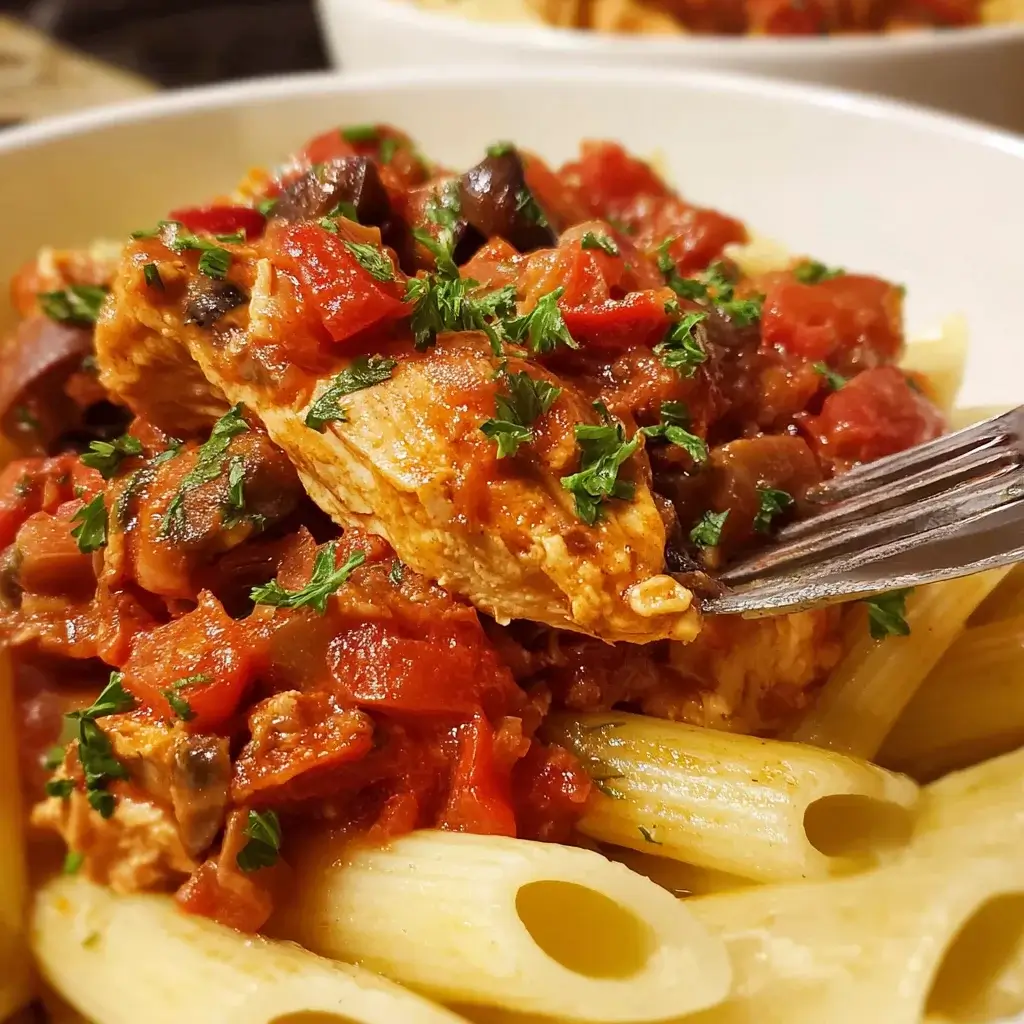

Some recipes are more than just a list of ingredients; they are a story, a tradition, a journey back to a cozy kitchen filled with the most incredible, soul-warming aromas. My first encounter with Chicken Cacciatore was at my grandmother’s house on a chilly autumn Sunday. The air was thick with the scent of simmering tomatoes, sweet bell peppers, earthy mushrooms, and a hint of red wine. It was a slow, deliberate process, a dish that couldn’t be rushed. For years, I reserved it for those special, lazy weekends, serving it traditionally with creamy polenta or a loaf of crusty bread. But life gets busy, and I wanted to bring that profound, rustic comfort into our regular rotation. The solution was simple yet brilliant: pasta. By shredding the tender, fall-apart chicken and tossing it with the rich, vegetable-studded sauce and sturdy rigatoni, the dish transformed. It became a complete, hearty, one-bowl meal that was both rustic and familiar. The first time I served this Chicken Cacciatore Pasta, my family was floored. It had all the deep, slow-simmered flavor of the classic but with the satisfying, family-friendly appeal of a pasta night. It’s now our go-to for a meal that feels both special and effortless.
Chicken Cacciatore Pasta: The Ultimate Rustic Meal
“Cacciatore” translates to “hunter-style” in Italian, evoking a rustic, hearty dish made with simple, available ingredients. Traditionally, it involves slow-braising chicken with onions, herbs, tomatoes, and often bell peppers, mushrooms, and a splash of wine. The result is an incredibly rich and flavorful stew where the chicken becomes meltingly tender.
While classic Chicken Cacciatore is often served alongside polenta or bread, this recipe adapts it beautifully for a modern palate by turning it into a spectacular pasta dish. The slow-simmered cacciatore sauce, studded with tender vegetables and shredded chicken, becomes the perfect coating for sturdy pasta. It’s a complete, satisfying meal in a single bowl, marrying the old-world charm of Italian country cooking with the universal love of a great pasta dish.
Why This Recipe Will Become a Family Favorite
- Incredible Depth of Flavor: The combination of searing the chicken, sautéing the vegetables, deglazing with wine, and a slow simmer creates layers of complex, savory flavor that taste like the dish has been cooking all day.
- Hearty and Satisfying: Packed with tender chicken, a medley of vegetables, and pasta, this is a truly substantial meal that will satisfy even the biggest appetites.
- Uses Simple, Wholesome Ingredients: This dish is built on a foundation of accessible and affordable ingredients like chicken thighs, bell peppers, mushrooms, and canned tomatoes.
- Surprisingly Straightforward: While the flavor is complex, the steps are simple and logical. It’s a fantastic recipe for a weekend cooking project or a leisurely dinner.
- Perfect for Making Ahead: The flavors of the cacciatore sauce actually deepen and improve overnight, making it an ideal dish to prepare in advance.
Complete with the Ingredients Amount
For the best results, use fresh, quality ingredients. This recipe is forgiving, so feel free to adjust vegetable quantities to your liking.
For the Chicken and Searing
- Bone-in, Skin-on Chicken Thighs (2.5 pounds / 1.1 kg): Chicken thighs are essential for this dish. They remain moist and tender during the long simmer and the bones add immense flavor to the sauce.
- All-Purpose Flour (1/4 cup): For dredging the chicken, which helps create a golden-brown crust and slightly thickens the sauce.
- Salt and Freshly Ground Black Pepper (to taste): For seasoning the flour and chicken.
- Olive Oil (2 tablespoons): For searing the chicken and sautéing the vegetables.
The “Hunter’s” Vegetables and Aromatics
- Yellow Onion (1 large, chopped): Forms the sweet, savory base of the sauce.
- Bell Peppers (2 large, a mix of red, yellow, or orange): Sliced into strips. They add sweetness and vibrant color.
- Cremini Mushrooms (8 ounces / 225g, sliced): Provide a deep, earthy flavor.
- Garlic (6 cloves, minced): A crucial aromatic. Don’t be afraid to use plenty!
- Carrot (1 medium, finely diced): Adds a subtle sweetness and depth.
- Celery Stalk (1, finely diced): Provides a classic savory backbone to the sauce.
The Rich Tomato Sauce
- Dry Red Wine (1/2 cup): Use a wine you’d enjoy drinking, such as a Chianti, Merlot, or Cabernet Sauvignon. This is for deglazing the pan and adds incredible depth.
- Canned Crushed Tomatoes (28-ounce can): The primary base of our sauce.
- Chicken Broth (1 cup): Adds more savory liquid for simmering.
- Dried Oregano (1 teaspoon):
- Dried Basil (1 teaspoon):
- Bay Leaf (1):
- Red Pepper Flakes (1/4 teaspoon, optional): For a hint of warmth.
For the Pasta and Assembly
- Pasta (1 pound / 450g): Choose a robust, tube-shaped pasta that can hold up to the hearty sauce. Rigatoni, penne, or pappardelle are excellent choices.
- Fresh Parsley (1/4 cup, chopped): For a fresh, vibrant finish.
- Grated Parmesan Cheese: For serving.
Step-by-Step Instructions for Rustic Perfection
This dish is about building layers of flavor. Follow these steps for a delicious result.
Step 1: Prepare and Sear the Chicken
In a shallow dish, combine the flour with a generous amount of salt (about 2 teaspoons) and pepper (about 1 teaspoon). Pat the chicken thighs dry with a paper towel. Dredge each piece of chicken in the seasoned flour, shaking off any excess. Heat the olive oil in a large Dutch oven or heavy-bottomed pot over medium-high heat. Carefully place the chicken thighs skin-side down in the pot. Sear for 5-7 minutes per side, without moving them, until they are deep golden brown and crispy. Do this in two batches if necessary to avoid overcrowding the pot. Transfer the seared chicken to a plate and set aside.
Step 2: Sauté the Vegetables
Reduce the heat to medium. To the same pot, add the chopped onion, carrot, and celery (the soffritto). Cook, stirring occasionally, for about 7-8 minutes, until the vegetables have softened. Add the sliced bell peppers and mushrooms and continue to cook for another 5-7 minutes, until the peppers are tender-crisp and the mushrooms have released their liquid. Finally, add the minced garlic and optional red pepper flakes and cook for one more minute until fragrant.
Step 3: Deglaze and Build the Sauce
Pour the red wine into the pot. Use a wooden spoon to scrape up all the browned bits (the fond) from the bottom of the pot—this is where a ton of flavor is. Let the wine bubble and reduce by about half, which should take 2-3 minutes.
Step 4: Simmer the Cacciatore
Stir in the crushed tomatoes, chicken broth, dried oregano, dried basil, and the bay leaf. Season with a bit more salt and pepper. Bring the sauce to a gentle simmer.
Step 5: Braise the Chicken
Nestle the seared chicken thighs (and any accumulated juices from the plate) back into the pot, making sure they are mostly submerged in the sauce. Reduce the heat to low, cover the pot, and let it simmer for at least 1 hour, or up to 1.5 hours. The longer it simmers, the more tender the chicken will be.
Step 6: Cook the Pasta and Finish the Dish
About 20 minutes before the sauce is done, bring a large pot of heavily salted water to a boil. Cook the pasta according to package directions until al dente. Reserve about 1 cup of the starchy pasta water before draining.
Step 7: Shred the Chicken and Combine
Carefully remove the chicken thighs from the sauce. The meat should be fall-off-the-bone tender. Discard the skin and bones, and use two forks to shred the chicken meat. Return the shredded chicken to the pot with the sauce. Remove the bay leaf. Stir the cooked, drained pasta directly into the pot with the cacciatore sauce. Toss everything together until the pasta is well-coated. If the sauce is too thick, stir in a splash of the reserved pasta water until it reaches your desired consistency.
Step 8: Garnish and Serve
Stir in the fresh chopped parsley. Serve the Chicken Cacciatore Pasta hot in large bowls, with a generous sprinkle of grated Parmesan cheese on top.
Nutrition Facts (Estimated)
These values are an approximation and depend on the specific ingredients used.
- Servings: 8
- Serving Size: Approximately 2 cups
- Calories per serving: Approximately 600-700 kcal
This is a hearty, all-in-one meal rich in protein, complex carbohydrates, and nutrients from the vegetables.
Preparation Time
- Preparation Time: 20 minutes (chopping vegetables)
- Cook Time: 1 hour 45 minutes (includes searing and simmering)
- Total Time: Approximately 2 hours 5 minutes
How to Serve Chicken Cacciatore Pasta
This dish is a complete meal, but a few simple accompaniments can elevate the experience.
- Essential Garnishes:
- Grated Parmesan Cheese: A non-negotiable final touch for its salty, nutty flavor.
- Fresh Herbs: A sprinkle of fresh, chopped flat-leaf parsley or basil brightens up the rich, savory flavors.
- Red Pepper Flakes: For those who appreciate a little extra heat.
- On the Side:
- Crusty Bread: A warm loaf of Italian bread or focaccia is perfect for scooping up any leftover sauce.
- Simple Green Salad: A salad with a tangy lemon or red wine vinaigrette provides a refreshing contrast to the hearty pasta dish.
- Roasted Asparagus or Broccoli: A simple side of roasted green vegetables complements the meal nicely.
- Wine Pairing:
- Red Wine: Stick with the theme and serve the same Italian red wine you used in the sauce, like a Chianti Classico. Its earthy notes and bright acidity are a perfect match.
- White Wine: If you prefer white, a full-bodied and crisp Pinot Grigio can cut through the richness of the tomato sauce.
Additional Tips for Cacciatore Success
- Don’t Skip Searing the Chicken: This step is crucial. Searing the chicken creates the Maillard reaction, developing a deep, savory, golden-brown crust that adds a foundational layer of flavor to the entire dish.
- Use Chicken Thighs: While chicken breasts can be used in a pinch, bone-in, skin-on thighs are far superior for a slow-braised dish like this. They contain more fat and connective tissue, which keeps them incredibly moist and flavorful during the long cooking time. The bones also release collagen and flavor into the sauce.
- Low and Slow is the Secret: Do not rush the simmering process. A long, gentle simmer over low heat is what breaks down the tough connective tissues in the chicken, making it meltingly tender, and allows all the flavors in the sauce to meld and deepen.
- Deglaze Like You Mean It: All those little browned bits stuck to the bottom of the pot after searing are concentrated flavor. When you add the wine, use your spoon to scrape them all up and incorporate them into the sauce. This simple step makes a huge difference.
- Let it Rest (If You Can): Like many stews and braises, Chicken Cacciatore tastes even better the next day. If you have the time, make the sauce a day ahead, refrigerate it, and then simply reheat it and toss with freshly cooked pasta before serving.
Frequently Asked Questions (FAQ)
1. What kind of wine is best, and is there a non-alcoholic substitute?
A dry, medium-bodied red wine like Chianti, Merlot, or Cabernet Sauvignon is ideal. The rule of thumb is to use a wine you would be happy to drink. For a non-alcoholic substitute, you can simply deglaze the pan with an equal amount of extra chicken broth or a splash of red wine vinegar to provide a bit of acidity.
2. Can I make this with boneless, skinless chicken?
Yes, you can. Boneless, skinless chicken thighs are the best substitute as they will remain quite moist. If using boneless, skinless chicken breasts, sear them as directed but reduce the simmering time to about 30-40 minutes to prevent them from drying out and becoming tough.
3. Is it possible to make this in a slow cooker?
Absolutely. Sear the chicken and sauté the vegetables on the stovetop as directed. Deglaze the pan with wine, then transfer everything (the sauce base and the seared chicken) to a slow cooker. Cook on LOW for 6-8 hours or on HIGH for 3-4 hours. Then, remove and shred the chicken, return it to the sauce, and toss with separately cooked pasta.
4. How do I store and reheat leftovers?
Store leftovers in an airtight container in the refrigerator for up to 4 days. Reheat gently in a saucepan over medium-low heat, adding a splash of chicken broth or water to loosen the sauce as it warms up. You can also reheat it in the microwave.
5. Can I freeze Chicken Cacciatore?
The cacciatore sauce (with the shredded chicken) freezes beautifully. Allow it to cool completely and store it in a freezer-safe container for up to 3 months. Thaw it overnight in the refrigerator, then reheat it on the stovetop and toss it with freshly cooked pasta for a quick and delicious meal. It’s best not to freeze the pasta mixed with the sauce, as the pasta can become mushy upon reheating.
Chicken Cacciatore Pasta recipe
Ingredients
For the Chicken and Searing
-
Bone-in, Skin-on Chicken Thighs (2.5 pounds / 1.1 kg): Chicken thighs are essential for this dish. They remain moist and tender during the long simmer and the bones add immense flavor to the sauce.
-
All-Purpose Flour (1/4 cup): For dredging the chicken, which helps create a golden-brown crust and slightly thickens the sauce.
-
Salt and Freshly Ground Black Pepper (to taste): For seasoning the flour and chicken.
-
Olive Oil (2 tablespoons): For searing the chicken and sautéing the vegetables.
The “Hunter’s” Vegetables and Aromatics
-
Yellow Onion (1 large, chopped): Forms the sweet, savory base of the sauce.
-
Bell Peppers (2 large, a mix of red, yellow, or orange): Sliced into strips. They add sweetness and vibrant color.
-
Cremini Mushrooms (8 ounces / 225g, sliced): Provide a deep, earthy flavor.
-
Garlic (6 cloves, minced): A crucial aromatic. Don’t be afraid to use plenty!
-
Carrot (1 medium, finely diced): Adds a subtle sweetness and depth.
-
Celery Stalk (1, finely diced): Provides a classic savory backbone to the sauce.
The Rich Tomato Sauce
-
Dry Red Wine (1/2 cup): Use a wine you’d enjoy drinking, such as a Chianti, Merlot, or Cabernet Sauvignon. This is for deglazing the pan and adds incredible depth.
-
Canned Crushed Tomatoes (28-ounce can): The primary base of our sauce.
-
Chicken Broth (1 cup): Adds more savory liquid for simmering.
-
Dried Oregano (1 teaspoon):
-
Dried Basil (1 teaspoon):
-
Bay Leaf (1):
-
Red Pepper Flakes (1/4 teaspoon, optional): For a hint of warmth.
For the Pasta and Assembly
-
Pasta (1 pound / 450g): Choose a robust, tube-shaped pasta that can hold up to the hearty sauce. Rigatoni, penne, or pappardelle are excellent choices.
-
Fresh Parsley (1/4 cup, chopped): For a fresh, vibrant finish.
-
Grated Parmesan Cheese: For serving.
Instructions
Step 1: Prepare and Sear the Chicken
In a shallow dish, combine the flour with a generous amount of salt (about 2 teaspoons) and pepper (about 1 teaspoon). Pat the chicken thighs dry with a paper towel. Dredge each piece of chicken in the seasoned flour, shaking off any excess. Heat the olive oil in a large Dutch oven or heavy-bottomed pot over medium-high heat. Carefully place the chicken thighs skin-side down in the pot. Sear for 5-7 minutes per side, without moving them, until they are deep golden brown and crispy. Do this in two batches if necessary to avoid overcrowding the pot. Transfer the seared chicken to a plate and set aside.
Step 2: Sauté the Vegetables
Reduce the heat to medium. To the same pot, add the chopped onion, carrot, and celery (the soffritto). Cook, stirring occasionally, for about 7-8 minutes, until the vegetables have softened. Add the sliced bell peppers and mushrooms and continue to cook for another 5-7 minutes, until the peppers are tender-crisp and the mushrooms have released their liquid. Finally, add the minced garlic and optional red pepper flakes and cook for one more minute until fragrant.
Step 3: Deglaze and Build the Sauce
Pour the red wine into the pot. Use a wooden spoon to scrape up all the browned bits (the fond) from the bottom of the pot—this is where a ton of flavor is. Let the wine bubble and reduce by about half, which should take 2-3 minutes.
Step 4: Simmer the Cacciatore
Stir in the crushed tomatoes, chicken broth, dried oregano, dried basil, and the bay leaf. Season with a bit more salt and pepper. Bring the sauce to a gentle simmer.
Step 5: Braise the Chicken
Nestle the seared chicken thighs (and any accumulated juices from the plate) back into the pot, making sure they are mostly submerged in the sauce. Reduce the heat to low, cover the pot, and let it simmer for at least 1 hour, or up to 1.5 hours. The longer it simmers, the more tender the chicken will be.
Step 6: Cook the Pasta and Finish the Dish
About 20 minutes before the sauce is done, bring a large pot of heavily salted water to a boil. Cook the pasta according to package directions until al dente. Reserve about 1 cup of the starchy pasta water before draining.
Step 7: Shred the Chicken and Combine
Carefully remove the chicken thighs from the sauce. The meat should be fall-off-the-bone tender. Discard the skin and bones, and use two forks to shred the chicken meat. Return the shredded chicken to the pot with the sauce. Remove the bay leaf. Stir the cooked, drained pasta directly into the pot with the cacciatore sauce. Toss everything together until the pasta is well-coated. If the sauce is too thick, stir in a splash of the reserved pasta water until it reaches your desired consistency.
Step 8: Garnish and Serve
Stir in the fresh chopped parsley. Serve the Chicken Cacciatore Pasta hot in large bowls, with a generous sprinkle of grated Parmesan cheese on top.
Nutrition
- Serving Size: one normal portion
- Calories: 600-700 kcal