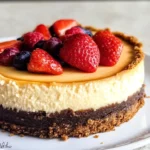
Ingredients
For the Nutty Almond Flour Crust:
The almond flour crust is what sets this cheesecake apart. It’s naturally gluten-free, adds a delightful nutty flavor, and provides a satisfyingly crumbly texture. Here’s what you’ll need to create the perfect base:
- 1 ½ cups blanched almond flour: Almond flour is the star of our crust. It’s made from blanched almonds that have had their skins removed and are then finely ground. Blanched almond flour is preferred over almond meal (which includes the skins) for a smoother texture and lighter color in the crust. Ensure you are using almond flour and not almond meal, as they are different and will affect the crust’s texture. If you are particularly sensitive to texture, you can sift the almond flour to remove any larger particles, although this is generally not necessary with finely ground blanched almond flour.
- ¼ cup granulated sweetener (or powdered sweetener for a smoother crust): Sweetness is essential for balancing the nutty flavor of the almond flour and complementing the cheesecake filling. You can use granulated sugar, but for an even smoother crust texture, powdered sweetener (like powdered sugar or a powdered sugar substitute) is recommended. Powdered sweetener dissolves more readily into the butter and almond flour, creating a more cohesive dough. If using granulated sweetener, ensure it is finely granulated for best results. For sugar-free options, you can use erythritol, xylitol, or stevia-based powdered sweeteners, adjusting the amount to your sweetness preference.
- 6 tablespoons unsalted butter, melted: Butter is the binding agent and adds richness and flavor to the crust. Unsalted butter is preferred so you can control the salt level in the crust. Melt the butter completely and allow it to cool slightly before mixing it with the almond flour and sweetener. This prevents the butter from cooking the sweetener and ensures even distribution throughout the crust mixture. If you are dairy-free, you can substitute with melted coconut oil or a vegan butter alternative, but butter provides the best flavor and texture for this crust.
- ¼ teaspoon salt: Salt is crucial for balancing the sweetness and enhancing the flavors of both the almond flour and the butter. It prevents the crust from tasting flat or one-dimensional. Use fine sea salt or table salt. If using kosher salt, you may need to use a slightly larger pinch as it is less dense than table salt.
For the Creamy Cheesecake Filling:
The filling is the heart of any cheesecake, and this recipe focuses on achieving a perfectly smooth, rich, and tangy filling that complements the almond flour crust beautifully. Here’s what you’ll need:
- 3 (8-ounce) packages full-fat cream cheese, softened to room temperature: Cream cheese is the foundation of our cheesecake filling, providing its signature creamy texture and tangy flavor. Full-fat cream cheese is essential for achieving a rich and decadent cheesecake. Reduced-fat cream cheese can be used, but it may result in a slightly less creamy texture. Ensure the cream cheese is fully softened to room temperature before mixing. This is crucial for a smooth, lump-free filling. Cold cream cheese will not incorporate properly and can lead to a grainy texture. You can speed up the softening process by cutting the cream cheese into smaller cubes and letting it sit at room temperature for about 30–60 minutes.
- 1 ½ cups granulated sweetener (or powdered sweetener for an extra smooth filling): Sweetness in the filling needs to be balanced with the tanginess of the cream cheese and other flavors. Similar to the crust, you can use granulated sugar, but powdered sweetener is highly recommended for an ultra-smooth cheesecake filling. Powdered sweetener dissolves seamlessly into the cream cheese, ensuring a silky texture. If using granulated sweetener, ensure it is finely granulated and beat it thoroughly with the cream cheese to minimize any graininess. Again, sugar-free powdered sweetener alternatives can be used as needed.
- 4 large eggs, room temperature: Eggs are essential for binding the cheesecake filling and providing structure and richness. Using room temperature eggs is important because they emulsify better into the batter, creating a smoother and more cohesive filling. Room temperature eggs also help to prevent the cheesecake from cracking during baking. If you forgot to take your eggs out of the refrigerator, you can quickly warm them by placing them in a bowl of warm (not hot) water for about 5-10 minutes.
- 1 teaspoon vanilla extract: Vanilla extract enhances the overall flavor profile of the cheesecake, adding warmth and depth. Use pure vanilla extract for the best flavor, avoiding imitation vanilla if possible. You can also experiment with vanilla bean paste for an even more intense vanilla flavor and visible vanilla bean specks in the cheesecake.
- 2 tablespoons lemon juice, freshly squeezed: Fresh lemon juice adds a crucial touch of brightness and tanginess that balances the richness of the cream cheese and sweetness of the sugar. Freshly squeezed lemon juice is always preferred over bottled lemon juice for its brighter and more vibrant flavor. The acidity of the lemon juice also helps to tenderize the cheesecake and prevent it from becoming too dense. You can adjust the amount of lemon juice to your preference, but 2 tablespoons is a good starting point for a balanced flavor.
- ½ cup heavy cream or sour cream (for added richness and tang): Adding heavy cream or sour cream enhances the creaminess and richness of the cheesecake filling. Heavy cream will result in a slightly richer and smoother cheesecake, while sour cream will add a subtle tang and slightly denser texture. You can choose whichever you prefer or even use a combination of both. Full-fat sour cream is recommended for the best flavor and texture. If using heavy cream, ensure it is cold before adding it to the filling.
- Optional: ¼ teaspoon almond extract (to enhance the almond flavor): To further enhance the almond flavor and complement the almond flour crust, you can add a touch of almond extract to the filling. Almond extract is potent, so use it sparingly – ¼ teaspoon is usually sufficient. If you are not a fan of almond extract, you can omit it without significantly altering the overall flavor of the cheesecake.
Instructions
- Preheat Oven and Prepare Pan: Preheat your oven to 350°F (175°C). Lightly grease a 9-inch springform pan. For easier removal and a neater presentation, line the bottom of the pan with parchment paper cut to fit the base. Greasing the sides helps the crust release easily.
- Combine Dry Ingredients: In a medium bowl, whisk together the almond flour, sweetener (granulated or powdered), and salt until well combined. This ensures even distribution of the sweetener and salt throughout the crust.
- Add Melted Butter: Pour the melted and slightly cooled butter into the dry ingredients. Stir with a fork until the mixture is evenly moistened and resembles damp sand. The mixture should hold together when you press it between your fingers.
- Press into Pan: Press the almond flour mixture evenly into the bottom of the prepared springform pan. Use the back of a spoon or the bottom of a measuring cup to firmly press the crust into an even layer. You can also bring the crust slightly up the sides of the pan if you prefer a higher crust edge, but this is optional.
- Pre-bake the Crust (Optional but Recommended): For a crispier crust, pre-bake it in the preheated oven for 8-10 minutes. Pre-baking helps to set the crust and prevent it from becoming soggy when the moist cheesecake filling is added. If you skip pre-baking, the crust will still be delicious, but may be slightly softer. After pre-baking, remove the crust from the oven and let it cool slightly while you prepare the filling.
Preparing the Creamy Cheesecake Filling:
The filling is where the magic happens, transforming simple ingredients into a rich and decadent cheesecake. Follow these steps for a smooth and creamy filling:
- Beat Cream Cheese and Sweetener: In a large bowl or the bowl of a stand mixer fitted with the paddle attachment, beat the softened cream cheese and sweetener (granulated or powdered) together on medium speed until completely smooth and creamy. This step is crucial for a lump-free filling. Scrape down the sides of the bowl as needed to ensure all the cream cheese is incorporated. Beat for at least 2-3 minutes until the mixture is light and fluffy.
- Incorporate Eggs One at a Time: Beat in the eggs one at a time, mixing until just combined after each addition. Do not overmix at this stage. Overmixing after adding eggs can incorporate too much air into the batter, which can lead to cracks on the surface of the cheesecake during baking. Mix each egg in just until it disappears into the batter.
- Add Flavorings: Stir in the vanilla extract, fresh lemon juice, and almond extract (if using). Mix until just combined.
- Add Heavy Cream or Sour Cream: Gently fold in the heavy cream or sour cream (or a combination of both) until just incorporated. Again, avoid overmixing. Folding gently helps to maintain the smooth texture of the batter.
- Pour Filling into Crust: Pour the prepared cheesecake filling evenly over the cooled almond flour crust in the springform pan. Smooth the top of the filling with a spatula if needed.
Baking and Cooling the Cheesecake:
Baking and cooling are critical steps for achieving a perfectly textured cheesecake without cracks. The water bath and slow cooling methods are essential for success.
- Prepare a Water Bath: A water bath is crucial for baking cheesecake evenly and preventing cracks. Wrap the bottom of your springform pan tightly with heavy-duty aluminum foil to prevent water from seeping into the crust. Place the wrapped springform pan inside a larger roasting pan.
- Add Hot Water to Roasting Pan: Carefully pour hot water into the roasting pan surrounding the springform pan, filling it about halfway up the sides of the cheesecake pan. The water bath creates a humid environment in the oven, which helps the cheesecake bake gently and evenly.
- Bake in Water Bath: Carefully transfer the roasting pan with the cheesecake and water bath to the preheated oven. Bake for 55-70 minutes, or until the cheesecake is set around the edges but still slightly jiggly in the center. The center should wobble slightly when you gently shake the pan. The baking time may vary depending on your oven, so check for doneness around 55 minutes and adjust accordingly.
- Turn Off Oven and Cool Gradually: Once the cheesecake is done, turn off the oven and leave the oven door slightly ajar (prop it open with a wooden spoon or oven mitt). Let the cheesecake cool in the oven with the door ajar for 1 hour. This slow cooling process helps to prevent cracks from forming as the cheesecake cools down.
- Remove from Oven and Water Bath: After 1 hour of cooling in the oven, remove the roasting pan with the cheesecake from the oven and carefully remove the springform pan from the water bath. Remove the aluminum foil from the bottom of the springform pan.
- Cool to Room Temperature: Let the cheesecake cool completely at room temperature on a wire rack. This will take about 2-3 hours.
- Chill in Refrigerator: Once cooled to room temperature, cover the cheesecake loosely with plastic wrap and refrigerate for at least 6 hours, or preferably overnight. Chilling is essential for the cheesecake to fully set and develop its signature creamy texture and flavor.
Nutrition
- Serving Size: one normal portion
- Calories: 400-450
- Sugar: 15-20 grams
- Sodium: 200-300 mg
- Fat: 30-35 grams
- Saturated Fat: 18-22 grams
- Carbohydrates: 20-25 grams
- Fiber: 2-3 grams
- Protein: 8-10 grams
- Cholesterol: 150-200 mg