
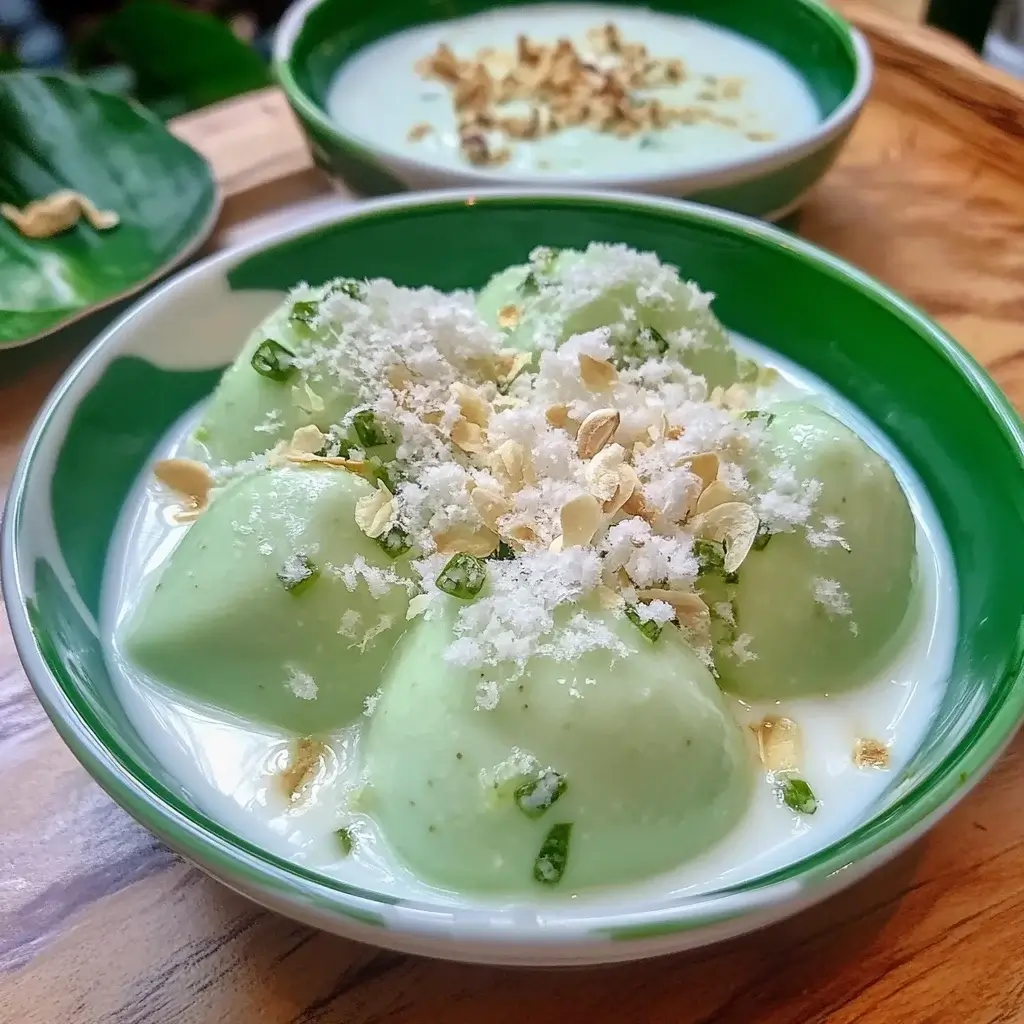

The first time I tasted Buko Pandan, I was at a Filipino friend’s family gathering, a vibrant fiesta of food and laughter. Amidst the savory delights, a strikingly green dessert in a large bowl caught my eye. It was creamy, dotted with translucent jelly cubes and shreds of young coconut. The aroma was intoxicating – a unique blend of sweet coconut and a fragrant, almost vanilla-like scent I couldn’t quite place. That first spoonful was pure, cool bliss. The combination of textures – the tender coconut, the chewy jelly, the rich cream – and that distinctive pandan flavour was unlike anything I’d had before. It was instantly refreshing and utterly addictive. I, of course, asked for the recipe, and since then, Buko Pandan has become a staple in my own home, especially during warm weather or when I want to bring a taste of tropical paradise to a potluck. My family adores its unique flavour and how surprisingly easy it is to whip up a batch that disappears in no time!
The Refreshing Allure of Buko Pandan: A Filipino Classic
Buko Pandan is a beloved Filipino dessert, a staple at parties, fiestas, and family gatherings. Its name directly translates to “young coconut” (buko) and “pandan” (the fragrant leaves of the Pandanus amaryllifolius plant). This no-bake dessert is celebrated for its vibrant green hue (naturally or enhanced), its delightful mix of textures, and its unique, refreshing flavour profile that perfectly captures the essence of tropical Southeast Asia.
At its core, Buko Pandan combines three key elements:
- Buko (Young Coconut): Tender, sweet shreds of young coconut meat provide a soft, subtly chewy texture and a delicate coconut flavour.
- Pandan-Flavored Jelly (Gulaman): Cubes of jelly, typically made from agar-agar (gulaman in Filipino), are infused with the distinctive aromatic flavour of pandan leaves. This gives the dessert its characteristic fragrance and often its green color.
- Creamy Sweet Sauce: A rich and sweet sauce, usually made with a combination of all-purpose cream (or heavy cream) and sweetened condensed milk, binds all the ingredients together, creating a luscious, indulgent base.
The magic of Buko Pandan lies in its simplicity and the harmonious interplay of these components. It’s cool, creamy, chewy, and fragrant all at once – a truly satisfying dessert that’s both comforting and exotic. While traditionally served chilled in a large bowl or individual cups, its popularity has led to various modern interpretations, including Buko Pandan ice cream, cakes, and even drinks.
Key Ingredients: The Heart of Buko Pandan’s Flavor
The authentic taste of Buko Pandan relies on a few key ingredients, each playing a vital role:
- Buko (Young Coconut):
- Fresh is Best: The ideal choice is fresh young coconut meat, which is tender, slightly sweet, and has a translucent white appearance. You can buy whole young coconuts (often called “Thai young coconuts”) and scrape the meat yourself. The coconut water can be reserved for another use or even incorporated into the jelly.
- Frozen Shredded Young Coconut: This is a convenient alternative found in the freezer section of Asian supermarkets. Thaw it completely and drain any excess water.
- Canned or Jarred Young Coconut Strips (Macapuno Strings): While not exactly the same, sweet macapuno strings (a variety of coconut with very soft, jelly-like flesh) can be used if fresh or frozen young coconut is unavailable. They will make the dessert sweeter. Ensure they are well-drained.
Avoid using mature, desiccated coconut as it will be too tough and dry.
- Pandan Leaves (Screwpine Leaves):
- The Source of Aroma: These long, blade-like green leaves are the heart of the dessert’s unique fragrance. They have a sweet, floral, slightly nutty, and vanilla-like aroma.
- Fresh or Frozen: Fresh pandan leaves are preferred for the most potent flavour. They can often be found in Asian markets. Frozen pandan leaves are a good alternative if fresh ones are unavailable; thaw before use.
- Pandan Extract/Essence/Flavoring: If fresh or frozen leaves are inaccessible, good quality pandan extract or essence can be used. However, the flavour might be slightly different or more artificial than using real leaves. Use sparingly as it can be quite concentrated. This is also often used to enhance the green color.
- Gulaman (Agar-Agar):
- The Jelly Maker: Agar-agar is a vegan gelatin substitute derived from seaweed. It sets more firmly than gelatin and can set at room temperature.
- Powdered or Bar Form: Powdered agar-agar is easier to measure and dissolves more readily. It usually comes in pre-measured sachets or small containers. Green-colored and pandan-flavored agar-agar powder is also commonly available, which simplifies the process. If using unflavored, clear agar-agar powder, you’ll rely on pandan leaves or extract for flavour and color. Agar-agar bars need to be shredded or cut and soaked before dissolving.
- Cream Components:
- All-Purpose Cream (Table Cream/Nestle Cream): This is a common ingredient in Filipino desserts. It’s a shelf-stable cream, often slightly thicker and less fatty than heavy whipping cream. Chilling it thoroughly before use is recommended.
- Heavy Cream or Whipping Cream: Can be used as a substitute for all-purpose cream for a richer result.
- Sweetened Condensed Milk: Provides sweetness and contributes to the creamy richness of the sauce. Adjust the amount to your preferred level of sweetness.
- Optional Additions for Texture and Flavor:
- Sago Pearls (Tapioca Pearls): Small, cooked sago pearls add another chewy texture. White or green ones can be used.
- Nata de Coco (Coconut Gel): Translucent, chewy cubes made from fermented coconut water. They come in various colours and add another layer of texture. Drain well.
- Kaong (Sugar Palm Fruit): Sweet, chewy, and often brightly colored (red, green, white) fruit from the sugar palm tree. Drain well.
Ingredients for Classic Buko Pandan Salad
This recipe yields a generous party-sized portion, serving approximately 8-12 people.
For the Pandan Jelly (Gulaman):
- 1 packet (approx. 25g or as per package instructions for 4-6 cups liquid) green agar-agar powder (preferably pandan-flavored, or use clear agar-agar with pandan flavoring/leaves)
- 4-6 cups water (or part young coconut water, if available, follow package instructions for liquid amount)
- 1/2 cup (100g) granulated sugar (adjust to taste, especially if agar-agar is unsweetened)
- 5-6 fresh or frozen pandan leaves, washed and tied into a knot (if using clear agar-agar)
- Optional: A few drops of green food coloring (if using clear agar-agar and want a more vibrant color)
- Optional: 1/2 teaspoon pandan extract (if not using fresh leaves or if agar-agar is unflavored)
For the Creamy Coconut Mixture:
- 2 cups shredded fresh young coconut meat (buko), or one 12-16 oz package frozen, thawed and drained
- 2 cans (approx. 250ml or 8.5 oz each) chilled all-purpose cream (Nestle cream is popular) OR 2 cups chilled heavy cream
- 1 can (14 oz / 397g) chilled sweetened condensed milk (adjust to taste)
- Optional: 1/2 cup small cooked sago pearls (tapioca pearls)
- Optional: 1/2 cup drained nata de coco (coconut gel), cubed
- Optional: 1/2 cup drained kaong (sugar palm fruit)
Equipment:
- Saucepan for jelly
- Shallow rectangular dish or pan (e.g., 9×13 inch) for setting the jelly
- Large mixing bowl
- Whisk
- Knife and cutting board
Step-by-Step Instructions to Buko Pandan Bliss
Follow these easy steps to create this refreshing Filipino favorite.
Part 1: Prepare the Pandan Jelly (Gulaman)
- Infuse Pandan Flavor (If using fresh leaves and clear agar-agar):
- If using fresh or frozen pandan leaves with clear agar-agar, combine the water (or coconut water blend) and the knotted pandan leaves in a saucepan.
- Bring to a boil, then reduce heat and simmer for 10-15 minutes to infuse the water with pandan aroma.
- Remove and discard the pandan leaves. Strain the pandan-infused water to remove any bits of leaves. Measure the liquid to ensure you still have the amount required by your agar-agar package (add more water if needed).
- Dissolve Agar-Agar and Sugar:
- In the saucepan with the pandan-infused water (or plain water if using pre-flavored agar-agar), add the agar-agar powder and granulated sugar.
- Whisk thoroughly to dissolve the powder and sugar completely before turning on the heat. This prevents lumps.
- Cook the Jelly:
- Bring the mixture to a rolling boil over medium heat, stirring constantly.
- Once boiling, continue to cook for 1-2 minutes (or as per package instructions), still stirring, to ensure the agar-agar is fully activated.
- If using pandan extract and/or green food coloring (with clear agar-agar), stir them in now, off the heat.
- Set the Jelly:
- Pour the hot agar-agar mixture into a shallow rectangular dish or pan (e.g., 9×13 inch). The thinner the layer, the faster it will set and the easier it will be to cut into small cubes.
- Let it cool at room temperature for about 30 minutes to an hour, or until it’s fully set and firm. Agar-agar can set without refrigeration, but chilling will speed up the process and make it firmer.
- Once set, you can cover and refrigerate it if you’re not using it immediately.
- Cut the Jelly:
- Once the jelly is firm, run a knife around the edges of the dish.
- Cut the jelly into small, uniform cubes (about ½-inch or 1 cm). Set aside.
Part 2: Prepare the Creamy Coconut Mixture and Assemble
- Prepare Buko (Young Coconut):
- If using fresh young coconuts, open them, reserve the water for another use, and scrape out the tender meat. Shred or cut it into bite-sized strips or pieces.
- If using frozen shredded young coconut, ensure it’s fully thawed and well-drained of any excess liquid.
- Combine Creamy Ingredients:
- In a very large mixing bowl, combine the chilled all-purpose cream (or heavy cream) and the chilled sweetened condensed milk. Whisk until well blended and smooth. Taste and adjust sweetness if necessary by adding more condensed milk (or a touch of sugar if preferred, though condensed milk is standard).
- Add Buko and Jelly:
- Gently add the shredded young coconut meat (buko) and the cubed pandan jelly (gulaman) to the cream mixture.
- Add Optional Ingredients (Sago, Nata de Coco, Kaong):
- If using, add the cooked sago pearls, drained nata de coco, and drained kaong.
- Mix Gently:
- Using a spatula, gently fold all the ingredients together until everything is well combined and evenly coated with the creamy sauce. Be careful not to break up the jelly cubes too much.
Part 3: Chill and Serve
- Chill Thoroughly:
- Cover the bowl with plastic wrap and refrigerate the Buko Pandan dessert for at least 2-4 hours, or preferably overnight. This allows the flavours to meld and the dessert to become thoroughly chilled, which is essential for the best taste and refreshing quality.
- Serve:
- Gently stir the Buko Pandan again just before serving.
- Serve chilled in individual bowls or cups. You can garnish with a sprig of mint or a tiny piece of pandan leaf if desired for presentation.
Nutritional Profile: A Refreshing Indulgence
- Servings: This recipe makes a large batch, serving approximately 8-12 people.
- Calories per serving (approximate, for a 1-cup serving): Around 250-400 calories.
Please note: Nutritional information is an estimate and can vary greatly depending on:
- The specific brands and types of cream and condensed milk used (fat content, sugar content).
- The amount of sugar added to the jelly.
- The inclusion and quantity of optional ingredients like sago, nata de coco, and kaong.
- The exact serving size.
- Key Contributors: Sweetened condensed milk (sugar, calories), all-purpose/heavy cream (fat, calories), and young coconut (natural sugars, fats).
- Agar-agar itself is very low in calories.
While Buko Pandan is undeniably a sweet and creamy dessert, the young coconut provides some fiber and nutrients. It’s a delightful treat to be enjoyed as part of a balanced diet.
Time Investment: Effort vs. Reward
Buko Pandan is relatively easy to make, with most of the time being inactive chilling.
- Pandan Jelly Preparation:
- Active prep (infusing, mixing, cooking): 20-30 minutes
- Setting time for jelly: 30-60 minutes at room temp, or faster if chilled (inactive)
- Cutting jelly: 5 minutes
- Creamy Mixture & Assembly: 10-15 minutes active
- Chilling Time for Final Dessert: Minimum 2-4 hours, preferably overnight (inactive)
Total Estimated Active Time: Approximately 40-50 minutes.
Total Estimated Time (from start to serving, including optimal chilling): At least 3-5 hours, but best if made a day ahead to allow for thorough chilling and flavour melding.
How to Serve Your Buko Pandan Masterpiece
Buko Pandan is typically served chilled, making it an incredibly refreshing dessert.
- Chilled in Bowls or Cups: The most common way is to serve it in individual dessert bowls or clear cups/glasses to showcase its attractive layers and colors.
- Large Serving Bowl: For parties and potlucks, it’s often presented in a large glass bowl from which guests can serve themselves.
- Garnishes (Optional):
- A small piece of pandan leaf or a sprig of fresh mint can add a nice touch of green.
- A tiny sprinkle of toasted desiccated coconut (use sparingly, as the focus is on fresh buko).
- A maraschino cherry for a pop of red (less traditional but sometimes seen).
- Temperature: Always serve it cold. Its refreshing quality is a huge part of its appeal.
- Occasions: Perfect for:
- Hot summer days.
- Fiestas, Noche Buena (Christmas Eve), and other Filipino celebrations.
- Potlucks and picnics (keep it chilled in a cooler).
- Any time you crave a light, creamy, and uniquely flavoured dessert.
Pro-Tips for Perfect Buko Pandan Every Time
Elevate your Buko Pandan game with these five expert tips:
- Use High-Quality Buko and Pandan: The flavour of fresh young coconut and real pandan leaves (or good quality extract) is unparalleled. If using frozen buko, ensure it’s well-drained to prevent the dessert from becoming watery.
- Don’t Overcrowd with Too Many Add-Ins: While sago, nata de coco, and kaong are lovely additions, be mindful not to add so many that they overwhelm the primary flavours of buko and pandan. The balance is key.
- Chill All Cream Components Thoroughly: Using well-chilled all-purpose cream and condensed milk helps the dessert set up nicely and contributes to its refreshing quality. Chilling the final mixture thoroughly is also crucial for flavour melding.
- Adjust Sweetness to Your Liking: The amount of sweetened condensed milk can be adjusted. Taste the cream mixture before adding all the solids and add more condensed milk if you prefer it sweeter. Remember that some optional add-ins like kaong or nata de coco might also be packed in syrup.
- Gentle Mixing is Key: When combining all the ingredients, especially the delicate jelly cubes and tender buko, fold them in gently to avoid mashing them. You want to maintain their distinct textures.
Buko Pandan FAQs: Your Questions Answered
Here are answers to some frequently asked questions about this Filipino dessert:
- Q: Can I make Buko Pandan ahead of time?
- A: Yes, absolutely! In fact, Buko Pandan is best made at least a few hours ahead, or even a day in advance. This allows the flavours to meld beautifully and the dessert to chill thoroughly. Store it covered in the refrigerator.
- Q: How long does Buko Pandan last in the refrigerator?
- A: When stored properly in an airtight container in the refrigerator, Buko Pandan should last for about 3-4 days. However, it’s at its freshest and best quality within the first 1-2 days. The texture of the buko might change slightly over longer periods.
- Q: What can I use if I can’t find fresh young coconut (buko)?
- A: Frozen shredded young coconut is the next best alternative and is widely available in Asian supermarkets. Thaw and drain it well. Canned young coconut strips or macapuno strings can also be used, but drain them thoroughly as they are often packed in syrup, which will make your dessert sweeter.
- Q: Can I use gelatin instead of agar-agar (gulaman) for the jelly?
- A: While you technically could, agar-agar (gulaman) is traditional and preferred for Buko Pandan for several reasons:
- Texture: Agar-agar gives a firmer, slightly more brittle jelly that holds its shape well when cubed. Gelatin produces a more wobbly, tender jelly.
- Setting Temperature: Agar-agar sets at room temperature, while gelatin requires refrigeration to set.
- Vegetarian/Vegan: Agar-agar is plant-based, making the jelly component suitable for vegetarians/vegans (the overall dessert becomes vegan if dairy-free creams and condensed milk are used).
If you must use gelatin, follow the package instructions carefully, and note the texture will be different.
- A: While you technically could, agar-agar (gulaman) is traditional and preferred for Buko Pandan for several reasons:
- Q: My Buko Pandan seems a bit watery. What went wrong?
- A: Wateriness can be caused by:
- Not draining ingredients properly: Ensure frozen buko, canned nata de coco, or kaong are well-drained of excess liquid or syrup.
- Jelly not set firmly enough: If the gulaman is too soft, it might release water.
- Using “light” cream or condensed milk alternatives with higher water content.
- Ratio of cream to other ingredients: If there’s not enough creamy base for the volume of solids.
Ensure everything is well-chilled, as this also helps it thicken.
- A: Wateriness can be caused by:
Buko Pandan is a truly special dessert that captures the vibrant flavours of the Philippines. It’s a delightful, refreshing treat that’s perfect for sharing with family and friends. Enjoy the process of making this tropical classic!
Print
Buko Pandan recipe
Ingredients
For the Pandan Jelly (Gulaman):
-
- 1 packet (approx. 25g or as per package instructions for 4-6 cups liquid) green agar-agar powder (preferably pandan-flavored, or use clear agar-agar with pandan flavoring/leaves)
-
- 4–6 cups water (or part young coconut water, if available, follow package instructions for liquid amount)
-
- 1/2 cup (100g) granulated sugar (adjust to taste, especially if agar-agar is unsweetened)
-
- 5–6 fresh or frozen pandan leaves, washed and tied into a knot (if using clear agar-agar)
-
- Optional: A few drops of green food coloring (if using clear agar-agar and want a more vibrant color)
-
- Optional: 1/2 teaspoon pandan extract (if not using fresh leaves or if agar-agar is unflavored)
For the Creamy Coconut Mixture:
-
- 2 cups shredded fresh young coconut meat (buko), or one 12-16 oz package frozen, thawed and drained
-
- 2 cans (approx. 250ml or 8.5 oz each) chilled all-purpose cream (Nestle cream is popular) OR 2 cups chilled heavy cream
-
- 1 can (14 oz / 397g) chilled sweetened condensed milk (adjust to taste)
-
- Optional: 1/2 cup small cooked sago pearls (tapioca pearls)
-
- Optional: 1/2 cup drained nata de coco (coconut gel), cubed
-
- Optional: 1/2 cup drained kaong (sugar palm fruit)
Instructions
Part 1: Prepare the Pandan Jelly (Gulaman)
-
- Infuse Pandan Flavor (If using fresh leaves and clear agar-agar):
-
- If using fresh or frozen pandan leaves with clear agar-agar, combine the water (or coconut water blend) and the knotted pandan leaves in a saucepan.
-
- Bring to a boil, then reduce heat and simmer for 10-15 minutes to infuse the water with pandan aroma.
-
- Remove and discard the pandan leaves. Strain the pandan-infused water to remove any bits of leaves. Measure the liquid to ensure you still have the amount required by your agar-agar package (add more water if needed).
-
- Infuse Pandan Flavor (If using fresh leaves and clear agar-agar):
-
- Dissolve Agar-Agar and Sugar:
-
- In the saucepan with the pandan-infused water (or plain water if using pre-flavored agar-agar), add the agar-agar powder and granulated sugar.
-
- Whisk thoroughly to dissolve the powder and sugar completely before turning on the heat. This prevents lumps.
-
- Dissolve Agar-Agar and Sugar:
-
- Cook the Jelly:
-
- Bring the mixture to a rolling boil over medium heat, stirring constantly.
-
- Once boiling, continue to cook for 1-2 minutes (or as per package instructions), still stirring, to ensure the agar-agar is fully activated.
-
- If using pandan extract and/or green food coloring (with clear agar-agar), stir them in now, off the heat.
-
- Cook the Jelly:
-
- Set the Jelly:
-
- Pour the hot agar-agar mixture into a shallow rectangular dish or pan (e.g., 9×13 inch). The thinner the layer, the faster it will set and the easier it will be to cut into small cubes.
-
- Let it cool at room temperature for about 30 minutes to an hour, or until it’s fully set and firm. Agar-agar can set without refrigeration, but chilling will speed up the process and make it firmer.
-
- Once set, you can cover and refrigerate it if you’re not using it immediately.
-
- Set the Jelly:
-
- Cut the Jelly:
-
- Once the jelly is firm, run a knife around the edges of the dish.
-
- Cut the jelly into small, uniform cubes (about ½-inch or 1 cm). Set aside.
-
- Cut the Jelly:
Part 2: Prepare the Creamy Coconut Mixture and Assemble
-
- Prepare Buko (Young Coconut):
-
- If using fresh young coconuts, open them, reserve the water for another use, and scrape out the tender meat. Shred or cut it into bite-sized strips or pieces.
-
- If using frozen shredded young coconut, ensure it’s fully thawed and well-drained of any excess liquid.
-
- Prepare Buko (Young Coconut):
-
- Combine Creamy Ingredients:
-
- In a very large mixing bowl, combine the chilled all-purpose cream (or heavy cream) and the chilled sweetened condensed milk. Whisk until well blended and smooth. Taste and adjust sweetness if necessary by adding more condensed milk (or a touch of sugar if preferred, though condensed milk is standard).
-
- Combine Creamy Ingredients:
-
- Add Buko and Jelly:
-
- Gently add the shredded young coconut meat (buko) and the cubed pandan jelly (gulaman) to the cream mixture.
-
- Add Buko and Jelly:
-
- Add Optional Ingredients (Sago, Nata de Coco, Kaong):
-
- If using, add the cooked sago pearls, drained nata de coco, and drained kaong.
-
- Add Optional Ingredients (Sago, Nata de Coco, Kaong):
-
- Mix Gently:
-
- Using a spatula, gently fold all the ingredients together until everything is well combined and evenly coated with the creamy sauce. Be careful not to break up the jelly cubes too much.
-
- Mix Gently:
Part 3: Chill and Serve
-
- Chill Thoroughly:
-
- Cover the bowl with plastic wrap and refrigerate the Buko Pandan dessert for at least 2-4 hours, or preferably overnight. This allows the flavours to meld and the dessert to become thoroughly chilled, which is essential for the best taste and refreshing quality.
-
- Chill Thoroughly:
-
- Serve:
-
- Gently stir the Buko Pandan again just before serving.
-
- Serve chilled in individual bowls or cups. You can garnish with a sprig of mint or a tiny piece of pandan leaf if desired for presentation.
-
- Serve:
Nutrition
- Serving Size: one normal portion
- Calories: 250-400