
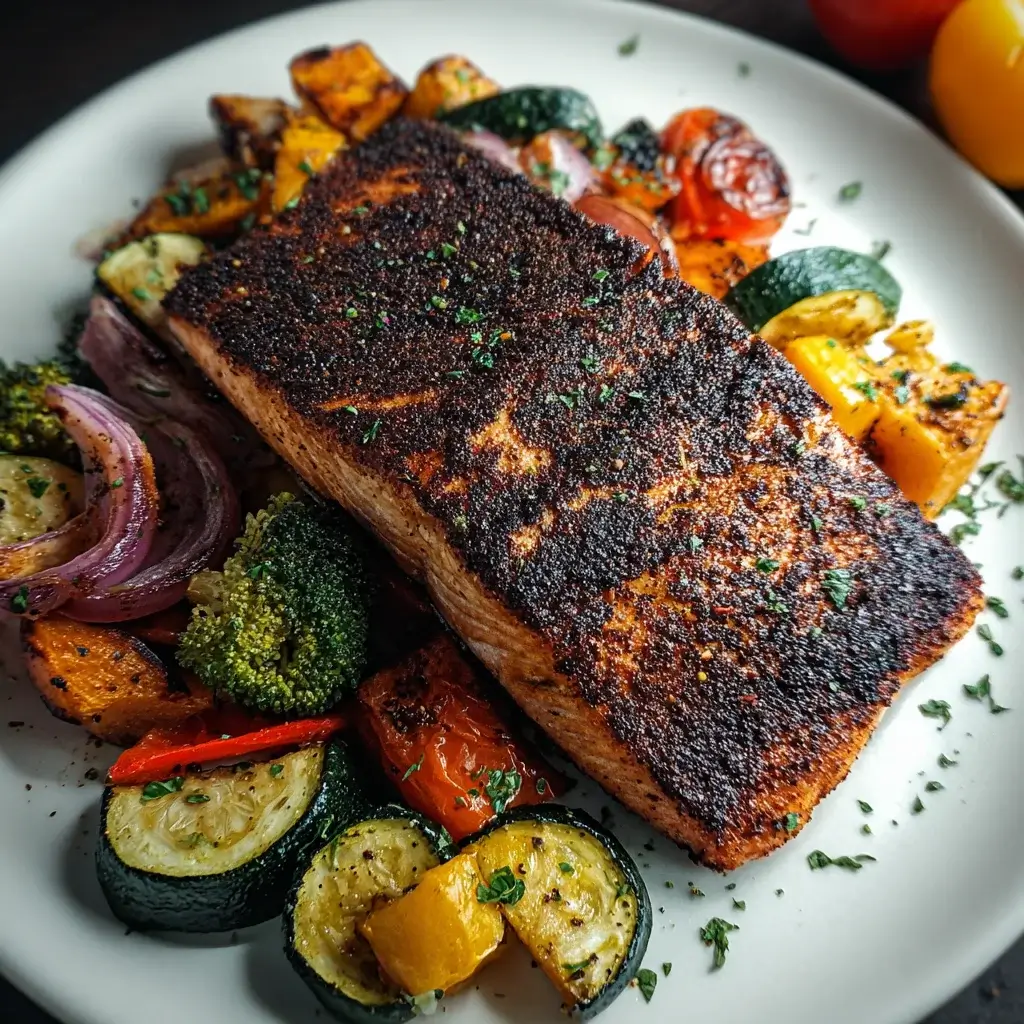

The aroma that filled our kitchen the first time I prepared Blackened Salmon with Charred Vegetables was nothing short of intoxicating. It was a symphony of smoky, savory, and subtly sweet notes, a prelude to the culinary masterpiece that awaited us. My usually picky eaters, including my notoriously vegetable-averse son, were drawn to the table by the sheer power of the scent. As I plated the perfectly seared, spice-crusted salmon alongside the vibrant, tender-crisp vegetables, I could see their curiosity turn into eagerness. The first bite was met with delighted murmurs – the salmon flaky and moist on the inside, with that incredible, bold crust, perfectly contrasted by the naturally sweet and slightly smoky charred vegetables. My husband declared it his new favorite weeknight meal, and even my son, after a moment of initial skepticism, admitted, “This is actually really good, Mom!” It was more than just a meal; it was an experience, a family moment centered around healthy, incredibly flavorful food that felt indulgent yet surprisingly easy to prepare. Since then, Blackened Salmon with Charred Vegetables has become a beloved staple in our household, a go-to when we crave something nutritious, packed with flavor, and satisfying for everyone.
Blackened Salmon with Charred Vegetables: A Culinary Masterpiece for Your Dinner Table
In the vast and varied world of culinary delights, few dishes strike the perfect balance between robust flavor, exceptional nutrition, and effortless preparation quite like Blackened Salmon with Charred Vegetables. This isn’t just a recipe; it’s a gastronomic experience that transports your taste buds to the vibrant, spice-laden kitchens of the American South while embracing the wholesome goodness of garden-fresh produce. Imagine tender, flaky salmon fillets, generously coated in a potent, fiery blackening seasoning, seared to perfection in a scorching hot pan, developing an irresistibly crusty exterior that locks in moisture and amplifies flavor. Beside it, an array of colorful, nutrient-rich vegetables, kissed by high heat, transforming their natural sugars into smoky, sweet caramelization, adding depth and a delightful textural contrast. This dish is a celebration of simple ingredients elevated through clever cooking techniques, resulting in a meal that is both profoundly satisfying and remarkably healthy. Whether you’re a seasoned chef looking for a weeknight triumph or a novice cook eager to impress, this recipe offers a foolproof path to culinary excellence.
The Allure of Blackened Salmon: A Deep Dive into Flavor and Technique
Blackening is not just a cooking method; it’s an art form, a dramatic culinary transformation that imbues food with an unparalleled depth of flavor and a unique textural profile. Originating in the Cajun and Creole traditions of Louisiana, this technique involves searing fish or meat, often coated in a robust spice blend, in an extremely hot, typically cast-iron skillet, until a dark, flavorful crust forms. Contrary to popular misconception, “blackened” doesn’t mean “burnt.” Instead, it refers to the deep, almost ebony crust that develops as the spices toast and caramelize under intense heat, creating a complex tapestry of savory, spicy, and smoky notes. This Maillard reaction, a chemical process responsible for the browning and flavor development in many foods, is amplified by the high temperatures, resulting in that distinctive, rich crust that is the hallmark of blackened dishes.
Salmon, with its rich, buttery flesh and natural oil content, is an ideal candidate for blackening. The intense heat quickly forms the crust, protecting the delicate interior and ensuring it remains incredibly moist and tender. The high fat content of salmon also contributes to a more pronounced sizzle and a richer blackening process, enhancing the overall flavor. Beyond its delightful taste and texture, salmon is a nutritional powerhouse. It’s renowned for being one of the best sources of omega-3 fatty acids, particularly EPA and DHA, which are crucial for heart health, brain function, and reducing inflammation. Furthermore, salmon is an excellent source of high-quality protein, essential for muscle repair and growth, and is packed with vital vitamins and minerals, including Vitamin D, B12, selenium, and potassium. Incorporating blackened salmon into your diet means not only indulging in a delicious meal but also nourishing your body with an abundance of beneficial nutrients, supporting overall well-being and vitality. The boldness of the blackening seasoning perfectly complements the richness of the salmon, creating a symphony of flavors that is both exhilarating and deeply satisfying.
The Perfect Complement: Charred Vegetables – Unlocking Sweetness and Depth
While the blackened salmon takes center stage with its fiery personality, the charred vegetables are far more than just a supporting act; they are an indispensable component that completes the dish, adding balance, freshness, and an exquisite depth of flavor. Charring vegetables, whether in a hot pan, on a grill, or in a high-temperature oven, works wonders by transforming their natural sugars through caramelization. This process not only brings out an inherent sweetness that might otherwise remain hidden but also imparts a desirable smoky note and a slightly crispy texture to the edges, creating a captivating contrast to the tender interior. Unlike boiling or steaming, which can sometimes leach out flavors and nutrients, charring concentrates the flavors and creates a more robust, appealing profile. The slightly bitter char provides a perfect foil to the richness of the salmon, preventing the meal from feeling heavy and ensuring a harmonious balance on the palate.
Beyond their exceptional taste and texture, charred vegetables are a boon for your health. They are packed with dietary fiber, which aids digestion, promotes satiety, and helps regulate blood sugar levels. Each vegetable brings its unique cocktail of vitamins, minerals, and antioxidants to the table. For instance, bell peppers are bursting with Vitamin C, essential for immune function; broccoli offers Vitamin K and a host of anti-cancer compounds; zucchini provides hydration and a good source of Vitamin B6; and cherry tomatoes are rich in lycopene, a powerful antioxidant. By charring a variety of colorful vegetables, you’re not just creating a visually appealing plate; you’re also ensuring a diverse intake of micronutrients, bolstering your body’s defenses and promoting long-term health. The beauty of charred vegetables lies in their versatility. Almost any firm vegetable can be charred, allowing you to adapt the recipe to seasonal availability, personal preference, or what you have on hand, ensuring that your Blackened Salmon with Charred Vegetables is always fresh, vibrant, and uniquely yours. The smoky, sweet notes from the charring process add an irresistible layer of complexity that elevates the entire meal from simple components to a cohesive, gourmet experience.
Unleashing Flavor: Ingredients You’ll Need for Blackened Salmon with Charred Vegetables
Crafting this culinary masterpiece requires a selection of fresh, high-quality ingredients, each playing a crucial role in the symphony of flavors and textures. The beauty of this recipe lies in its simplicity and the ability of a few key components to create something truly extraordinary. Sourcing fresh ingredients is paramount, as their inherent quality directly impacts the final taste and nutritional value of your dish.
Here’s a detailed breakdown of the ingredients, complete with specific amounts, and important considerations for each:
- For the Blackened Salmon:
- Salmon Fillets: 4 portions, 6 oz (approximately 170g) each, skin on or off (skin on often yields a crispier result if desired, but skinless is perfectly fine).
- Selection Tip: Look for firm, moist, bright pink flesh with no discoloration or strong “fishy” odor. Wild-caught salmon (like Alaskan Sockeye or King Salmon) often has a richer flavor and higher omega-3 content, but responsibly farmed salmon is also an excellent choice. Ensure the fillets are roughly uniform in thickness for even cooking.
- Olive Oil: 2 tablespoons (30ml), divided (1 tablespoon for seasoning, 1 tablespoon for the pan).
- Selection Tip: Use a good quality extra virgin olive oil for its flavor and heat stability, especially for coating the salmon.
- Blackening Seasoning: 3-4 tablespoons (45-60ml), divided.
- Homemade is highly recommended for freshness and customizable heat! Here’s a robust blend:
- 2 tablespoons Smoked Paprika (adds depth and color)
- 1 tablespoon Garlic Powder (for savory punch)
- 1 tablespoon Onion Powder (adds umami)
- 1.5 teaspoons Dried Thyme (earthy, aromatic)
- 1.5 teaspoons Dried Oregano (classic Mediterranean/Cajun note)
- 1 teaspoon Cayenne Pepper (adjust to your spice preference; use 0.5 tsp for mild, 2 tsp for extra hot)
- 1 teaspoon Sea Salt (fine grain for even distribution)
- 0.5 teaspoon Freshly Ground Black Pepper (adds sharpness)
- Preparation Tip: Whisk all spices together in a small bowl until thoroughly combined. Store any excess in an airtight container for future use. This blend ensures maximum flavor penetration and a beautiful dark crust.
- Homemade is highly recommended for freshness and customizable heat! Here’s a robust blend:
- Salmon Fillets: 4 portions, 6 oz (approximately 170g) each, skin on or off (skin on often yields a crispier result if desired, but skinless is perfectly fine).
- For the Charred Vegetables:
- Broccoli Florets: 3 cups (about 300g), cut into bite-sized pieces.
- Selection Tip: Choose broccoli with tight, dark green florets and firm stems.
- Bell Peppers: 2 large (e.g., 1 red, 1 yellow), cored, deseeded, and cut into 1-inch strips or chunks.
- Selection Tip: Look for firm, brightly colored peppers with smooth, unblemished skin. Red, yellow, and orange peppers are sweeter than green.
- Zucchini: 1 large (about 250g), sliced into ½-inch thick rounds or half-moons.
- Selection Tip: Choose firm, unblemished zucchini without soft spots.
- Cherry Tomatoes: 1 pint (about 300g), left whole or halved if very large.
- Selection Tip: Opt for firm, brightly colored tomatoes that are sweet and juicy.
- Red Onion: 1 small, peeled and cut into ½-inch thick wedges.
- Selection Tip: Choose firm onions with dry, papery skins. Red onions add a lovely color and a milder, sweeter flavor when roasted.
- Olive Oil: 2 tablespoons (30ml).
- Selection Tip: A good quality everyday olive oil is perfect for roasting vegetables, ensuring they cook evenly and brown nicely.
- Salt: 1 teaspoon (5ml), or to taste.
- Black Pepper: 0.5 teaspoon (2.5ml), or to taste.
- Garlic Powder: 1 teaspoon (5ml). (Optional, but enhances flavor).
- Broccoli Florets: 3 cups (about 300g), cut into bite-sized pieces.
- For Serving & Garnish (Optional but Recommended):
- Fresh Lemon Wedges: 2-3 lemons, cut into wedges.
- Function: A squeeze of fresh lemon juice brightens the entire dish, cutting through the richness of the salmon and enhancing the flavors of the vegetables.
- Fresh Parsley or Cilantro: A handful, finely chopped.
- Function: Adds a burst of freshness, color, and aromatic complexity.
- Fresh Lemon Wedges: 2-3 lemons, cut into wedges.
Ensuring you have all these ingredients prepped and ready before you begin cooking is key to a smooth and enjoyable culinary process. The careful selection of each component contributes not only to the dish’s nutritional value but also to its ultimate success in terms of flavor and presentation.
Mastering the Art: Step-by-Step Instructions for Blackened Salmon with Charred Vegetables
Creating this dish is a two-part process that, while requiring a bit of coordination, is surprisingly straightforward and incredibly rewarding. The key to perfection lies in proper preparation, high heat, and not overcrowding your cooking surfaces. Follow these detailed steps to achieve perfectly blackened salmon and beautifully charred vegetables every time.
Part 1: Preparing the Charred Vegetables (Oven Roasting)
- Preheat Your Oven: Position an oven rack in the middle of your oven. Preheat your oven to a high temperature, 425°F (220°C). High heat is crucial for achieving that desirable char and tender-crisp texture. While the oven preheats, you can begin prepping your vegetables.
- Prepare the Vegetables: Wash and thoroughly dry all your chosen vegetables. This step is vital because excess moisture can lead to steaming instead of charring. Cut the broccoli into uniform florets, the bell peppers into 1-inch strips or chunks, the zucchini into ½-inch rounds or half-moons, the red onion into ½-inch wedges, and leave the cherry tomatoes whole or halve them if exceptionally large. Ensure all pieces are roughly similar in size to promote even cooking.
- Season the Vegetables: In a large mixing bowl, combine all the prepped vegetables. Drizzle with 2 tablespoons of olive oil. Sprinkle with 1 teaspoon of salt, 0.5 teaspoon of black pepper, and 1 teaspoon of garlic powder (if using). Toss thoroughly with your hands or a large spoon until all the vegetables are lightly and evenly coated with oil and seasoning.
- Arrange on Baking Sheets: Divide the seasoned vegetables evenly between one or two large baking sheets. It’s critical not to overcrowd the baking sheets. Vegetables need space to allow air circulation and direct contact with the hot metal, which facilitates charring. If the pan is too full, the vegetables will steam and become soggy rather than charring. Use two sheets if necessary, rotating them halfway through cooking.
- Roast the Vegetables: Place the baking sheets in the preheated oven. Roast for 20-30 minutes, stirring or flipping the vegetables halfway through (around the 10-15 minute mark). The exact cooking time will depend on the density of your vegetables and your oven’s calibration. Look for tender vegetables with browned, slightly crispy, and visibly charred edges. The cherry tomatoes will burst and become juicy, and the bell peppers and onions will soften and sweeten. Once done, remove from the oven and set aside while you prepare the salmon.
Part 2: Preparing the Blackened Salmon (Stovetop)
- Prepare the Salmon: Pat the salmon fillets very thoroughly dry with paper towels. This is a crucial step for achieving a proper crust. Excess moisture on the surface will inhibit the blackening process and can cause the salmon to stick. If the skin is on, you can score it lightly a few times with a sharp knife to prevent curling.
- Season the Salmon: In a shallow dish or on a plate, pour the pre-mixed blackening seasoning. Drizzle the salmon fillets with 1 tablespoon of olive oil, ensuring they are lightly coated. Then, generously dredge each side of the salmon fillets in the blackening seasoning, pressing lightly to ensure a thick, even coating. You want a dark, uniform layer of spices.
- Heat the Skillet: Place a heavy-bottomed skillet, preferably cast iron, over high heat. Allow the skillet to heat up for 3-5 minutes until it is smoking hot. A properly heated pan is essential for the blackening effect. Cast iron is preferred because it retains heat exceptionally well, ensuring a consistent high temperature.
- Safety Note: Blackening produces a fair amount of smoke. Ensure your kitchen is well-ventilated. Turn on your range hood to its highest setting, open windows, and consider a fan if needed.
- Sear the Salmon: Add the remaining 1 tablespoon of olive oil to the smoking hot skillet. Swirl to coat the bottom. Carefully place the seasoned salmon fillets, skin-side down (if applicable), into the hot skillet. Do not overcrowd the pan; cook in batches if necessary. Overcrowding will lower the pan temperature and result in steaming rather than blackening.
- Cook the Salmon:
- Sear for 2-4 minutes per side, depending on the thickness of your fillets and your desired doneness.
- For a medium-rare to medium internal temperature (around 125-135°F or 52-57°C), cook thicker fillets closer to 4 minutes per side, thinner ones closer to 2-3 minutes. The exterior should be deeply crusted and almost black, while the interior remains moist and flaky.
- Use a spatula to gently flip the salmon to the other side and sear for an additional 2-4 minutes.
- Doneness Check: You can check for doneness by gently flaking the salmon with a fork. It should flake easily, and the center should still be slightly translucent for medium, or opaque for well-done. An instant-read thermometer inserted into the thickest part of the fillet should read 145°F (63°C) for food safety, though many prefer salmon cooked to a slightly lower temperature for optimal moistness.
- Rest the Salmon: Once cooked, immediately remove the salmon from the skillet and transfer it to a plate. Let it rest for 2-3 minutes. This allows the juices to redistribute, ensuring a more tender and flavorful fillet.
Part 3: Assembly and Serving
- Combine and Garnish: Arrange the perfectly blackened salmon fillets on individual plates alongside the vibrant, charred vegetables.
- Final Touches: Squeeze fresh lemon wedges generously over both the salmon and vegetables. The bright acidity of the lemon cuts through the richness and spice, elevating the entire dish. Garnish with a sprinkle of fresh chopped parsley or cilantro for added freshness and visual appeal.
- Serve Immediately: This dish is best enjoyed fresh, when the salmon is still warm and flaky, and the vegetables retain their tender-crisp texture and smoky sweetness.
Following these detailed instructions will guide you to a restaurant-quality meal that is both impressive and deeply satisfying. The harmony between the bold, spicy salmon and the sweet, smoky vegetables creates a truly unforgettable dining experience.
Nutritional Powerhouse: Understanding the Health Benefits of Your Meal
Blackened Salmon with Charred Vegetables is more than just a delicious meal; it’s a nutritional powerhouse, carefully crafted to deliver a wealth of health benefits in every bite. While exact nutritional values can vary slightly based on specific ingredient brands, cooking methods, and portion sizes, the following estimates provide a general idea of the impressive nutritional profile of this dish. These calculations are based on the ingredient amounts specified for 4 servings.
Estimated Nutrition Facts (Per Serving):
- Servings: 4
- Calories: Approximately 450-550 kcal
- Protein: 35-40g
- Total Fat: 25-35g (includes healthy fats from salmon and olive oil)
- Saturated Fat: 4-6g
- Monounsaturated Fat: 12-18g (from olive oil, beneficial for heart health)
- Polyunsaturated Fat: 6-10g (rich in Omega-3s from salmon)
- Carbohydrates: 15-20g (primarily from vegetables)
- Dietary Fiber: 5-7g (excellent source from vegetables)
- Sugars: 5-8g (natural sugars from vegetables, minimal added sugars)
- Cholesterol: 100-120mg
- Sodium: 600-800mg (can be adjusted by controlling added salt and seasoning blend)
Key Health Benefits:
- Abundant Omega-3 Fatty Acids: Salmon is one of nature’s best sources of EPA and DHA, crucial for heart health, reducing inflammation, supporting brain function, and even promoting healthy skin and hair. These essential fats are vital for overall well-being and are often lacking in typical Western diets.
- High-Quality Protein: With a significant protein content per serving, this meal supports muscle growth and repair, aids in satiety (keeping you feeling full longer), and is essential for countless bodily functions, from enzyme production to immune response.
- Rich in Vitamins and Minerals:
- Vitamin D: Salmon is one of the few natural dietary sources of Vitamin D, important for bone health, immune function, and mood regulation.
- B Vitamins: Salmon and vegetables provide a spectrum of B vitamins (B12, B6, niacin, folate), vital for energy metabolism, nerve function, and red blood cell formation.
- Vitamin C: Abundant in bell peppers and broccoli, Vitamin C is a powerful antioxidant that supports the immune system, collagen production, and iron absorption.
- Vitamin K: Found in broccoli, Vitamin K is essential for blood clotting and bone health.
- Potassium: Vegetables like broccoli and potatoes (if added) contribute potassium, important for blood pressure regulation and fluid balance.
- Selenium: Salmon is rich in selenium, an essential trace mineral with antioxidant properties, supporting thyroid function and immune health.
- Excellent Source of Dietary Fiber: The generous portion of charred vegetables provides ample dietary fiber, which promotes digestive health, helps regulate blood sugar levels, and contributes to a feeling of fullness, aiding in weight management.
- Antioxidant Powerhouse: The vibrant array of vegetables (bell peppers, cherry tomatoes, broccoli) combined with the spices in the blackening seasoning are rich in various antioxidants. These compounds help combat oxidative stress in the body, protecting cells from damage caused by free radicals and potentially reducing the risk of chronic diseases.
- Supports Various Dietary Lifestyles: This recipe is inherently gluten-free, dairy-free, and fits well into popular eating patterns such as Mediterranean, Paleo, and Keto (if carb intake from specific vegetables is monitored). It’s a fantastic option for anyone seeking a clean, whole-foods-based meal.
By choosing Blackened Salmon with Charred Vegetables, you’re not just enjoying a delightful meal; you’re actively investing in your health, providing your body with the essential nutrients it needs to thrive.
Time-Efficient Excellence: Preparation and Cooking Durations
One of the many appealing aspects of Blackened Salmon with Charred Vegetables, especially for busy individuals or families, is its relatively quick preparation and cooking time, making it an ideal candidate for a weeknight dinner that feels far more elaborate than it is. While the dish delivers gourmet-level flavor and presentation, the actual hands-on time is surprisingly minimal.
Here’s an estimated breakdown of the time required:
- Preparation Time: 15-20 minutes
- This includes washing and chopping all the vegetables, drying the salmon, preparing the blackening seasoning (if making from scratch), and seasoning both the vegetables and salmon. Efficient knife skills can shave off a few minutes here.
- Cooking Time: 25-35 minutes
- Vegetables: 20-30 minutes (roasting time in the oven, including one flip/stir).
- Salmon: 4-8 minutes (searing time on the stovetop, depending on thickness and desired doneness).
- Note: While the total cooking time is about 25-35 minutes, the salmon and vegetables cook concurrently for a portion of this, which minimizes the overall waiting time. The salmon is usually cooked in the last few minutes while the vegetables finish roasting.
- Resting Time (Salmon): 2-3 minutes
- Essential for juicy, tender salmon.
- Total Time: Approximately 45-60 minutes from start to plate.
Tips for Maximizing Time Efficiency:
- Pre-Prepping Vegetables: If you’re short on time during the week, you can wash and chop your vegetables a day or two in advance and store them in airtight containers in the refrigerator. This cuts down the “on-the-day” prep time significantly.
- Homemade Seasoning in Bulk: Prepare a larger batch of blackening seasoning and store it in an airtight jar. This way, it’s always ready to go for this recipe or other blackened dishes, saving you the 5-7 minutes of measuring and mixing each time.
- Use a Large Oven: If you have a larger oven, ensure you can fit two baking sheets at once without them touching. This allows you to cook all the vegetables simultaneously without overcrowding.
- Simultaneous Cooking: Start your vegetables roasting first, as they take longer. While they are in the oven, you can prepare and season your salmon. By the time the vegetables are nearing completion, your skillet will be hot and ready for the salmon. This overlapping method is key to getting dinner on the table quickly.
- Clean As You Go: While the vegetables are roasting and the salmon is searing, quickly wash any used bowls and utensils. This streamlines cleanup and makes the entire cooking process feel less overwhelming.
This recipe is perfectly designed for a busy weeknight. Its efficiency means you can enjoy a wholesome, flavorful, and satisfying meal without spending hours in the kitchen, proving that healthy, delicious eating doesn’t have to be a time-consuming affair.
Elevating the Experience: How to Serve Your Blackened Salmon with Charred Vegetables
While Blackened Salmon with Charred Vegetables is a complete and satisfying meal on its own, its versatility allows for numerous serving suggestions that can elevate the experience, adapting it to different occasions, palates, or hunger levels. The rich, spicy salmon and the sweet, smoky vegetables create a harmonious base that pairs beautifully with a variety of accompaniments.
Here are some creative and delicious ways to serve your Blackened Salmon with Charred Vegetables:
- As a Standalone Masterpiece:
- Simply plate the blackened salmon alongside a generous portion of the colorful charred vegetables. A fresh lemon wedge is absolutely essential for a squeeze of bright acidity that cuts through the richness and enhances the flavors. A sprinkle of fresh herbs like parsley or cilantro adds a final flourish of color and aroma. This is perfect for a lighter, carb-conscious meal.
- Paired with Wholesome Grains:
- Quinoa: A fluffy, protein-rich grain that absorbs flavors beautifully. Cooked quinoa makes an excellent bed for the salmon and vegetables, adding substance and a complete protein profile.
- Brown Rice or Wild Rice: Offers a nutty flavor and chewy texture that complements the dish well. These whole grains provide complex carbohydrates for sustained energy.
- Couscous: For a quicker option, instant couscous can be prepared in minutes and offers a light, fluffy texture that pairs well with the bold flavors. Consider flavoring the couscous with vegetable broth instead of water for extra depth.
- Layered with Fresh Salads:
- Simple Green Salad: A light, crisp mixed green salad with a simple vinaigrette (lemon-herb or a light balsamic) provides a refreshing counterpoint to the cooked elements.
- Avocado Salad: Diced avocado, red onion, cherry tomatoes, and a squeeze of lime juice create a creamy, zesty side that balances the spice of the salmon and adds healthy fats.
- Cucumber Dill Salad: Thinly sliced cucumbers with fresh dill, a touch of Greek yogurt or sour cream, and a squeeze of lemon juice offer a cool, tangy contrast.
- Complemented by Creamy Sauces or Dips:
- Creamy Dill Sauce: A simple sauce made from Greek yogurt or sour cream, fresh dill, lemon juice, salt, and pepper can add a cooling, tangy element that works wonderfully with salmon.
- Sriracha Mayo: For those who love an extra kick, a quick mix of mayonnaise and sriracha creates a spicy, creamy drizzle.
- Lemon-Herb Butter Sauce: Melted butter infused with fresh lemon juice, garlic, and your favorite herbs (like thyme or oregano) can be drizzled over the salmon just before serving for an extra layer of richness and flavor.
- Creative Presentation Ideas:
- Deconstructed Bowl: Serve the salmon, vegetables, and your chosen grain in a large bowl, allowing for easy mixing and a casual, contemporary feel.
- Sheet Pan Dinner (Modified): If you’re using a single sheet pan for both, you can serve directly from the pan for a rustic, family-style presentation.
- Individual Servings: For a more formal presentation, arrange a salmon fillet neatly on one side of the plate, with the charred vegetables artfully arranged beside it. Add your chosen grain or salad on the other side, and finish with garnishes.
- Beverage Pairings:
- Wine: A crisp Sauvignon Blanc or a light-bodied Pinot Noir can beautifully complement the salmon. For those who prefer something slightly richer, an unoaked Chardonnay might also work.
- Non-Alcoholic: Freshly brewed unsweetened iced tea, sparkling water with lemon and mint, or a light ginger ale can be refreshing choices.
No matter how you choose to serve it, Blackened Salmon with Charred Vegetables promises a vibrant, flavorful, and satisfying meal that caters to both health-conscious eaters and those simply seeking an extraordinary culinary experience.
Expert Tips for Blackened Salmon with Charred Vegetables Perfection
Achieving consistently perfect Blackened Salmon with Charred Vegetables goes beyond simply following the recipe. It involves understanding the nuances of the ingredients and techniques. These five expert tips will help you elevate your dish from good to absolutely unforgettable, ensuring maximum flavor, ideal texture, and a truly impressive result.
- The Right Pan and Extreme Heat are Non-Negotiable (for Blackening):
- Why it matters: Blackening isn’t just about cooking; it’s about creating a crust through intense, rapid heat. A thin stainless steel pan won’t cut it. A heavy-bottomed cast-iron skillet is the undisputed champion here. Cast iron retains and distributes heat incredibly well, allowing the pan to get smoking hot and stay that way even when the salmon is added.
- How to achieve it: Place your cast-iron skillet on your stove’s largest burner over high heat. Let it preheat for a solid 5-7 minutes until it’s visibly smoking. This ultra-hot surface is what instantly sears the seasoning onto the fish, creating that signature dark, flavorful crust without overcooking the interior.
- Pro-Tip: Ensure your kitchen is well-ventilated. Open windows, turn on your range hood to max, and don’t be alarmed by the smoke – it’s a sign you’re doing it right!
- Pat Salmon Dry, Then Season Liberally:
- Why it matters: Moisture is the enemy of a good crust. If the salmon surface is wet, the heat will first evaporate the water, then steam the fish, before it can even begin to blacken. This results in a soggy, pale crust instead of the desired dark, crisp one. Furthermore, a generous application of seasoning is crucial for flavor.
- How to achieve it: Before applying any oil or seasoning, thoroughly pat each salmon fillet dry with paper towels on all sides. Get it as dry as possible. Then, once dry, lightly coat the salmon with a tiny bit of olive oil (just enough for the seasoning to stick) and then dredge it very liberally in your blackening seasoning. Don’t be shy; the seasoning is what creates the “blackened” effect and imparts the majority of the flavor. Press the seasoning gently into the fish to ensure it adheres well.
- Don’t Overcrowd the Pan (Both Salmon and Veggies):
- Why it matters: This is a common mistake that sabotages both the charring of vegetables and the blackening of salmon. When you overcrowd a pan or baking sheet, you lower the surface temperature, and the food starts to steam rather than sear or char. This leads to soft, soggy textures and underdeveloped flavors.
- How to achieve it:
- For Salmon: Cook salmon in batches if necessary, ensuring each fillet has ample space around it in the hot skillet. This maintains the high heat needed for proper blackening.
- For Vegetables: Use two baking sheets if your batch of vegetables is large. Spread them out in a single layer with space between each piece. This allows for direct contact with the hot air and metal, promoting even charring and crispiness. Uneven distribution will lead to some pieces steaming while others char.
- Embrace Homemade Blackening Seasoning (and Adjust to Taste):
- Why it matters: While store-bought blackening seasonings are convenient, making your own offers unparalleled freshness, control over ingredients (especially sodium), and the ability to customize the spice level. Freshly ground spices have a much more potent and vibrant flavor profile.
- How to achieve it: Invest in individual dried herbs and spices (paprika, cayenne, garlic powder, onion powder, thyme, oregano, salt, black pepper). Mix a larger batch of your preferred blend and store it in an airtight container. This way, it’s always ready. For heat, cayenne pepper is your friend. Start with a smaller amount (e.g., ½ teaspoon for the recipe) and increase it to 1 or 2 teaspoons for a true Cajun kick, depending on your family’s preference. You can also experiment with adding a pinch of white pepper for an extra layer of heat or a touch of brown sugar to aid in caramelization and balance the spice.
- Vary Your Vegetables (and Cut Them Uniformly):
- Why it matters: The beauty of charred vegetables lies in their versatility. You’re not limited to just broccoli and bell peppers. Varying your vegetable choices adds nutritional diversity, visual appeal, and keeps the meal exciting. However, inconsistent cutting will lead to uneven cooking.
- How to achieve it:
- Variety: Experiment with other sturdy, quick-cooking vegetables like asparagus spears, green beans, cauliflower florets, Brussels sprouts (halved), sweet potato chunks (cut smaller as they take longer), or even mushrooms. Choose what’s in season for the best flavor.
- Uniformity: Regardless of your selection, the most important tip is to cut all your chosen vegetables into roughly uniform sizes. This ensures they cook evenly and are done at the same time. Thicker pieces will naturally take longer, while thinner ones might burn. For example, if adding dense root vegetables, cut them smaller than softer ones like zucchini or bell peppers, or roast them for a few minutes longer before adding the quicker-cooking veggies to the pan.
By incorporating these expert tips, you’ll consistently produce Blackened Salmon with Charred Vegetables that impresses with its depth of flavor, perfect texture, and effortless gourmet appeal, solidifying its place as a cherished recipe in your culinary repertoire.
Frequently Asked Questions (FAQ) About Blackened Salmon with Charred Vegetables
This section addresses common questions that arise when preparing Blackened Salmon with Charred Vegetables, providing practical solutions and deeper insights to ensure your cooking experience is smooth and successful.
Q1: Can I use frozen salmon for this recipe? If so, what’s the best way to prepare it?
A1: Yes, you can absolutely use frozen salmon, and it’s a convenient option. The key is proper thawing to ensure the best texture and blackening. The best method is to transfer the frozen salmon fillets from the freezer to the refrigerator 12-24 hours before you plan to cook them. This slow thawing helps maintain the salmon’s texture and moisture. If you need a quicker method, place the vacuum-sealed (or in a freezer bag) frozen salmon in a bowl of cold water, changing the water every 30 minutes, until thawed (this usually takes 1-2 hours). Once thawed, it’s crucial to pat the salmon very, very dry with paper towels before seasoning and cooking, as any excess moisture will hinder the blackening process and make it steam rather than sear.
Q2: I don’t have a cast-iron skillet. Can I still make blackened salmon, and what are the alternatives?
A2: While a cast-iron skillet is ideal for achieving the signature deep blackening and crust due to its superior heat retention, you can still make a delicious version using other heavy-bottomed, oven-safe skillets. A heavy stainless steel skillet or a non-stick skillet (if it can withstand high heat – check manufacturer’s instructions, as some non-stick coatings are not suitable for very high temperatures) can work. The key is to get the pan as hot as possible without burning the oil. You might not get the exact same deep, dark crust as with cast iron, but you can still achieve excellent flavor and a nice sear. Ensure good ventilation, as any pan at high heat with oil and spices will produce smoke.
Q3: How spicy is blackening seasoning, and can I adjust the heat level?
A3: The heat level of blackening seasoning is primarily determined by the amount of cayenne pepper used. Traditional blackening seasoning can be quite spicy, but you have full control when making your own. For a milder flavor, start with just 1/2 teaspoon of cayenne pepper (or even a pinch) in the homemade seasoning blend. If you prefer a medium heat, use 1 teaspoon. For a true Cajun kick that packs a punch, increase it to 1.5-2 teaspoons. You can also experiment with different types of chili powder or a touch of smoked paprika for flavor without excessive heat. Adjust to your family’s preference and remember that a squeeze of fresh lemon juice at the end can help balance out intense spice.
Q4: Can I meal prep this recipe? How long does it last, and what’s the best way to reheat it?
A4: Yes, this recipe is fantastic for meal prepping! You can prepare a larger batch and portion it out for lunches or dinners throughout the week.
- Storage: Store cooked salmon and charred vegetables separately in airtight containers in the refrigerator for up to 3-4 days.
- Reheating: For the best results, reheat the salmon gently to prevent it from drying out.
- Oven/Toaster Oven: The preferred method. Preheat your oven or toaster oven to 300°F (150°C). Place the salmon and vegetables on a baking sheet, cover loosely with foil (especially the salmon), and heat for 10-15 minutes, or until warmed through.
- Microwave: While quicker, the microwave can sometimes dry out the salmon. Heat in short bursts (30-60 seconds) until just warm. A small splash of water or broth and covering the dish can help retain moisture.
- Stovetop: For vegetables, a quick toss in a hot skillet can help re-crisp them. The salmon is best reheated in the oven for texture.
Q5: What are some good substitutes for the recommended vegetables, or how can I customize the vegetable medley?
A5: This recipe is incredibly versatile when it comes to vegetables! You can easily customize the medley based on what’s in season, your preferences, or what you have on hand.
- Great Substitutes/Additions:
- Asparagus: Cut into 1-inch pieces or leave whole.
- Cauliflower: Florets, similar to broccoli.
- Brussels Sprouts: Halved.
- Green Beans: Whole or trimmed.
- Sweet Potatoes/Butternut Squash: Diced into ½-inch cubes (note: these are denser and may require a slightly longer roasting time, so add them to the pan a few minutes before softer vegetables).
- Mushrooms: Quartered cremini or button mushrooms.
- Eggplant: Diced into 1-inch cubes.
- Customization Tip: The most important thing is to cut all your chosen vegetables into roughly uniform sizes to ensure even cooking. If mixing denser vegetables (like potatoes) with softer ones (like bell peppers), you might want to add the denser ones to the roasting pan 5-10 minutes before the others to give them a head start.
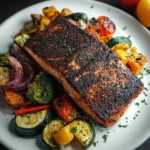
Blackened Salmon with Charred Vegetables recipe
Ingredients
-
For the Blackened Salmon:
-
Salmon Fillets: 4 portions, 6 oz (approximately 170g) each, skin on or off (skin on often yields a crispier result if desired, but skinless is perfectly fine).
-
Selection Tip: Look for firm, moist, bright pink flesh with no discoloration or strong “fishy” odor. Wild-caught salmon (like Alaskan Sockeye or King Salmon) often has a richer flavor and higher omega-3 content, but responsibly farmed salmon is also an excellent choice. Ensure the fillets are roughly uniform in thickness for even cooking.
-
-
Olive Oil: 2 tablespoons (30ml), divided (1 tablespoon for seasoning, 1 tablespoon for the pan).
-
Selection Tip: Use a good quality extra virgin olive oil for its flavor and heat stability, especially for coating the salmon.
-
-
Blackening Seasoning: 3-4 tablespoons (45-60ml), divided.
-
Homemade is highly recommended for freshness and customizable heat! Here’s a robust blend:
-
2 tablespoons Smoked Paprika (adds depth and color)
-
1 tablespoon Garlic Powder (for savory punch)
-
1 tablespoon Onion Powder (adds umami)
-
1.5 teaspoons Dried Thyme (earthy, aromatic)
-
1.5 teaspoons Dried Oregano (classic Mediterranean/Cajun note)
-
1 teaspoon Cayenne Pepper (adjust to your spice preference; use 0.5 tsp for mild, 2 tsp for extra hot)
-
1 teaspoon Sea Salt (fine grain for even distribution)
-
0.5 teaspoon Freshly Ground Black Pepper (adds sharpness)
-
-
Preparation Tip: Whisk all spices together in a small bowl until thoroughly combined. Store any excess in an airtight container for future use. This blend ensures maximum flavor penetration and a beautiful dark crust.
-
-
-
For the Charred Vegetables:
-
Broccoli Florets: 3 cups (about 300g), cut into bite-sized pieces.
-
Selection Tip: Choose broccoli with tight, dark green florets and firm stems.
-
-
Bell Peppers: 2 large (e.g., 1 red, 1 yellow), cored, deseeded, and cut into 1-inch strips or chunks.
-
Selection Tip: Look for firm, brightly colored peppers with smooth, unblemished skin. Red, yellow, and orange peppers are sweeter than green.
-
-
Zucchini: 1 large (about 250g), sliced into ½-inch thick rounds or half-moons.
-
Selection Tip: Choose firm, unblemished zucchini without soft spots.
-
-
Cherry Tomatoes: 1 pint (about 300g), left whole or halved if very large.
-
Selection Tip: Opt for firm, brightly colored tomatoes that are sweet and juicy.
-
-
Red Onion: 1 small, peeled and cut into ½-inch thick wedges.
-
Selection Tip: Choose firm onions with dry, papery skins. Red onions add a lovely color and a milder, sweeter flavor when roasted.
-
-
Olive Oil: 2 tablespoons (30ml).
-
Selection Tip: A good quality everyday olive oil is perfect for roasting vegetables, ensuring they cook evenly and brown nicely.
-
-
Salt: 1 teaspoon (5ml), or to taste.
-
Black Pepper: 0.5 teaspoon (2.5ml), or to taste.
-
Garlic Powder: 1 teaspoon (5ml). (Optional, but enhances flavor).
-
-
For Serving & Garnish (Optional but Recommended):
-
Fresh Lemon Wedges: 2-3 lemons, cut into wedges.
-
Function: A squeeze of fresh lemon juice brightens the entire dish, cutting through the richness of the salmon and enhancing the flavors of the vegetables.
-
-
Fresh Parsley or Cilantro: A handful, finely chopped.
-
Function: Adds a burst of freshness, color, and aromatic complexity.
-
-
Instructions
Part 1: Preparing the Charred Vegetables (Oven Roasting)
-
Preheat Your Oven: Position an oven rack in the middle of your oven. Preheat your oven to a high temperature, 425°F (220°C). High heat is crucial for achieving that desirable char and tender-crisp texture. While the oven preheats, you can begin prepping your vegetables.
-
Prepare the Vegetables: Wash and thoroughly dry all your chosen vegetables. This step is vital because excess moisture can lead to steaming instead of charring. Cut the broccoli into uniform florets, the bell peppers into 1-inch strips or chunks, the zucchini into ½-inch rounds or half-moons, the red onion into ½-inch wedges, and leave the cherry tomatoes whole or halve them if exceptionally large. Ensure all pieces are roughly similar in size to promote even cooking.
-
Season the Vegetables: In a large mixing bowl, combine all the prepped vegetables. Drizzle with 2 tablespoons of olive oil. Sprinkle with 1 teaspoon of salt, 0.5 teaspoon of black pepper, and 1 teaspoon of garlic powder (if using). Toss thoroughly with your hands or a large spoon until all the vegetables are lightly and evenly coated with oil and seasoning.
-
Arrange on Baking Sheets: Divide the seasoned vegetables evenly between one or two large baking sheets. It’s critical not to overcrowd the baking sheets. Vegetables need space to allow air circulation and direct contact with the hot metal, which facilitates charring. If the pan is too full, the vegetables will steam and become soggy rather than charring. Use two sheets if necessary, rotating them halfway through cooking.
-
Roast the Vegetables: Place the baking sheets in the preheated oven. Roast for 20-30 minutes, stirring or flipping the vegetables halfway through (around the 10-15 minute mark). The exact cooking time will depend on the density of your vegetables and your oven’s calibration. Look for tender vegetables with browned, slightly crispy, and visibly charred edges. The cherry tomatoes will burst and become juicy, and the bell peppers and onions will soften and sweeten. Once done, remove from the oven and set aside while you prepare the salmon.
Part 2: Preparing the Blackened Salmon (Stovetop)
-
Prepare the Salmon: Pat the salmon fillets very thoroughly dry with paper towels. This is a crucial step for achieving a proper crust. Excess moisture on the surface will inhibit the blackening process and can cause the salmon to stick. If the skin is on, you can score it lightly a few times with a sharp knife to prevent curling.
-
Season the Salmon: In a shallow dish or on a plate, pour the pre-mixed blackening seasoning. Drizzle the salmon fillets with 1 tablespoon of olive oil, ensuring they are lightly coated. Then, generously dredge each side of the salmon fillets in the blackening seasoning, pressing lightly to ensure a thick, even coating. You want a dark, uniform layer of spices.
-
Heat the Skillet: Place a heavy-bottomed skillet, preferably cast iron, over high heat. Allow the skillet to heat up for 3-5 minutes until it is smoking hot. A properly heated pan is essential for the blackening effect. Cast iron is preferred because it retains heat exceptionally well, ensuring a consistent high temperature.
-
Safety Note: Blackening produces a fair amount of smoke. Ensure your kitchen is well-ventilated. Turn on your range hood to its highest setting, open windows, and consider a fan if needed.
-
-
Sear the Salmon: Add the remaining 1 tablespoon of olive oil to the smoking hot skillet. Swirl to coat the bottom. Carefully place the seasoned salmon fillets, skin-side down (if applicable), into the hot skillet. Do not overcrowd the pan; cook in batches if necessary. Overcrowding will lower the pan temperature and result in steaming rather than blackening.
-
Cook the Salmon:
-
Sear for 2-4 minutes per side, depending on the thickness of your fillets and your desired doneness.
-
For a medium-rare to medium internal temperature (around 125-135°F or 52-57°C), cook thicker fillets closer to 4 minutes per side, thinner ones closer to 2-3 minutes. The exterior should be deeply crusted and almost black, while the interior remains moist and flaky.
-
Use a spatula to gently flip the salmon to the other side and sear for an additional 2-4 minutes.
-
Doneness Check: You can check for doneness by gently flaking the salmon with a fork. It should flake easily, and the center should still be slightly translucent for medium, or opaque for well-done. An instant-read thermometer inserted into the thickest part of the fillet should read 145°F (63°C) for food safety, though many prefer salmon cooked to a slightly lower temperature for optimal moistness.
-
-
Rest the Salmon: Once cooked, immediately remove the salmon from the skillet and transfer it to a plate. Let it rest for 2-3 minutes. This allows the juices to redistribute, ensuring a more tender and flavorful fillet.
Part 3: Assembly and Serving
-
Combine and Garnish: Arrange the perfectly blackened salmon fillets on individual plates alongside the vibrant, charred vegetables.
-
Final Touches: Squeeze fresh lemon wedges generously over both the salmon and vegetables. The bright acidity of the lemon cuts through the richness and spice, elevating the entire dish. Garnish with a sprinkle of fresh chopped parsley or cilantro for added freshness and visual appeal.
-
Serve Immediately: This dish is best enjoyed fresh, when the salmon is still warm and flaky, and the vegetables retain their tender-crisp texture and smoky sweetness.
Nutrition
- Serving Size: one normal portion
- Calories: 450-550 kcal
- Sugar: 5-8g
- Sodium: 600-800mg
- Fat: 25-35g
- Saturated Fat: 4-6g
- Carbohydrates: 15-20g
- Fiber: 5-7g
- Protein: 35-40g
- Cholesterol: 100-120mg