
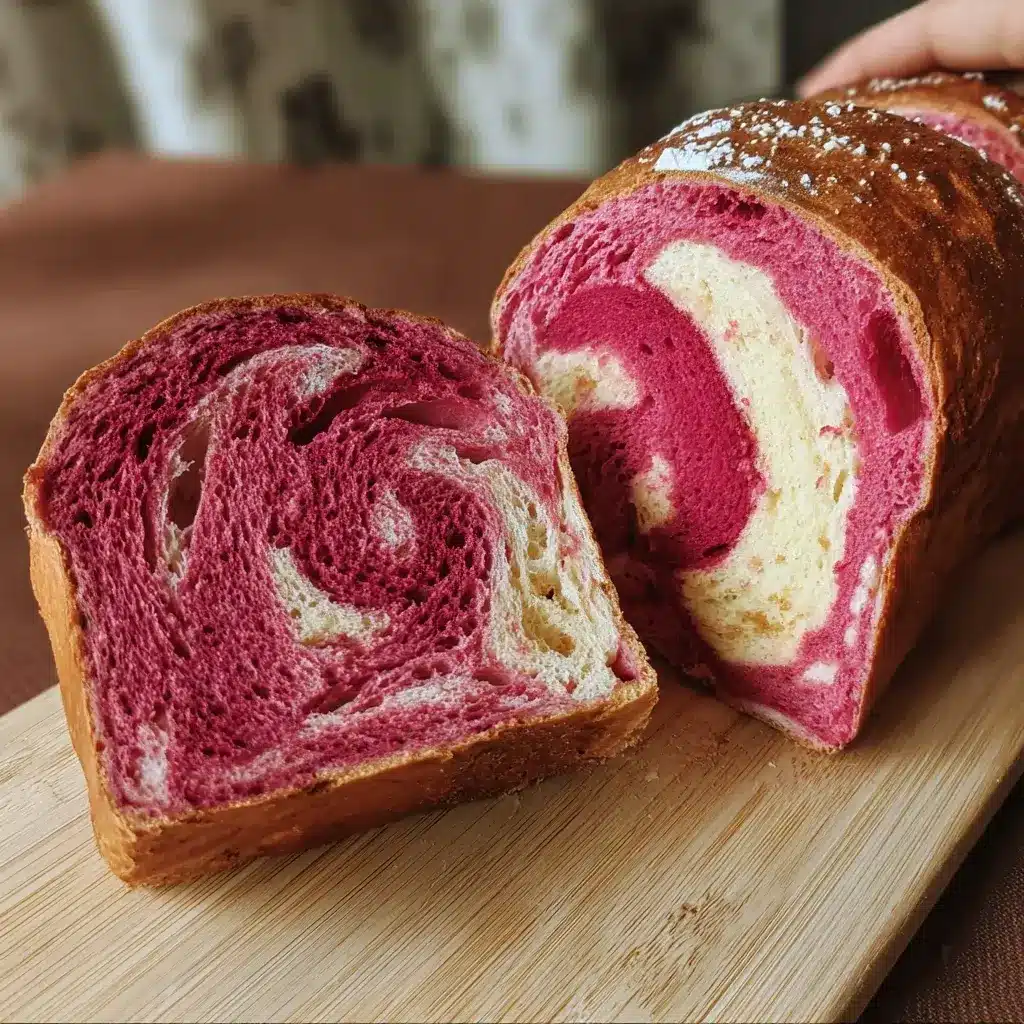

Of all the baking projects that have filled my kitchen with warmth and incredible aromas, this Beetroot Milk Bread holds a uniquely special place. I was initially drawn to it purely for its looks—the idea of a naturally vibrant, fuchsia-colored loaf seemed like a magical challenge. The first time I made it, I was captivated by the process. Watching the pale dough transform into a shocking pink ball as I kneaded in the beetroot purée was pure joy. My biggest question, and my family’s biggest hesitation, was the taste. Would it be overwhelmingly earthy? Would it just taste like…beets? The moment of truth came after it emerged from the oven, perfectly golden on the outside. I let it cool (the hardest part!), and when I finally sliced into it, the reveal was breathtaking. A soft, pillowy crumb swirled with the most gorgeous magenta hue. And the taste? It was a masterpiece of subtlety. A faint, earthy sweetness that perfectly complemented the rich, milky flavor of the bread, not overpowering it in the slightest. My kids, who normally eye beets with suspicion, were enchanted by the “pink bread” and devoured their slices with butter melting into the warm, colorful crumb. This recipe is more than just bread; it’s a conversation starter, a work of edible art, and a delicious way to make everyday moments feel extraordinary.
Beetroot Milk Bread: A Feast for the Eyes and the Palate
Welcome to the ultimate guide to baking the softest, most visually stunning loaf of bread you’ve ever made. This Beetroot Milk Bread is a beautiful twist on the classic Japanese Milk Bread, also known as Shokupan. What makes this type of bread famously soft, fluffy, and moist is a special technique involving a roux-like starter called a Tangzhong. By pre-cooking a small portion of the flour and liquid, we create a paste that traps a significant amount of moisture. When this Tangzhong is added to the main dough, it results in a bread that is unbelievably tender and stays fresh for days longer than a standard loaf.
In this recipe, we take that incredible texture and elevate it with the all-natural, vibrant color of beetroot. Forget artificial food dyes; the deep magenta of the beetroot purée gives this bread its signature look, along with a host of nutrients and a very subtle, pleasant earthy sweetness that adds a new layer of complexity to the flavor. This article will walk you through every step of the process, from creating the perfect Tangzhong to kneading the dough to achieve that coveted “windowpane” elasticity, ensuring your final product is a show-stopping success.
Complete Ingredients for Beetroot Milk Bread
Baking is a science, and using precise measurements, preferably with a kitchen scale, will yield the best results. This recipe is broken down into three components for clarity: the Tangzhong, the Beetroot Purée, and the Main Dough.
For the Tangzhong (Water Roux Starter):
- Bread Flour: 3 tablespoons (30g)
- Whole Milk: ½ cup (120ml)
For the Beetroot Purée:
- Raw Beetroot: 1 medium (about 150g), which will yield approximately ½ cup (120g) of purée.
For the Main Dough:
- Bread Flour: 3 cups (380g), plus more for dusting
- Granulated Sugar: ¼ cup (50g)
- Instant Yeast: 2 ¼ teaspoons (7g, or one standard packet)
- Salt: 1 teaspoon (6g)
- Whole Milk: ½ cup (120ml), lukewarm
- Large Egg: 1, at room temperature
- Unsalted Butter: 4 tablespoons (57g), softened to room temperature and cut into small pieces
- The prepared Tangzhong (all of it)
- The prepared Beetroot Purée (all of it)
For the Egg Wash (Optional, for a shiny crust):
- Large Egg: 1
- Milk or Water: 1 tablespoon
Step-by-Step Instructions: Crafting Your Vibrant Loaf
Follow these detailed steps for a flawless, fluffy, and brilliantly pink loaf. The process is divided into key stages, from preparation to the final bake.
Part 1: Prepare the Key Components
- Make the Tangzhong: In a small saucepan, whisk together the 3 tablespoons of bread flour and ½ cup of milk until no lumps remain. Place the saucepan over medium-low heat. Cook, whisking constantly, for about 3-5 minutes. The mixture will thicken into a smooth, thick paste, resembling pudding. When you drag your whisk through it, it should leave a distinct trail on the bottom of the pan. Remove from the heat, transfer to a small bowl, and cover with plastic wrap, pressing it directly onto the surface to prevent a skin from forming. Let it cool to room temperature.
- Make the Beetroot Purée: The best method is roasting, as it concentrates the flavor and color. Preheat your oven to 400°F (200°C). Wash and trim the beetroot, wrap it loosely in aluminum foil, and roast for 45-60 minutes, or until it is easily pierced with a fork. Let it cool slightly, then peel the skin off (it should slip off easily). Chop the roasted beet and place it in a small blender or food processor. Blend until completely smooth. If needed, add a teaspoon of water to help it blend, but try to use as little liquid as possible to keep the color concentrated. Measure out ½ cup (120g) of the purée and set it aside to cool.
Part 2: Mixing and Kneading the Dough
- Combine Ingredients: In the bowl of a stand mixer fitted with the dough hook attachment, combine the 3 cups of bread flour, ¼ cup of sugar, 2 ¼ teaspoons of instant yeast, and 1 teaspoon of salt. Give it a quick whisk to distribute everything evenly.
- Add Wet Ingredients: To the dry ingredients, add the lukewarm milk, the room temperature egg, the cooled Tangzhong, and the cooled beetroot purée.
- Mix: Turn the mixer on to a low speed and mix until all the ingredients come together to form a shaggy, sticky, and vibrant pink dough. This will take about 2-3 minutes. Scrape down the sides of the bowl as needed.
- Knead and Add Butter: Increase the mixer speed to medium-low and knead the dough for about 5-7 minutes. The dough will start to become smoother and more elastic. Now, begin adding the softened butter, one small piece at a time, waiting until each piece is incorporated before adding the next. The dough may look like it’s separating or becoming greasy, but don’t worry—keep kneading, and it will come back together.
- Final Knead for Gluten Development: After all the butter is incorporated, continue to knead on medium-low speed for another 10-15 minutes. The dough should transform from sticky to smooth, tacky, and very elastic. To check if it’s ready, perform the windowpane test: take a small piece of dough and gently stretch it between your fingers. It should stretch thin enough to be translucent in the center without tearing. If it tears easily, knead for a few more minutes and test again. (If kneading by hand, this entire process will take 20-25 minutes of vigorous kneading on a lightly floured surface).
Part 3: Rising and Shaping
- First Rise (Bulk Fermentation): Lightly grease a large bowl with oil or cooking spray. Form the kneaded dough into a smooth ball and place it in the bowl, turning it once to coat. Cover the bowl with plastic wrap or a damp kitchen towel. Let it rise in a warm, draft-free place for 60-90 minutes, or until it has doubled in size.
- Degas and Divide: Gently press down on the risen dough to release the air. Transfer it to a lightly floured work surface. Divide the dough into three equal pieces using a kitchen scale for accuracy.
- Shape the Loaf: Working with one piece at a time, gently flatten it into a rough rectangle. Fold the top third down to the center, and the bottom third up, like you’re folding a letter. Turn the dough 90 degrees and use a rolling pin to roll it out into a long rectangle, about the same width as your loaf pan. Starting from the short end, roll the dough up tightly into a log. Pinch the seam to seal. Repeat with the other two pieces of dough.
- Second Rise (Proofing): Grease a standard 9×5 inch loaf pan. Place the three rolled logs of dough side-by-side in the pan. Cover the pan loosely with plastic wrap and let it rise in a warm place for another 45-60 minutes, or until the dough has risen about 1 inch above the rim of the pan.
Part 4: Baking and Cooling
- Preheat Oven: While the loaf is proofing, preheat your oven to 350°F (175°C).
- Egg Wash (Optional): Just before baking, whisk together one egg with a tablespoon of milk or water. Gently brush this mixture over the top of the risen loaf. This will give it a beautiful, shiny, golden-brown crust.
- Bake: Place the loaf pan in the preheated oven on a center rack. Bake for 30-35 minutes. If the top starts to brown too quickly, you can loosely tent it with aluminum foil for the last 10 minutes of baking. The bread is done when the top is golden brown and an instant-read thermometer inserted into the center registers 190-200°F (88-93°C).
- Cool: Remove the loaf from the oven and let it cool in the pan for 10-15 minutes. Then, carefully turn it out onto a wire rack to cool completely. It is crucial to let the bread cool for at least 2 hours before slicing. Slicing into hot bread can result in a gummy texture as the structure hasn’t fully set.
Nutrition Facts
Please note these values are an estimate and will vary based on the specific ingredients used.
- Servings: 1 loaf (approximately 12 slices)
- Calories per serving (approximate): 190-230 kcal per slice
Preparation Time
This bread is a project, but most of the time is hands-off.
- Active Time: 35-45 minutes (making Tangzhong, mixing, kneading, shaping)
- Inactive Time: 3.5 – 4 hours (cooling, rising, baking)
- Total Time: Approximately 4.5 – 5 hours
How to Serve This Vibrant Loaf
The beauty of this bread is its versatility. It’s just as good in savory applications as it is in sweet ones. Here are some ideas:
- The Simple Classic:
- Serve a thick, warm slice with a generous spread of high-quality salted butter.
- Toast it and top with your favorite jam, marmalade, or honey.
- For a Stunning Breakfast or Brunch:
- Avocado Toast: The contrast between the bright pink bread and the green avocado is visually spectacular. Top with a sprinkle of flaky sea salt and red pepper flakes.
- Cream Cheese & Chives: A simple schmear of cream cheese looks beautiful against the pink crumb.
- The Ultimate French Toast: This bread makes the most incredible French toast. The eggy custard soaks into the soft crumb, and the color remains vibrant even after cooking. Serve with maple syrup and fresh berries.
- For Elegant Sandwiches:
- Tea Sandwiches: Use it to make delicate finger sandwiches with fillings like cucumber and cream cheese or smoked salmon and dill.
- Grilled Cheese: A pink grilled cheese is a fun and whimsical treat for kids and adults alike.
- As a Dessert Component:
- Use slightly stale slices to make a visually striking and delicious bread pudding.
Additional Tips for Baking Success
1. A Kitchen Scale is Your Best Friend
Bread baking is more chemistry than art. Measuring flour by volume (cups) can be wildly inaccurate depending on how you scoop it. Using a digital kitchen scale to measure ingredients by weight (grams) is the single best way to ensure consistent, repeatable results.
2. Roast, Don’t Boil, Your Beets
While boiling beets is faster, it introduces more water into them, which can dilute the color and flavor and potentially throw off the hydration of your dough. Roasting concentrates the beet’s natural sugars and deepens its color, leading to a more flavorful and vibrantly hued loaf.
3. Don’t Rush the Rise
The rising times given are estimates. The actual time will depend on the temperature of your kitchen. The best way to know if your dough is ready is by visual cues—it should double in size on the first rise and crest the loaf pan on the second. A warm (but not hot) spot, like a turned-off oven with the light on, can help speed things up.
4. Master the Windowpane Test
Proper gluten development is the secret to a light and chewy, not dense and crumbly, loaf. Don’t stop kneading until you can pass the windowpane test. It’s the definitive sign that your dough has the strength and structure to trap the gasses produced by the yeast, leading to a magnificent rise.
5. Be Patient Before Slicing
This is perhaps the most difficult tip to follow! The smell of freshly baked bread is intoxicating, but you must resist the urge to slice into it while it’s hot. The internal structure is still setting as it cools. Slicing too early releases steam and can collapse the delicate crumb, resulting in a gummy, dense texture. Your patience will be rewarded with perfect slices.
Frequently Asked Questions (FAQ)
1. Q: Will my bread taste strongly of beets?
A: Not at all. This is the most common concern, but the flavor is surprisingly subtle. You’ll notice a very faint earthy sweetness in the background, which is quite pleasant and complex. It mostly tastes like a rich, soft, and slightly sweet milk bread, with the beet primarily contributing its stunning color and moisture.
2. Q: My dough is incredibly sticky. Did I do something wrong?
A: No, this is normal! This is a highly hydrated dough, thanks to the milk, egg, purée, and Tangzhong. It will be very sticky at the beginning of the kneading process. Resist the temptation to add a lot of extra flour, as this will make your bread dry and dense. Trust the process; as you knead and the gluten develops, the dough will become smooth, elastic, and much easier to handle.
3. Q: Can I make this recipe without a stand mixer?
A: Absolutely! Be prepared for a good arm workout. The process is the same, but you’ll do all the kneading by hand on a lightly floured surface. It will take around 20-25 minutes of consistent, vigorous kneading to develop the gluten enough to pass the windowpane test.
4. Q: Why didn’t my bread rise properly?
A: There are a few common culprits. First, check your yeast. It may be old or expired. You can test it by dissolving it in the lukewarm milk with a pinch of sugar; if it doesn’t get foamy after 5-10 minutes, it’s no longer active. Second, your kitchen might be too cold. Yeast is a living organism and loves warmth. Try finding a cozier spot for your dough to rise. Finally, you may not have kneaded the dough enough to develop the gluten structure needed to trap air.
5. Q: Can I use beet powder instead of fresh beetroot purée?
A: Yes, you can. Beet powder is a great alternative if you’re short on time. However, you’ll need to adjust the liquid in the recipe. Start by whisking 3-4 tablespoons of beet powder into the dry ingredients. Then, add the ½ cup of purée’s worth of liquid (120ml) as extra milk to the main dough to maintain the correct hydration. The color may be slightly different, but it will still be beautiful.

Beetroot Milk Bread recipe
Ingredients
For the Tangzhong (Water Roux Starter):
-
Bread Flour: 3 tablespoons (30g)
-
Whole Milk: ½ cup (120ml)
For the Beetroot Purée:
-
Raw Beetroot: 1 medium (about 150g), which will yield approximately ½ cup (120g) of purée.
For the Main Dough:
-
Bread Flour: 3 cups (380g), plus more for dusting
-
Granulated Sugar: ¼ cup (50g)
-
Instant Yeast: 2 ¼ teaspoons (7g, or one standard packet)
-
Salt: 1 teaspoon (6g)
-
Whole Milk: ½ cup (120ml), lukewarm
-
Large Egg: 1, at room temperature
-
Unsalted Butter: 4 tablespoons (57g), softened to room temperature and cut into small pieces
-
The prepared Tangzhong (all of it)
-
The prepared Beetroot Purée (all of it)
For the Egg Wash (Optional, for a shiny crust):
-
Large Egg: 1
-
Milk or Water: 1 tablespoon
Instructions
Part 1: Prepare the Key Components
-
Make the Tangzhong: In a small saucepan, whisk together the 3 tablespoons of bread flour and ½ cup of milk until no lumps remain. Place the saucepan over medium-low heat. Cook, whisking constantly, for about 3-5 minutes. The mixture will thicken into a smooth, thick paste, resembling pudding. When you drag your whisk through it, it should leave a distinct trail on the bottom of the pan. Remove from the heat, transfer to a small bowl, and cover with plastic wrap, pressing it directly onto the surface to prevent a skin from forming. Let it cool to room temperature.
-
Make the Beetroot Purée: The best method is roasting, as it concentrates the flavor and color. Preheat your oven to 400°F (200°C). Wash and trim the beetroot, wrap it loosely in aluminum foil, and roast for 45-60 minutes, or until it is easily pierced with a fork. Let it cool slightly, then peel the skin off (it should slip off easily). Chop the roasted beet and place it in a small blender or food processor. Blend until completely smooth. If needed, add a teaspoon of water to help it blend, but try to use as little liquid as possible to keep the color concentrated. Measure out ½ cup (120g) of the purée and set it aside to cool.
Part 2: Mixing and Kneading the Dough
-
Combine Ingredients: In the bowl of a stand mixer fitted with the dough hook attachment, combine the 3 cups of bread flour, ¼ cup of sugar, 2 ¼ teaspoons of instant yeast, and 1 teaspoon of salt. Give it a quick whisk to distribute everything evenly.
-
Add Wet Ingredients: To the dry ingredients, add the lukewarm milk, the room temperature egg, the cooled Tangzhong, and the cooled beetroot purée.
-
Mix: Turn the mixer on to a low speed and mix until all the ingredients come together to form a shaggy, sticky, and vibrant pink dough. This will take about 2-3 minutes. Scrape down the sides of the bowl as needed.
-
Knead and Add Butter: Increase the mixer speed to medium-low and knead the dough for about 5-7 minutes. The dough will start to become smoother and more elastic. Now, begin adding the softened butter, one small piece at a time, waiting until each piece is incorporated before adding the next. The dough may look like it’s separating or becoming greasy, but don’t worry—keep kneading, and it will come back together.
-
Final Knead for Gluten Development: After all the butter is incorporated, continue to knead on medium-low speed for another 10-15 minutes. The dough should transform from sticky to smooth, tacky, and very elastic. To check if it’s ready, perform the windowpane test: take a small piece of dough and gently stretch it between your fingers. It should stretch thin enough to be translucent in the center without tearing. If it tears easily, knead for a few more minutes and test again. (If kneading by hand, this entire process will take 20-25 minutes of vigorous kneading on a lightly floured surface).
Part 3: Rising and Shaping
-
First Rise (Bulk Fermentation): Lightly grease a large bowl with oil or cooking spray. Form the kneaded dough into a smooth ball and place it in the bowl, turning it once to coat. Cover the bowl with plastic wrap or a damp kitchen towel. Let it rise in a warm, draft-free place for 60-90 minutes, or until it has doubled in size.
-
Degas and Divide: Gently press down on the risen dough to release the air. Transfer it to a lightly floured work surface. Divide the dough into three equal pieces using a kitchen scale for accuracy.
-
Shape the Loaf: Working with one piece at a time, gently flatten it into a rough rectangle. Fold the top third down to the center, and the bottom third up, like you’re folding a letter. Turn the dough 90 degrees and use a rolling pin to roll it out into a long rectangle, about the same width as your loaf pan. Starting from the short end, roll the dough up tightly into a log. Pinch the seam to seal. Repeat with the other two pieces of dough.
-
Second Rise (Proofing): Grease a standard 9×5 inch loaf pan. Place the three rolled logs of dough side-by-side in the pan. Cover the pan loosely with plastic wrap and let it rise in a warm place for another 45-60 minutes, or until the dough has risen about 1 inch above the rim of the pan.
Part 4: Baking and Cooling
-
Preheat Oven: While the loaf is proofing, preheat your oven to 350°F (175°C).
-
Egg Wash (Optional): Just before baking, whisk together one egg with a tablespoon of milk or water. Gently brush this mixture over the top of the risen loaf. This will give it a beautiful, shiny, golden-brown crust.
-
Bake: Place the loaf pan in the preheated oven on a center rack. Bake for 30-35 minutes. If the top starts to brown too quickly, you can loosely tent it with aluminum foil for the last 10 minutes of baking. The bread is done when the top is golden brown and an instant-read thermometer inserted into the center registers 190-200°F (88-93°C).
-
Cool: Remove the loaf from the oven and let it cool in the pan for 10-15 minutes. Then, carefully turn it out onto a wire rack to cool completely. It is crucial to let the bread cool for at least 2 hours before slicing. Slicing into hot bread can result in a gummy texture as the structure hasn’t fully set.
Nutrition
- Serving Size: one normal portion
- Calories: 190-230 kcal