
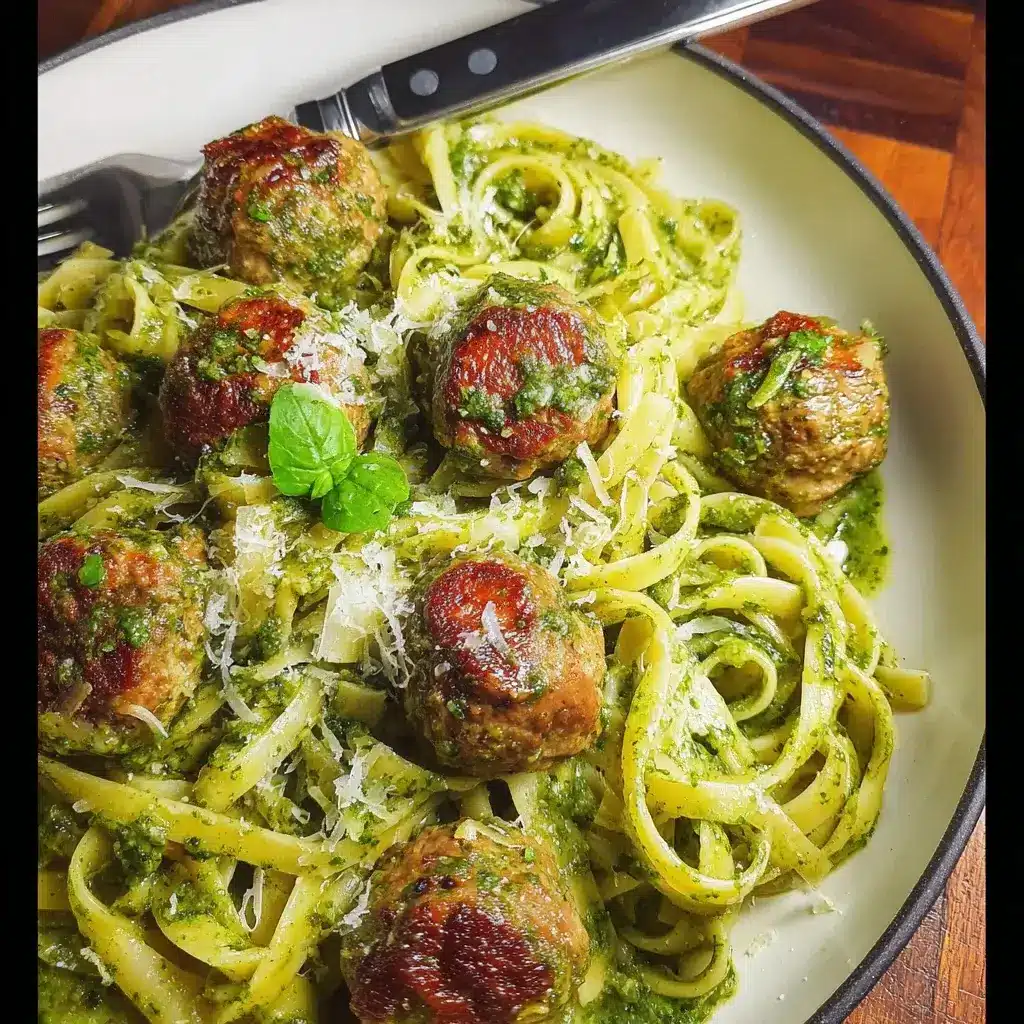
There are certain dishes that feel like a warm hug, and for my family, this Basil Pesto Pasta with Meatballs is the epitome of comfort food. I’ll never forget the first time I made it. The house filled with the intoxicating aroma of garlic and fresh basil from the pesto, mingling with the savory scent of perfectly browned meatballs sizzling in the pan. My kids, usually picky eaters, were drawn to the kitchen like magnets, their eyes wide with anticipation. When I finally brought the large bowl to the table—a vibrant tapestry of green-coated pasta, robust meatballs, and a flurry of white Parmesan—the silence that followed the first bites was the highest compliment a cook can receive. It has since become our go-to meal for everything from hectic weeknight dinners, where the make-ahead components are a lifesaver, to celebratory Sunday suppers. It’s a recipe that’s more than just food; it’s a creator of memories, a crowd-pleaser that never fails to bring smiles to our faces. This dish is a beautiful symphony of textures and flavors: the bright, herbaceous punch of the homemade pesto, the tender, juicy meatballs packed with flavor, and the satisfying chew of perfectly cooked pasta that ties it all together. It’s hearty yet fresh, sophisticated yet incredibly simple to master. I’m thrilled to share this beloved recipe with you, in the hopes that it brings as much joy to your table as it has to mine.
Complete Recipe: Basil Pesto Pasta With Meatballs
This recipe is broken down into three main components: the meatballs, the pesto, and the final assembly. Making each component from scratch elevates the dish from good to absolutely unforgettable. While it might seem like a lot of steps, each one is simple, and the process can be easily managed, especially if you prepare the pesto or meatballs in advance.
Ingredients for the Juicy Homemade Meatballs
- 1 lb (450g) ground meat (a mix of half ground beef and half ground pork is recommended for flavor and tenderness)
- 1/2 cup Panko breadcrumbs
- 1/4 cup whole milk
- 1/2 cup finely grated Parmesan cheese
- 1/4 cup finely chopped fresh parsley
- 1 large egg, lightly beaten
- 2 cloves garlic, minced
- 1 teaspoon salt
- 1/2 teaspoon black pepper
- 1/4 teaspoon red pepper flakes (optional, for a little heat)
- 2 tablespoons olive oil (for frying)
Ingredients for the Vibrant Basil Pesto
- 3 cups fresh basil leaves, packed (about 3 large bunches)
- 1/2 cup toasted pine nuts (see instructions for toasting)
- 3/4 cup freshly grated Parmesan cheese
- 2-3 cloves garlic, roughly chopped
- 1/2 teaspoon salt
- 1/4 teaspoon black pepper
- 1/2 cup extra virgin olive oil
- 1 tablespoon fresh lemon juice (to keep the color bright)
Ingredients for Pasta and Assembly
- 1 lb (450g) of your favorite pasta (long shapes like spaghetti or linguine, or short, textured shapes like fusilli or rigatoni work well)
- Salt for pasta water
- Reserved pasta water (about 1 cup)
- Extra Parmesan cheese, for serving
- Fresh basil leaves, for garnish
- Toasted pine nuts, for garnish (optional)
Step-by-Step Instructions
Follow these detailed instructions to create the perfect plate of pesto pasta with meatballs every time. We’ll start by making the meatballs, then the fresh pesto, and finally, bring it all together.
Part 1: Crafting the Perfect Meatballs
- Prepare the Breadcrumbs: In a large mixing bowl, combine the Panko breadcrumbs and the whole milk. Let it sit for about 5-10 minutes. This step, known as creating a “panade,” is crucial for tender, moist meatballs as the soaked breadcrumbs prevent the meat proteins from shrinking and becoming tough.
- Combine Meatball Ingredients: To the bowl with the soaked breadcrumbs, add the ground meat, grated Parmesan cheese, chopped parsley, beaten egg, minced garlic, salt, black pepper, and optional red pepper flakes.
- Mix Gently: Using your hands, gently mix all the ingredients until they are just combined. Be very careful not to overmix. Overworking the meat will result in dense, tough meatballs. The goal is a homogenous mixture where all ingredients are evenly distributed, but the meat isn’t compacted.
- Form the Meatballs: Lightly wet your hands with water to prevent the mixture from sticking. Roll the meat mixture into uniform balls, about 1.5 inches in diameter. This should yield approximately 18-20 meatballs. Place them on a baking sheet or large plate lined with parchment paper.
- Cook the Meatballs: You have two excellent options for cooking.
- Pan-Frying (Recommended for best flavor): Heat 2 tablespoons of olive oil in a large skillet or Dutch oven over medium-high heat. Carefully place the meatballs in the pan, ensuring not to crowd them (cook in batches if necessary). Brown the meatballs on all sides, turning them every 2-3 minutes. This should take about 8-10 minutes in total. The meatballs don’t need to be cooked through at this stage, as they will finish cooking in the final step. The browning process creates a delicious, caramelized crust (the Maillard reaction) that adds immense flavor.
- Baking (Easier cleanup): Preheat your oven to 400°F (200°C). Arrange the meatballs in a single layer on a baking sheet lined with parchment paper. Bake for 15-20 minutes, or until browned and cooked through.
- Set Aside: Once cooked, remove the meatballs from the skillet or oven and set them aside.
Part 2: Making the Vibrant Basil Pesto
- Toast the Pine Nuts: Place the pine nuts in a small, dry skillet over medium-low heat. Toast them for 3-5 minutes, shaking the pan frequently, until they are lightly golden and fragrant. Be very watchful, as they can burn quickly. Immediately remove them from the pan to stop the cooking process. Toasting the nuts releases their natural oils and deepens their flavor significantly.
- Combine Ingredients in Food Processor: In the bowl of a food processor, combine the packed basil leaves, the toasted pine nuts, grated Parmesan cheese, chopped garlic, salt, and pepper.
- Pulse to Combine: Pulse the mixture several times until it forms a coarse, thick paste. You may need to scrape down the sides of the bowl once or twice with a spatula to ensure everything is incorporated evenly.
- Stream in the Olive Oil: With the food processor running on low, slowly stream in the extra virgin olive oil. This process emulsifies the sauce, creating a smooth and creamy consistency rather than an oily, separated one. Continue processing until the pesto is smooth but still has a little texture.
- Add Lemon Juice: Add the tablespoon of fresh lemon juice and pulse a few more times to combine. The acid in the lemon juice not only brightens the flavor but also helps the pesto retain its vibrant green color by slowing down oxidation.
- Taste and Adjust: Taste the pesto and adjust the seasoning if necessary. You might want more salt, pepper, or even a little more Parmesan. Set the pesto aside.
Part 3: Assembly and Bringing It All Together
- Cook the Pasta: Bring a large pot of water to a rolling boil. Add a generous amount of salt (it should taste like the sea). This is your only chance to season the pasta itself. Add the pasta and cook according to the package directions for al dente. An al dente texture is important as the pasta will continue to cook slightly when tossed with the sauce.
- Reserve Pasta Water: Before you drain the pasta, carefully scoop out and reserve about 1-2 cups of the starchy pasta water. This “liquid gold” is the secret to a perfectly silky, non-oily pesto sauce. The starches in the water help the pesto cling to the pasta and create a creamy, emulsified sauce.
- Drain the Pasta: Drain the pasta in a colander. Do not rinse it. The starches on the surface of the pasta are essential for the sauce to adhere properly.
- Combine and Finish: Return the drained pasta to the warm pot or a large mixing bowl. Add the meatballs back to the pasta. Spoon in a generous amount of the homemade pesto (start with about 1 cup) and add a splash (about 1/4 cup) of the reserved pasta water.
- Toss Gently: Using tongs, gently toss everything together over low heat (if using the pot) or off the heat (if using a bowl). The residual heat from the pasta and pot will warm the pesto through and finish cooking the meatballs. The starchy water will help the pesto coat every noodle and meatball beautifully. Continue to add more pesto or pasta water as needed until you reach your desired sauce consistency. The sauce should be creamy and cling to the pasta, not be clumpy or oily.
- Serve Immediately: Divide the Basil Pesto Pasta with Meatballs among serving plates. Garnish generously with extra grated Parmesan cheese, a few fresh basil leaves, and a sprinkle of toasted pine nuts for added texture and flavor.
Nutrition Facts
- Servings: 6-8 servings
- Calories per serving (approximate): 750-850 kcal
Disclaimer: The nutritional information provided is an estimate and can vary based on the specific ingredients used (e.g., fat content of the meat, type of pasta, amount of oil and cheese).
Preparation Time
- Active Time: 45 minutes
- Total Time: 1 hour
- Time Breakdown:
- Meatball Preparation and Cooking: 20-25 minutes
- Pesto Preparation: 10-15 minutes
- Pasta Cooking and Final Assembly: 15-20 minutes
How to Serve This Delicious Dish
Transforming this recipe into a complete meal experience is easy. Here are some suggestions for serving that will complement the rich flavors of the pesto and meatballs.
- Garnishes are Key: A final flourish before serving can make a huge difference.
- Extra Parmesan: Always offer more freshly grated Parmesan cheese at the table.
- Fresh Herbs: A few torn fresh basil leaves on top reinforce the pesto’s primary flavor.
- A Drizzle of Olive Oil: A light drizzle of high-quality extra virgin olive oil over each plate adds a touch of peppery richness.
- Red Pepper Flakes: For those who enjoy heat, a small bowl of red pepper flakes on the side is a must.
- Perfect Side Dishes: While the dish is a complete meal on its own, a fresh side can cut through the richness.
- Simple Arugula Salad: A salad of baby arugula, cherry tomatoes, and a light lemon vinaigrette provides a peppery, acidic contrast that cleanses the palate.
- Caprese Salad: The classic combination of fresh mozzarella, ripe tomatoes, and basil drizzled with balsamic glaze echoes the Italian flavors of the main course.
- Crusty Garlic Bread: Perfect for sopping up every last bit of the delicious pesto sauce from the plate.
- Roasted Vegetables: Simple roasted broccoli, asparagus, or bell peppers tossed in olive oil and salt add a healthy and flavorful component to the meal.
- Wine Pairings: The right wine can elevate your dinner to another level.
- White Wine: The herbaceous and garlicky notes of pesto pair beautifully with a crisp, dry white wine. Look for a Sauvignon Blanc with its grassy notes, or an Italian Pinot Grigio or Vermentino.
- Red Wine: Because of the savory meatballs, a light-bodied red wine also works wonderfully. Choose one with good acidity and not too much tannin, such as a Pinot Noir or a Barbera d’Asti.
Additional Tips for Success
Here are five professional tips to help you perfect this Basil Pesto Pasta with Meatballs recipe and adapt it to your needs.
- Master Your Pesto Storage: Homemade pesto is best fresh, but you can easily store it. To prevent it from oxidizing and turning brown, pour it into a jar or airtight container and cover the surface directly with a thin layer of olive oil before sealing. This creates a barrier against the air. It will keep in the refrigerator for up to a week. For longer storage, freeze it in an ice cube tray, then transfer the frozen cubes to a freezer bag. This is perfect for single servings later on.
- Make Components Ahead (Meal Prep Champion): This recipe is fantastic for meal prepping. The meatballs can be fully cooked and stored in an airtight container in the refrigerator for up to 3 days or frozen for up to 3 months. The pesto can be made and stored as described above. When you’re ready to eat, you just need to cook the pasta and combine everything, turning a gourmet meal into a 20-minute weeknight dinner.
- Don’t Ditch the Pasta Water: This was mentioned in the instructions, but it’s so important it bears repeating. The starchy, salty water left over from cooking pasta is the key to a restaurant-quality sauce. It helps the oil-based pesto emulsify, creating a creamy sauce that clings to the pasta instead of separating and leaving a pool of oil at the bottom of the bowl. Always reserve more than you think you’ll need.
- Customize Your Pesto: Don’t be afraid to experiment with your pesto!
- Different Nuts: If you don’t have pine nuts or want a different flavor, try using walnuts, almonds, or even pistachios. Just be sure to toast them first.
- Add Greens: For a nutritional boost and a milder flavor, substitute up to half of the basil with fresh baby spinach or arugula.
- Cheese Variations: While Parmesan is classic, you can use Pecorino Romano for a sharper, saltier flavor, or a mix of both.
- Choose the Right Pasta Shape: The shape of your pasta can significantly impact the dish.
- Long Strands: Linguine, spaghetti, or fettuccine are classic choices. The long strands get beautifully coated in the pesto sauce.
- Short, Textured Shapes: Shapes like fusilli, rotini, cavatappi, or rigatoni are excellent because their nooks, crannies, and ridges are perfect for trapping the pesto and small bits of meatball, ensuring a flavorful bite every time.
Frequently Asked Questions (FAQ)
Q1: Can I use store-bought pesto to save time?
A: Absolutely! While homemade pesto offers an unparalleled fresh and vibrant flavor, using a high-quality store-bought pesto is a fantastic shortcut for a busy day. Look for brands sold in the refrigerated section, as they tend to have a fresher taste and brighter color than jarred versions on the shelf. If you use store-bought, you may still want to thin it out with a little reserved pasta water to achieve the perfect consistency.
Q2: How can I make this recipe gluten-free?
A: This dish is very easy to adapt for a gluten-free diet. Simply make two substitutions: use your favorite gluten-free pasta and swap the Panko breadcrumbs in the meatballs for gluten-free breadcrumbs or even almond flour. Cook the gluten-free pasta according to its specific package directions, as cooking times and textures can vary.
Q3: Can I use a different type of meat for the meatballs?
A: Yes, you can easily customize the meatballs. Ground chicken or turkey are great leaner options. If using poultry, which has less fat, be extra careful not to overmix, and consider adding a little extra olive oil to the mixture to ensure they stay moist. All-beef meatballs will have a richer, more robust flavor.
Q4: My homemade pesto sometimes turns dark or brown. How do I prevent this?
A: Pesto turns brown due to oxidation, which happens when the cut basil is exposed to air. There are a few tricks to prevent this. First, as mentioned in the recipe, adding a little acid like lemon juice helps. Second, some chefs blanch the basil leaves for 15-20 seconds in boiling water and then immediately plunge them into an ice bath before making the pesto. This sets the chlorophyll and keeps the color intensely green. Finally, when storing, always cover the surface of the pesto directly with a layer of olive oil to block air exposure.
Q5: Can I freeze the entire finished dish for later?
A: While you can freeze the finished dish, it’s not the ideal method. Pasta can become mushy upon reheating, and the texture of the pesto sauce can change. The best approach for freezing is to freeze the components separately. Freeze the cooked meatballs and the pesto (in an ice cube tray). Then, on the day of serving, you can cook fresh pasta and combine it with the thawed meatballs and pesto for a much better texture and flavor. It’s almost as convenient and yields a far superior result.
Basil Pesto Pasta With Meatballs recipe
Ingredients
-
1 lb (450g) ground meat (a mix of half ground beef and half ground pork is recommended for flavor and tenderness)
-
1/2 cup Panko breadcrumbs
-
1/4 cup whole milk
-
1/2 cup finely grated Parmesan cheese
-
1/4 cup finely chopped fresh parsley
-
1 large egg, lightly beaten
-
2 cloves garlic, minced
-
1 teaspoon salt
-
1/2 teaspoon black pepper
-
1/4 teaspoon red pepper flakes (optional, for a little heat)
-
2 tablespoons olive oil (for frying)
Ingredients for the Vibrant Basil Pesto
-
3 cups fresh basil leaves, packed (about 3 large bunches)
-
1/2 cup toasted pine nuts (see instructions for toasting)
-
3/4 cup freshly grated Parmesan cheese
-
2-3 cloves garlic, roughly chopped
-
1/2 teaspoon salt
-
1/4 teaspoon black pepper
-
1/2 cup extra virgin olive oil
-
1 tablespoon fresh lemon juice (to keep the color bright)
Ingredients for Pasta and Assembly
-
1 lb (450g) of your favorite pasta (long shapes like spaghetti or linguine, or short, textured shapes like fusilli or rigatoni work well)
-
Salt for pasta water
-
Reserved pasta water (about 1 cup)
-
Extra Parmesan cheese, for serving
-
Fresh basil leaves, for garnish
-
Toasted pine nuts, for garnish (optional)
Instructions
Part 1: Crafting the Perfect Meatballs
-
Prepare the Breadcrumbs: In a large mixing bowl, combine the Panko breadcrumbs and the whole milk. Let it sit for about 5-10 minutes. This step, known as creating a “panade,” is crucial for tender, moist meatballs as the soaked breadcrumbs prevent the meat proteins from shrinking and becoming tough.
-
Combine Meatball Ingredients: To the bowl with the soaked breadcrumbs, add the ground meat, grated Parmesan cheese, chopped parsley, beaten egg, minced garlic, salt, black pepper, and optional red pepper flakes.
-
Mix Gently: Using your hands, gently mix all the ingredients until they are just combined. Be very careful not to overmix. Overworking the meat will result in dense, tough meatballs. The goal is a homogenous mixture where all ingredients are evenly distributed, but the meat isn’t compacted.
-
Form the Meatballs: Lightly wet your hands with water to prevent the mixture from sticking. Roll the meat mixture into uniform balls, about 1.5 inches in diameter. This should yield approximately 18-20 meatballs. Place them on a baking sheet or large plate lined with parchment paper.
-
Cook the Meatballs: You have two excellent options for cooking.
-
Pan-Frying (Recommended for best flavor): Heat 2 tablespoons of olive oil in a large skillet or Dutch oven over medium-high heat. Carefully place the meatballs in the pan, ensuring not to crowd them (cook in batches if necessary). Brown the meatballs on all sides, turning them every 2-3 minutes. This should take about 8-10 minutes in total. The meatballs don’t need to be cooked through at this stage, as they will finish cooking in the final step. The browning process creates a delicious, caramelized crust (the Maillard reaction) that adds immense flavor.
-
Baking (Easier cleanup): Preheat your oven to 400°F (200°C). Arrange the meatballs in a single layer on a baking sheet lined with parchment paper. Bake for 15-20 minutes, or until browned and cooked through.
-
-
Set Aside: Once cooked, remove the meatballs from the skillet or oven and set them aside.
Part 2: Making the Vibrant Basil Pesto
-
Toast the Pine Nuts: Place the pine nuts in a small, dry skillet over medium-low heat. Toast them for 3-5 minutes, shaking the pan frequently, until they are lightly golden and fragrant. Be very watchful, as they can burn quickly. Immediately remove them from the pan to stop the cooking process. Toasting the nuts releases their natural oils and deepens their flavor significantly.
-
Combine Ingredients in Food Processor: In the bowl of a food processor, combine the packed basil leaves, the toasted pine nuts, grated Parmesan cheese, chopped garlic, salt, and pepper.
-
Pulse to Combine: Pulse the mixture several times until it forms a coarse, thick paste. You may need to scrape down the sides of the bowl once or twice with a spatula to ensure everything is incorporated evenly.
-
Stream in the Olive Oil: With the food processor running on low, slowly stream in the extra virgin olive oil. This process emulsifies the sauce, creating a smooth and creamy consistency rather than an oily, separated one. Continue processing until the pesto is smooth but still has a little texture.
-
Add Lemon Juice: Add the tablespoon of fresh lemon juice and pulse a few more times to combine. The acid in the lemon juice not only brightens the flavor but also helps the pesto retain its vibrant green color by slowing down oxidation.
-
Taste and Adjust: Taste the pesto and adjust the seasoning if necessary. You might want more salt, pepper, or even a little more Parmesan. Set the pesto aside.
Part 3: Assembly and Bringing It All Together
-
Cook the Pasta: Bring a large pot of water to a rolling boil. Add a generous amount of salt (it should taste like the sea). This is your only chance to season the pasta itself. Add the pasta and cook according to the package directions for al dente. An al dente texture is important as the pasta will continue to cook slightly when tossed with the sauce.
-
Reserve Pasta Water: Before you drain the pasta, carefully scoop out and reserve about 1-2 cups of the starchy pasta water. This “liquid gold” is the secret to a perfectly silky, non-oily pesto sauce. The starches in the water help the pesto cling to the pasta and create a creamy, emulsified sauce.
-
Drain the Pasta: Drain the pasta in a colander. Do not rinse it. The starches on the surface of the pasta are essential for the sauce to adhere properly.
-
Combine and Finish: Return the drained pasta to the warm pot or a large mixing bowl. Add the meatballs back to the pasta. Spoon in a generous amount of the homemade pesto (start with about 1 cup) and add a splash (about 1/4 cup) of the reserved pasta water.
-
Toss Gently: Using tongs, gently toss everything together over low heat (if using the pot) or off the heat (if using a bowl). The residual heat from the pasta and pot will warm the pesto through and finish cooking the meatballs. The starchy water will help the pesto coat every noodle and meatball beautifully. Continue to add more pesto or pasta water as needed until you reach your desired sauce consistency. The sauce should be creamy and cling to the pasta, not be clumpy or oily.
-
Serve Immediately: Divide the Basil Pesto Pasta with Meatballs among serving plates. Garnish generously with extra grated Parmesan cheese, a few fresh basil leaves, and a sprinkle of toasted pine nuts for added texture and flavor.
Nutrition
- Serving Size: one normal portion
- Calories: 750-850 kcal