
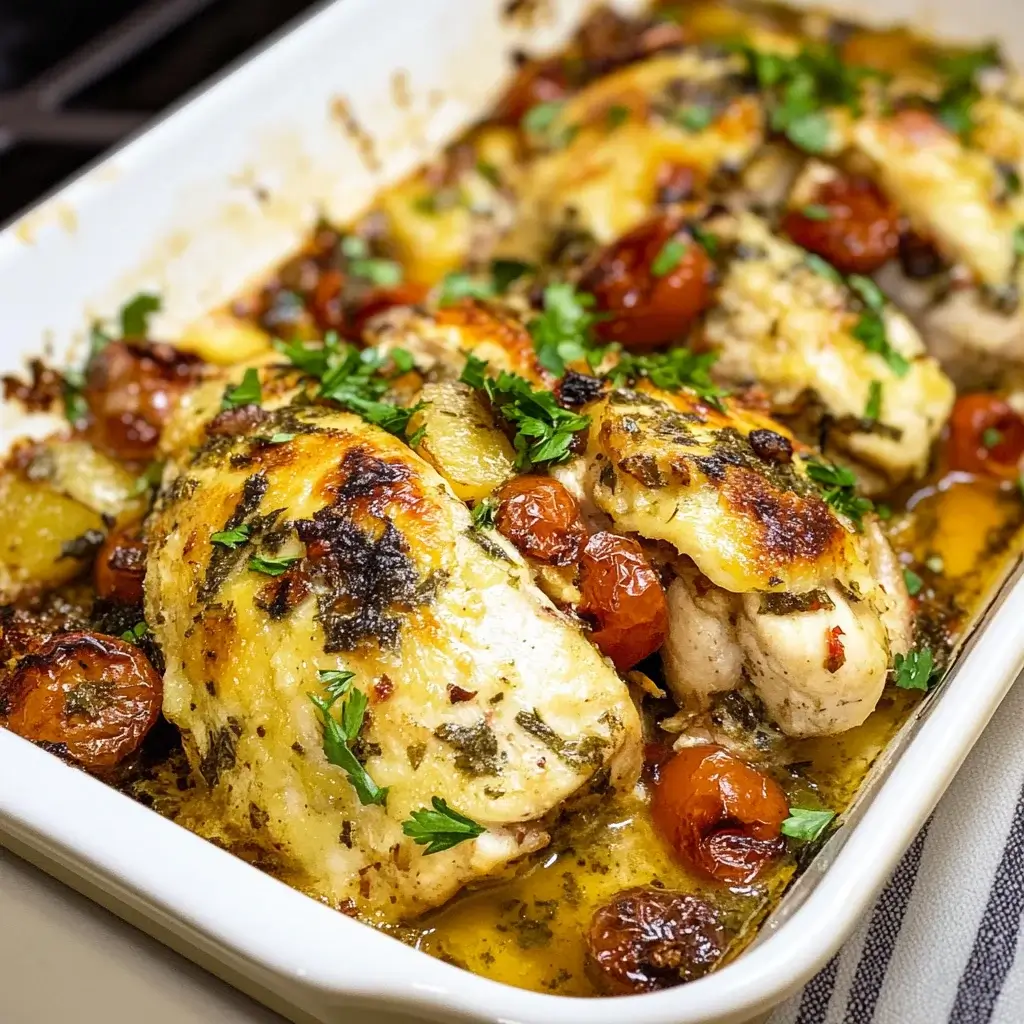
It was one of those busy weeknights where the thought of cooking felt more like a chore than a joy. I was scrolling through my recipe apps, desperately seeking something both easy and exciting to break our usual dinner routine. That’s when I stumbled upon Baked Tuscan Chicken. The name alone conjured images of sun-drenched Italian landscapes and rustic, flavorful meals. Intrigued by the promise of creamy sauce, sun-dried tomatoes, and spinach, I decided to give it a try. Let me tell you, it was a weeknight dinner game-changer! From the moment the chicken hit the oven, the aroma filling my kitchen was absolutely intoxicating – a blend of garlic, herbs, and the sweet tang of sun-dried tomatoes. And the taste? Oh my goodness! The chicken was incredibly tender and juicy, bathed in a luscious, creamy Tuscan sauce that was bursting with flavor. The sun-dried tomatoes added a delightful chewiness and intense sweetness, perfectly balanced by the fresh spinach and savory Parmesan. My family devoured it! Even my kids, who can be picky eaters, were asking for seconds. This Baked Tuscan Chicken has become a regular in our dinner rotation. It’s surprisingly simple to make, uses ingredients I often have on hand, and delivers restaurant-quality flavor without any fuss. If you’re looking for a quick, flavorful, and family-friendly meal that will transport your taste buds to Tuscany, you absolutely must try this recipe. You won’t be disappointed!
Ingredients for Flavorful Baked Tuscan Chicken
The magic of Baked Tuscan Chicken lies in the quality and combination of its ingredients. Each component plays a vital role in creating the signature Tuscan flavor profile. Here’s a detailed list of what you’ll need to gather to create this delectable dish, along with notes on why each ingredient is important and potential substitutions:
For the Chicken:
- 4 boneless, skinless Chicken Breasts (about 1 ½ – 2 pounds): Chicken breasts are the star of the show, providing a lean and versatile protein base. Boneless, skinless breasts cook quickly and evenly in the oven, absorbing the flavors of the Tuscan sauce beautifully. Choose chicken breasts that are of uniform thickness for even cooking. If you prefer, you can also use boneless, skinless chicken thighs for a richer, more flavorful option, though cooking times may need to be slightly adjusted as thighs take a bit longer to cook. Ensure your chicken is fresh or properly thawed for the best results.
- 1 tablespoon Olive Oil: Olive oil is essential in Mediterranean and Tuscan cuisine. It’s used for searing the chicken and adds a fruity, slightly peppery flavor to the dish. Extra virgin olive oil is recommended for its superior flavor and health benefits. If you don’t have olive oil, you can use another neutral cooking oil like avocado oil or canola oil, but olive oil truly enhances the authentic Tuscan taste.
- 1 teaspoon Italian Seasoning: Italian seasoning is a blend of dried herbs that are commonly used in Italian cooking, typically including oregano, basil, rosemary, thyme, and marjoram. It provides a convenient way to infuse the chicken with classic Italian herb flavors. Ensure your Italian seasoning is relatively fresh for the best aroma and flavor. You can also make your own Italian seasoning blend using individual dried herbs if you prefer.
- ½ teaspoon Garlic Powder: Garlic powder adds a foundational garlic flavor that complements the fresh garlic used later in the sauce. It evenly coats the chicken and provides a consistent garlic note. Garlic powder is a pantry staple that provides a quick and easy garlic flavor. While fresh garlic is preferred for the sauce, garlic powder is excellent for seasoning the chicken itself.
- ½ teaspoon Onion Powder: Onion powder adds a subtle savory depth to the chicken seasoning, complementing the garlic powder and Italian seasoning. It enhances the overall flavor profile of the chicken and adds a touch of umami. Like garlic powder, onion powder is a convenient way to add onion flavor and is great for dry rubs and seasonings.
- Salt and Black Pepper: Essential seasonings to enhance the natural flavors of the chicken and all other ingredients. Season generously to taste. Kosher salt or sea salt is recommended for its pure flavor. Freshly ground black pepper is always preferred for its brighter, more aromatic flavor compared to pre-ground pepper.
For the Creamy Tuscan Sauce:
- 2 tablespoons Butter: Butter adds richness, flavor, and a velvety texture to the Tuscan sauce. Unsalted butter is recommended to control the salt content of the sauce, allowing you to adjust seasoning later. Butter also helps to create a beautiful golden brown color when sautéing the garlic and sun-dried tomatoes. For a dairy-free option, you can use olive oil or a plant-based butter substitute, though butter contributes significantly to the classic creamy texture and flavor.
- 4 cloves Garlic, minced: Fresh garlic is crucial for the signature pungent and aromatic flavor of Tuscan cuisine. Mincing the garlic finely releases its oils and flavor more effectively. Garlic is a cornerstone of Italian cooking and provides a robust, savory base for the sauce. If you are a garlic lover, feel free to add an extra clove for a bolder garlic flavor.
- ½ cup Sun-dried Tomatoes, oil-packed, drained and chopped: Sun-dried tomatoes are a quintessential Tuscan ingredient. Oil-packed sun-dried tomatoes are preferred as they are softer and more flavorful. Draining them from the oil is important to prevent the sauce from becoming too oily. Chopping them into smaller pieces ensures they distribute evenly throughout the sauce and are easy to eat. Sun-dried tomatoes add a concentrated sweetness, tanginess, and chewy texture that is characteristic of Tuscan dishes. If you only have dry-packed sun-dried tomatoes, you can rehydrate them by soaking them in hot water for about 15-20 minutes before chopping.
- 1 cup Heavy Cream: Heavy cream is what makes the Tuscan sauce luxuriously creamy and rich. It thickens beautifully as it simmers and creates a velvety smooth sauce that coats the chicken perfectly. For a slightly lighter option, you can use half-and-half, but the sauce will be less rich and creamy. Do not substitute with milk, as it will be too thin and won’t provide the desired creamy texture. Full-fat heavy cream is recommended for the best results.
- ½ cup Chicken Broth: Chicken broth adds a savory depth to the sauce and helps to thin it out to the desired consistency. Low-sodium chicken broth is recommended to control the salt content of the sauce. Vegetable broth can be used as a vegetarian alternative, though chicken broth complements the chicken flavor in a more traditional way. Using a good quality broth will enhance the overall flavor of the sauce.
- 5 ounces Fresh Spinach, roughly chopped: Fresh spinach adds a boost of nutrients, a touch of green color, and a subtle earthy flavor to the Tuscan sauce. Spinach wilts beautifully into the hot sauce and adds a healthy element to the dish. Roughly chopping the spinach makes it easier to incorporate into the sauce and eat. You can also use frozen spinach, about 5 ounces, but ensure you thaw it completely and squeeze out excess water before adding it to the sauce.
- ½ cup Grated Parmesan Cheese: Parmesan cheese adds a salty, nutty, and umami-rich flavor to the Tuscan sauce. It also helps to thicken the sauce slightly and adds a delicious cheesy element. Freshly grated Parmesan is always preferred for its superior flavor and texture. Pre-grated Parmesan can be used, but it often contains cellulose and may not melt as smoothly. Parmigiano-Reggiano is the highest quality Parmesan and will provide the most authentic flavor.
- ¼ teaspoon Red Pepper Flakes (Optional): Red pepper flakes add a subtle hint of heat to the Tuscan sauce, balancing the richness and adding a touch of complexity. This is optional, especially if you are sensitive to spice or prefer a milder dish. Adjust the amount to your spice preference. A small pinch is usually enough to add a pleasant warmth without making the dish overly spicy.
- Fresh Parsley, chopped (for garnish): Fresh parsley adds a bright, herbaceous note and a pop of fresh green color as a garnish. It enhances the visual appeal of the dish and adds a final touch of freshness. Italian flat-leaf parsley is often preferred for its stronger flavor compared to curly parsley.
Step-by-Step Instructions for Perfect Baked Tuscan Chicken
Creating this restaurant-worthy Baked Tuscan Chicken at home is surprisingly simple and straightforward. Follow these detailed, step-by-step instructions to bring this flavorful dish to your table:
- Preheat Oven and Prepare Chicken: Preheat your oven to 400°F (200°C). While the oven is preheating, prepare the chicken breasts. Pat the chicken breasts dry with paper towels. This helps them to sear properly and develop a nice color. Season both sides of each chicken breast generously with Italian seasoning, garlic powder, onion powder, salt, and black pepper. Ensure the seasoning is evenly distributed for maximum flavor.
- Sear the Chicken: Heat olive oil in a large oven-safe skillet (cast iron or stainless steel work well) over medium-high heat. Once the skillet is hot and the oil is shimmering, carefully add the seasoned chicken breasts to the skillet in a single layer. Avoid overcrowding the skillet, as this will lower the temperature and prevent proper searing. Sear the chicken for 3-4 minutes per side, until golden brown. Searing the chicken creates a flavorful crust and helps to lock in moisture, ensuring juicy and tender chicken. You don’t need to cook the chicken through at this stage; searing is just for color and flavor. Remove the seared chicken from the skillet and set aside on a plate.
- Sauté Garlic and Sun-dried Tomatoes: Reduce the heat to medium in the same skillet. Add butter to the skillet and let it melt. Once the butter is melted and sizzling, add the minced garlic and chopped sun-dried tomatoes. Sauté for 1-2 minutes, until the garlic is fragrant and the sun-dried tomatoes are softened and have released their flavor into the butter. Be careful not to burn the garlic, as it can become bitter. Sautéing the garlic and sun-dried tomatoes in butter creates a flavorful base for the Tuscan sauce.
- Make the Creamy Tuscan Sauce: Pour chicken broth into the skillet, scraping up any browned bits from the bottom of the pan. These browned bits, known as “fond,” are packed with flavor and will enrich the sauce. Bring the broth to a simmer. Once simmering, pour in the heavy cream and stir to combine. Reduce the heat to low and let the sauce simmer gently for 3-5 minutes, allowing it to thicken slightly. Simmering the sauce helps to meld the flavors together and thicken the cream.
- Add Spinach and Parmesan: Stir in the chopped fresh spinach and grated Parmesan cheese into the simmering sauce. Continue to stir until the spinach wilts and the Parmesan cheese is melted and incorporated into the sauce, creating a creamy and cheesy texture. The heat from the sauce will be sufficient to wilt the spinach quickly.
- Return Chicken to Skillet and Bake: Nestle the seared chicken breasts back into the skillet, arranging them in a single layer in the creamy Tuscan sauce. Ensure the chicken is partially submerged in the sauce. Transfer the skillet to the preheated oven and bake for 15-20 minutes, or until the chicken is cooked through and reaches an internal temperature of 165°F (74°C). Use a meat thermometer to check the internal temperature at the thickest part of the chicken breast to ensure it is fully cooked.
- Garnish and Serve: Once the chicken is cooked through, remove the skillet from the oven. Garnish generously with fresh chopped parsley. Let the Baked Tuscan Chicken rest for a few minutes before serving. This allows the juices to redistribute, resulting in even more tender and flavorful chicken. Serve hot and enjoy the creamy, flavorful goodness of your homemade Baked Tuscan Chicken!
Nutrition Facts for Baked Tuscan Chicken
Understanding the nutritional profile of your meals can be beneficial for making informed dietary choices. Here’s an estimated nutritional breakdown for a serving of Baked Tuscan Chicken. Please remember that these values are approximate and can vary based on specific ingredient brands, portion sizes, and cooking methods.
- Servings: This recipe typically yields approximately 4 servings.
- Calories per Serving (Estimated): 500-600 calories
Approximate Nutritional Breakdown per Serving (Estimated):
- Protein: 45-50 grams
- Fat: 30-35 grams (This will vary depending on the fat content of the heavy cream and butter)
- Saturated Fat: 18-22 grams
- Cholesterol: 200-250 mg
- Sodium: 600-800 mg (This can be significantly reduced by using low-sodium broth and controlling added salt)
- Carbohydrates: 10-12 grams
- Fiber: 2-3 grams
- Sugar: 3-5 grams
Important Notes:
- These are estimated values and can vary.
- The calorie and fat content can be reduced by using half-and-half instead of heavy cream (though this will affect the creaminess slightly).
- This dish is a good source of protein, niacin, and selenium, primarily from the chicken.
- It also provides some calcium from the Parmesan cheese and vitamins and minerals from the spinach and other ingredients.
- Consider adjusting portion sizes and ingredient choices to fit your individual dietary needs and preferences.
Preparation Time for Baked Tuscan Chicken
Baked Tuscan Chicken is a relatively quick and easy dish to prepare, making it perfect for weeknight dinners. Here’s a breakdown of the estimated time involved:
- Prep Time: 15-20 minutes
- This includes time for prepping the chicken (patting dry and seasoning), chopping the sun-dried tomatoes and spinach, mincing the garlic, and grating the Parmesan cheese.
- Cook Time: 25-30 minutes
- This includes time for searing the chicken (8-10 minutes total), sautéing garlic and sun-dried tomatoes (2-3 minutes), simmering the sauce (3-5 minutes), and baking in the oven (15-20 minutes).
- Total Time: 40-50 minutes
This makes Baked Tuscan Chicken a fantastic option for a flavorful and satisfying meal that can be on the table in under an hour, even on busy evenings. The active cooking time is minimal, allowing you to multitask or relax while the chicken bakes in the oven.
How to Serve Baked Tuscan Chicken for a Complete Meal
Baked Tuscan Chicken is a delicious and satisfying main course on its own, but pairing it with complementary sides and accompaniments can create a well-rounded and delightful meal. Here are some excellent ways to serve your Baked Tuscan Chicken:
Toppings to Enhance Flavor and Presentation:
- Fresh Parsley: As mentioned, a generous sprinkle of fresh chopped parsley is essential for adding freshness and visual appeal.
- Extra Parmesan Cheese: A dusting of extra grated Parmesan cheese enhances the cheesy flavor and adds a salty, savory touch.
- Fresh Basil: Chopped fresh basil adds a bright, aromatic, and herbaceous note that complements the Tuscan flavors beautifully.
- Red Pepper Flakes: For those who enjoy a bit of heat, a pinch of red pepper flakes adds a subtle kick and visual interest.
- Lemon Wedges: Serving lemon wedges alongside allows guests to add a squeeze of fresh lemon juice, which brightens the flavors and cuts through the richness of the sauce.
- Drizzle of Olive Oil: A drizzle of high-quality extra virgin olive oil just before serving adds richness, flavor, and a beautiful sheen to the dish.
Side Dishes for a Balanced and Satisfying Meal:
- Creamy Mashed Potatoes: Classic creamy mashed potatoes are a perfect pairing for Baked Tuscan Chicken. The rich, creamy sauce soaks into the mashed potatoes beautifully.
- Garlic Roasted Potatoes: Roasted potatoes with garlic and herbs provide a more rustic and flavorful potato option that complements the Tuscan theme.
- Polenta: Creamy polenta is another excellent base for serving Baked Tuscan Chicken. The sauce and chicken are delicious spooned over a bed of warm polenta.
- Pasta (Linguine, Fettuccine, or Angel Hair): Serving Baked Tuscan Chicken over pasta is a classic and satisfying way to enjoy the dish. Linguine, fettuccine, or angel hair pasta all work well to soak up the creamy Tuscan sauce.
- Rice (White Rice or Risotto): Simple white rice or a creamy risotto can also be served as a side dish to absorb the flavorful sauce.
- Roasted Vegetables (Asparagus, Broccoli, Green Beans, or Brussels Sprouts): Roasted vegetables provide a healthy and flavorful side dish that balances the richness of the chicken and sauce. Asparagus, broccoli, green beans, or Brussels sprouts all roast beautifully and complement the Tuscan flavors.
- Simple Green Salad: A fresh green salad with a light vinaigrette dressing offers a refreshing contrast to the richness of the chicken and sauce.
Beverage Pairings to Complement the Tuscan Flavors:
- Chianti: A classic Italian Chianti wine is a natural pairing for Tuscan Chicken. Its earthy notes and acidity complement the creamy sauce and sun-dried tomatoes.
- Pinot Grigio: A crisp and refreshing Pinot Grigio is a good white wine option that balances the richness of the dish without overpowering it.
- Sauvignon Blanc: A Sauvignon Blanc with its herbaceous and citrusy notes can also pair well with the Tuscan flavors, especially if you add lemon juice to the dish.
- Italian Soda: For a non-alcoholic option, Italian soda in flavors like blood orange or lemon provides a refreshing and flavorful accompaniment.
- Sparkling Water with Lemon or Lime: Sparkling water with a squeeze of lemon or lime is a light and refreshing choice that cleanses the palate between bites.
By offering a variety of toppings, side dishes, and beverage options, you can create a memorable and satisfying dining experience centered around your delicious Baked Tuscan Chicken.
Additional Tips for the Best Baked Tuscan Chicken
To ensure your Baked Tuscan Chicken is consistently delicious and impressive, here are five helpful tips and tricks to keep in mind:
- Don’t Overcrowd the Skillet When Searing: When searing the chicken, make sure not to overcrowd the skillet. Overcrowding will lower the temperature of the pan, causing the chicken to steam instead of sear, resulting in less color and flavor development. Sear the chicken in batches if necessary to ensure each piece gets a good sear.
- Use Good Quality Sun-dried Tomatoes: The flavor of sun-dried tomatoes is crucial to the overall taste of Tuscan Chicken. Opt for oil-packed sun-dried tomatoes, as they tend to be softer, more flavorful, and less dry than dry-packed ones. Drain them well from the oil before chopping to prevent the sauce from becoming too oily.
- Adjust the Sauce Consistency to Your Liking: If you prefer a thicker sauce, you can simmer it for a longer period after adding the heavy cream, allowing it to reduce and thicken. Alternatively, you can add a tablespoon of cream cheese or a cornstarch slurry (1 teaspoon cornstarch mixed with 2 teaspoons cold water) to thicken the sauce quickly. For a thinner sauce, add a splash more chicken broth or milk.
- Add Other Vegetables for Variety: Feel free to customize your Baked Tuscan Chicken by adding other vegetables to the sauce. Sliced bell peppers, zucchini, mushrooms, or artichoke hearts are all delicious additions that complement the Tuscan flavors. Sauté these vegetables along with the garlic and sun-dried tomatoes for added flavor and nutrition.
- Make it Ahead for Easy Weeknight Dinners: Baked Tuscan Chicken is a great dish to prepare ahead of time. You can prepare the entire dish up to 1-2 days in advance. Store it covered in the refrigerator. When ready to serve, reheat gently in the oven at 350°F (175°C) or on the stovetop over medium-low heat until heated through. The flavors actually meld and deepen even further when made ahead, making it perfect for meal prepping or entertaining. You may need to add a splash of broth or water when reheating if the sauce has thickened too much.
Frequently Asked Questions (FAQ) about Baked Tuscan Chicken
Here are some common questions people ask about Baked Tuscan Chicken, along with helpful answers to ensure your cooking experience is smooth and successful:
Q1: Can I make Baked Tuscan Chicken dairy-free?
A1: Yes, you can adapt Baked Tuscan Chicken to be dairy-free. Substitute the butter with olive oil or a plant-based butter alternative. For the heavy cream, you can use full-fat coconut milk (the thick, creamy part from the top of a chilled can) or cashew cream for a creamy texture. Omit the Parmesan cheese or use a dairy-free Parmesan cheese alternative. Keep in mind that the flavor and texture will be slightly different from the traditional recipe, but it can still be delicious and dairy-free.
Q2: Can I use frozen spinach instead of fresh spinach?
A2: Yes, you can use frozen spinach in Baked Tuscan Chicken. Use about 5 ounces of frozen spinach. Be sure to thaw it completely and squeeze out as much excess water as possible before adding it to the sauce. Excess water from frozen spinach can dilute the sauce.
Q3: Can I bake the chicken without searing it first?
A3: While you can technically bake the chicken without searing it first, searing is highly recommended for Baked Tuscan Chicken. Searing the chicken creates a flavorful crust and helps to lock in moisture, resulting in a more flavorful and tender dish. Searing adds depth of flavor that is worth the extra few minutes of effort. If you skip searing, the chicken may be less flavorful and slightly less tender.
Q4: What if I don’t have Italian seasoning? Can I make my own?
A4: Yes, you can easily make your own Italian seasoning blend if you don’t have a pre-made mix. Combine equal parts (about ¼ teaspoon each for this recipe) of dried oregano, dried basil, dried rosemary, dried thyme, and dried marjoram. You can adjust the proportions to your liking. If you are missing one or two of these herbs, you can still make a delicious seasoning blend with the herbs you have on hand.
Q5: Can I use chicken thighs instead of chicken breasts?
A5: Yes, you can definitely use boneless, skinless chicken thighs instead of chicken breasts for Baked Tuscan Chicken. Chicken thighs are generally more forgiving and flavorful than chicken breasts. They may require a slightly longer cooking time in the oven, about 20-25 minutes, to reach an internal temperature of 175°F (79°C) for thighs. Ensure they are cooked through and tender. Chicken thighs will result in a richer and more flavorful dish due to their higher fat content.
Print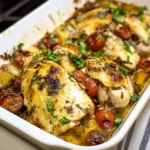
Baked Tuscan Chicken recipe
Ingredients
For the Chicken:
-
- 4 boneless, skinless Chicken Breasts (about 1 ½ – 2 pounds): Chicken breasts are the star of the show, providing a lean and versatile protein base. Boneless, skinless breasts cook quickly and evenly in the oven, absorbing the flavors of the Tuscan sauce beautifully. Choose chicken breasts that are of uniform thickness for even cooking. If you prefer, you can also use boneless, skinless chicken thighs for a richer, more flavorful option, though cooking times may need to be slightly adjusted as thighs take a bit longer to cook. Ensure your chicken is fresh or properly thawed for the best results.
-
- 1 tablespoon Olive Oil: Olive oil is essential in Mediterranean and Tuscan cuisine. It’s used for searing the chicken and adds a fruity, slightly peppery flavor to the dish. Extra virgin olive oil is recommended for its superior flavor and health benefits. If you don’t have olive oil, you can use another neutral cooking oil like avocado oil or canola oil, but olive oil truly enhances the authentic Tuscan taste.
-
- 1 teaspoon Italian Seasoning: Italian seasoning is a blend of dried herbs that are commonly used in Italian cooking, typically including oregano, basil, rosemary, thyme, and marjoram. It provides a convenient way to infuse the chicken with classic Italian herb flavors. Ensure your Italian seasoning is relatively fresh for the best aroma and flavor. You can also make your own Italian seasoning blend using individual dried herbs if you prefer.
-
- ½ teaspoon Garlic Powder: Garlic powder adds a foundational garlic flavor that complements the fresh garlic used later in the sauce. It evenly coats the chicken and provides a consistent garlic note. Garlic powder is a pantry staple that provides a quick and easy garlic flavor. While fresh garlic is preferred for the sauce, garlic powder is excellent for seasoning the chicken itself.
-
- ½ teaspoon Onion Powder: Onion powder adds a subtle savory depth to the chicken seasoning, complementing the garlic powder and Italian seasoning. It enhances the overall flavor profile of the chicken and adds a touch of umami. Like garlic powder, onion powder is a convenient way to add onion flavor and is great for dry rubs and seasonings.
-
- Salt and Black Pepper: Essential seasonings to enhance the natural flavors of the chicken and all other ingredients. Season generously to taste. Kosher salt or sea salt is recommended for its pure flavor. Freshly ground black pepper is always preferred for its brighter, more aromatic flavor compared to pre-ground pepper.
For the Creamy Tuscan Sauce:
-
- 2 tablespoons Butter: Butter adds richness, flavor, and a velvety texture to the Tuscan sauce. Unsalted butter is recommended to control the salt content of the sauce, allowing you to adjust seasoning later. Butter also helps to create a beautiful golden brown color when sautéing the garlic and sun-dried tomatoes. For a dairy-free option, you can use olive oil or a plant-based butter substitute, though butter contributes significantly to the classic creamy texture and flavor.
-
- 4 cloves Garlic, minced: Fresh garlic is crucial for the signature pungent and aromatic flavor of Tuscan cuisine. Mincing the garlic finely releases its oils and flavor more effectively. Garlic is a cornerstone of Italian cooking and provides a robust, savory base for the sauce. If you are a garlic lover, feel free to add an extra clove for a bolder garlic flavor.
-
- ½ cup Sun-dried Tomatoes, oil-packed, drained and chopped: Sun-dried tomatoes are a quintessential Tuscan ingredient. Oil-packed sun-dried tomatoes are preferred as they are softer and more flavorful. Draining them from the oil is important to prevent the sauce from becoming too oily. Chopping them into smaller pieces ensures they distribute evenly throughout the sauce and are easy to eat. Sun-dried tomatoes add a concentrated sweetness, tanginess, and chewy texture that is characteristic of Tuscan dishes. If you only have dry-packed sun-dried tomatoes, you can rehydrate them by soaking them in hot water for about 15–20 minutes before chopping.
-
- 1 cup Heavy Cream: Heavy cream is what makes the Tuscan sauce luxuriously creamy and rich. It thickens beautifully as it simmers and creates a velvety smooth sauce that coats the chicken perfectly. For a slightly lighter option, you can use half-and-half, but the sauce will be less rich and creamy. Do not substitute with milk, as it will be too thin and won’t provide the desired creamy texture. Full-fat heavy cream is recommended for the best results.
-
- ½ cup Chicken Broth: Chicken broth adds a savory depth to the sauce and helps to thin it out to the desired consistency. Low-sodium chicken broth is recommended to control the salt content of the sauce. Vegetable broth can be used as a vegetarian alternative, though chicken broth complements the chicken flavor in a more traditional way. Using a good quality broth will enhance the overall flavor of the sauce.
-
- 5 ounces Fresh Spinach, roughly chopped: Fresh spinach adds a boost of nutrients, a touch of green color, and a subtle earthy flavor to the Tuscan sauce. Spinach wilts beautifully into the hot sauce and adds a healthy element to the dish. Roughly chopping the spinach makes it easier to incorporate into the sauce and eat. You can also use frozen spinach, about 5 ounces, but ensure you thaw it completely and squeeze out excess water before adding it to the sauce.
-
- ½ cup Grated Parmesan Cheese: Parmesan cheese adds a salty, nutty, and umami-rich flavor to the Tuscan sauce. It also helps to thicken the sauce slightly and adds a delicious cheesy element. Freshly grated Parmesan is always preferred for its superior flavor and texture. Pre-grated Parmesan can be used, but it often contains cellulose and may not melt as smoothly. Parmigiano-Reggiano is the highest quality Parmesan and will provide the most authentic flavor.
-
- ¼ teaspoon Red Pepper Flakes (Optional): Red pepper flakes add a subtle hint of heat to the Tuscan sauce, balancing the richness and adding a touch of complexity. This is optional, especially if you are sensitive to spice or prefer a milder dish. Adjust the amount to your spice preference. A small pinch is usually enough to add a pleasant warmth without making the dish overly spicy.
-
- Fresh Parsley, chopped (for garnish): Fresh parsley adds a bright, herbaceous note and a pop of fresh green color as a garnish. It enhances the visual appeal of the dish and adds a final touch of freshness. Italian flat-leaf parsley is often preferred for its stronger flavor compared to curly parsley.
Instructions
-
- Preheat Oven and Prepare Chicken: Preheat your oven to 400°F (200°C). While the oven is preheating, prepare the chicken breasts. Pat the chicken breasts dry with paper towels. This helps them to sear properly and develop a nice color. Season both sides of each chicken breast generously with Italian seasoning, garlic powder, onion powder, salt, and black pepper. Ensure the seasoning is evenly distributed for maximum flavor.
-
- Sear the Chicken: Heat olive oil in a large oven-safe skillet (cast iron or stainless steel work well) over medium-high heat. Once the skillet is hot and the oil is shimmering, carefully add the seasoned chicken breasts to the skillet in a single layer. Avoid overcrowding the skillet, as this will lower the temperature and prevent proper searing. Sear the chicken for 3-4 minutes per side, until golden brown. Searing the chicken creates a flavorful crust and helps to lock in moisture, ensuring juicy and tender chicken. You don’t need to cook the chicken through at this stage; searing is just for color and flavor. Remove the seared chicken from the skillet and set aside on a plate.
-
- Sauté Garlic and Sun-dried Tomatoes: Reduce the heat to medium in the same skillet. Add butter to the skillet and let it melt. Once the butter is melted and sizzling, add the minced garlic and chopped sun-dried tomatoes. Sauté for 1-2 minutes, until the garlic is fragrant and the sun-dried tomatoes are softened and have released their flavor into the butter. Be careful not to burn the garlic, as it can become bitter. Sautéing the garlic and sun-dried tomatoes in butter creates a flavorful base for the Tuscan sauce.
-
- Make the Creamy Tuscan Sauce: Pour chicken broth into the skillet, scraping up any browned bits from the bottom of the pan. These browned bits, known as “fond,” are packed with flavor and will enrich the sauce. Bring the broth to a simmer. Once simmering, pour in the heavy cream and stir to combine. Reduce the heat to low and let the sauce simmer gently for 3-5 minutes, allowing it to thicken slightly. Simmering the sauce helps to meld the flavors together and thicken the cream.
-
- Add Spinach and Parmesan: Stir in the chopped fresh spinach and grated Parmesan cheese into the simmering sauce. Continue to stir until the spinach wilts and the Parmesan cheese is melted and incorporated into the sauce, creating a creamy and cheesy texture. The heat from the sauce will be sufficient to wilt the spinach quickly.
-
- Return Chicken to Skillet and Bake: Nestle the seared chicken breasts back into the skillet, arranging them in a single layer in the creamy Tuscan sauce. Ensure the chicken is partially submerged in the sauce. Transfer the skillet to the preheated oven and bake for 15-20 minutes, or until the chicken is cooked through and reaches an internal temperature of 165°F (74°C). Use a meat thermometer to check the internal temperature at the thickest part of the chicken breast to ensure it is fully cooked.
-
- Garnish and Serve: Once the chicken is cooked through, remove the skillet from the oven. Garnish generously with fresh chopped parsley. Let the Baked Tuscan Chicken rest for a few minutes before serving. This allows the juices to redistribute, resulting in even more tender and flavorful chicken. Serve hot and enjoy the creamy, flavorful goodness of your homemade Baked Tuscan Chicken!
Nutrition
- Serving Size: one normal portion
- Calories: 500-600
- Sugar: 3-5 grams
- Sodium: 600-800 mg
- Fat: 30-35 grams
- Saturated Fat: 18-22 grams
- Carbohydrates: 10-12 grams
- Fiber: 2-3 grams
- Protein: 45-50 grams
- Cholesterol: 200-250 mg