
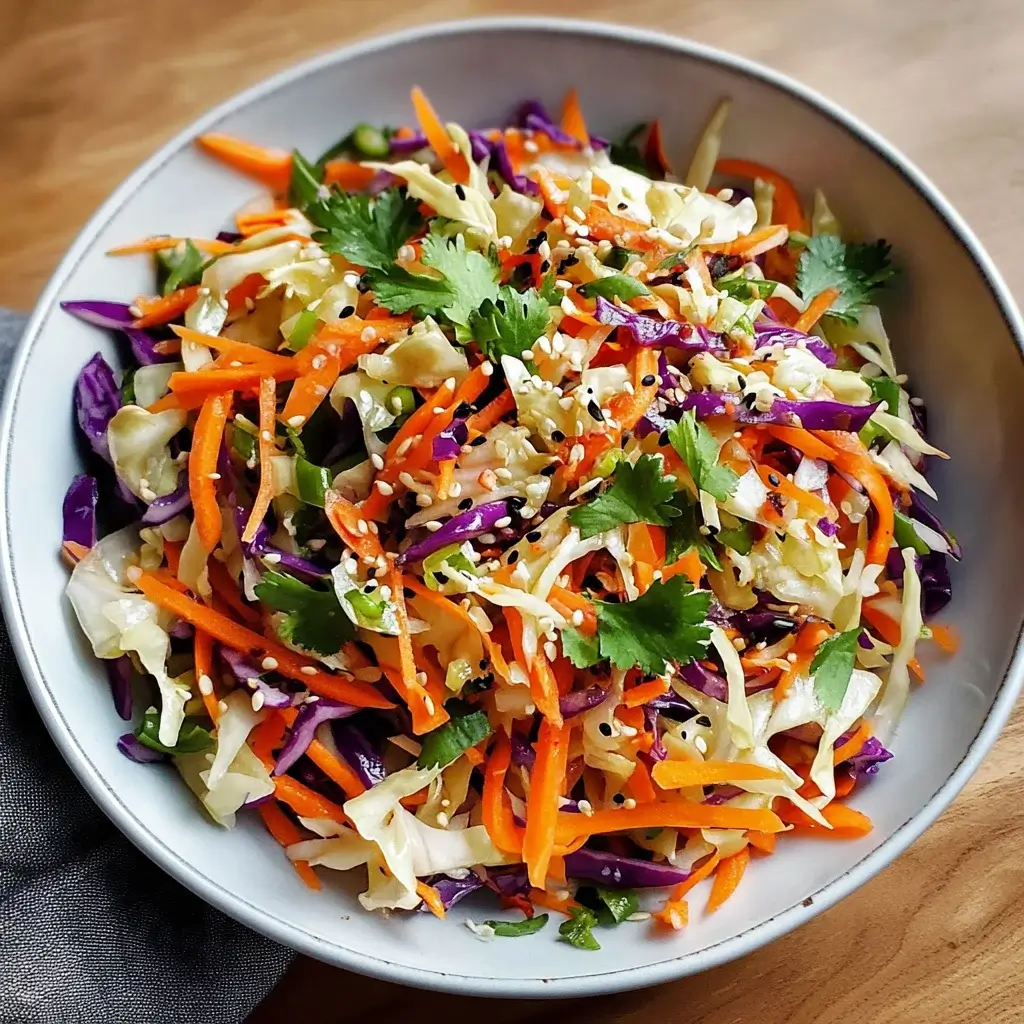
My family and I are always looking for vibrant, healthy, and flavorful side dishes that can brighten up our meals. We love Asian flavors, and sometimes we crave something lighter and fresher than the usual rice or noodle dishes. That’s when Asian Cabbage Salad became a staple in our kitchen. This salad is a total game-changer! The crunchy cabbage, the colorful veggies, and that tangy, savory-sweet dressing – it’s an explosion of textures and tastes in every bite. Even my kids, who are sometimes picky about salads, devour this one. It’s incredibly versatile too, pairing perfectly with everything from grilled chicken and fish to tofu and spring rolls. Plus, it’s so easy to make and can be prepped ahead of time, making it a lifesaver for busy weeknights or potlucks. Honestly, once you try this Asian Cabbage Salad, you’ll be hooked. It’s not just a salad; it’s a flavor adventure!
Ingredients: The Vibrant Components of Asian Cabbage Salad
The magic of Asian Cabbage Salad lies in the harmonious blend of fresh, crunchy vegetables and a vibrant, flavorful dressing. Each ingredient plays a crucial role in creating the perfect balance of textures and tastes. Let’s break down the key components and explore how to choose the best ingredients for your salad:
- Cabbage: The Crunchy Base
- Napa Cabbage (Chinese Cabbage): This is often considered the star of Asian Cabbage Salad. Napa cabbage is milder and sweeter than green cabbage, with tender, crinkly leaves that provide a wonderful delicate crunch. Its elongated shape and softer texture make it perfect for salads, as it doesn’t become overly tough even when dressed.
- Green Cabbage: A classic and readily available choice, green cabbage provides a more robust crunch and slightly peppery flavor. If using green cabbage, shred it thinly and consider massaging it lightly with a bit of salt and sugar (or the dressing itself) to tenderize it slightly and make it easier to digest.
- Red Cabbage (Purple Cabbage): Red cabbage adds a beautiful pop of color and a slightly bolder, earthier flavor to the salad. It’s also packed with antioxidants. Like green cabbage, shred it thinly and consider a light massage to soften its texture. Using a mix of green and red cabbage is visually appealing and flavorfully balanced.
- Savoy Cabbage: Savoy cabbage, with its crinkled leaves and milder flavor, is another excellent option. It’s more tender than green cabbage and less peppery, making it a good alternative if you prefer a gentler cabbage flavor.
- Freshness: Select firm, heavy heads of cabbage with tightly packed leaves. Avoid heads with blemishes, bruises, or wilted outer leaves.
- Shredding: The key to a great cabbage salad is thinly shredded cabbage. You can use a sharp knife, a mandoline (use caution!), or a food processor with a shredding blade. Thin shreds ensure the cabbage is tender and absorbs the dressing well.
- Core Removal: Before shredding, remove the tough core from the base of the cabbage head.
- Washing: Wash the shredded cabbage in a salad spinner or colander and spin or pat it dry thoroughly. Excess moisture will dilute the dressing and make the salad less crisp.
- Other Vegetables: Adding Color, Flavor, and Texture
- Carrots: Shredded or julienned carrots add sweetness, vibrant color, and a satisfying crunch. Matchstick carrots are a convenient option, or you can shred whole carrots yourself.
- Bell Peppers: Red, yellow, or orange bell peppers (or a combination) contribute sweetness, crispness, and bright colors. Julienne or thinly slice them. Green bell peppers can be used but have a slightly more bitter flavor.
- Green Onions (Scallions): Thinly sliced green onions provide a mild oniony bite and fresh flavor. Use both the white and green parts.
- Edamame (Shelled Soybeans): Cooked and shelled edamame adds protein, a slightly nutty flavor, and a pleasant chewy texture. You can use frozen edamame, steamed or microwaved until tender.
- Snow Peas or Snap Peas: Thinly sliced snow peas or snap peas offer a delicate sweetness and crispness. Snap peas can be eaten raw or lightly blanched for a softer texture.
- Cucumber: English cucumbers or Persian cucumbers, diced or thinly sliced, bring a refreshing coolness and mild flavor. Remove the seeds if using larger cucumbers.
- Radishes: Thinly sliced radishes add a peppery bite and vibrant color.
- Broccoli Slaw Mix: For convenience, you can use a pre-packaged broccoli slaw mix, which often includes shredded broccoli stalks, carrots, and red cabbage.
- Red Onion: Thinly sliced red onion can be added for a stronger onion flavor, but use sparingly as it can be quite pungent.
- Jicama: Julienned jicama adds a crisp, slightly sweet, and nutty flavor.
- Celery: Finely diced celery provides a subtle savory note and crunch.
- The Asian Dressing: The Flavor Powerhouse
- Soy Sauce (or Tamari/Coconut Aminos): Soy sauce provides the essential salty and umami base of the dressing. Use low-sodium soy sauce to control the saltiness. For gluten-free options, use tamari or coconut aminos.
- Rice Vinegar (Unseasoned): Rice vinegar adds a mild, slightly sweet acidity that balances the saltiness and richness of the other dressing ingredients. Unseasoned rice vinegar is crucial; avoid seasoned rice vinegar, which contains added sugar and salt.
- Sesame Oil (Toasted): Toasted sesame oil is a key flavor component, contributing a rich, nutty aroma and flavor. A little goes a long way, so use it judiciously.
- Ginger (Freshly Grated): Fresh ginger adds a warm, spicy, and slightly citrusy note that is characteristic of Asian cuisine. Grate it finely for best flavor distribution.
- Garlic (Minced): Minced garlic provides pungency and depth of flavor. Use fresh garlic for the most vibrant taste.
- Sweetener (Honey, Maple Syrup, or Agave): A touch of sweetness balances the savory and acidic elements of the dressing. Honey, maple syrup, or agave nectar are all good choices. Adjust the amount to your preference. For a vegan option, use maple syrup or agave.
- Sriracha or Red Pepper Flakes (Optional): For a touch of heat, add sriracha or a pinch of red pepper flakes. Adjust the amount to your spice preference.
- Optional Additions:
- Peanut Butter (Smooth): A spoonful of smooth peanut butter adds creaminess, nutty flavor, and richness.
- Tahini (Sesame Seed Paste): Tahini contributes a slightly bitter, nutty flavor and creamy texture, similar to peanut butter but nut-free.
- Citrus Juice (Lime or Orange): A squeeze of lime or orange juice can add extra brightness and acidity.
- Mirin (Sweet Rice Wine): A splash of mirin can enhance the sweetness and depth of flavor.
- Rice Wine Vinegar (Seasoned): If you prefer a sweeter dressing and don’t have unseasoned rice vinegar, you can use seasoned rice vinegar, but you may need to reduce or omit the added sweetener.
- Whisking: The dressing is typically made by whisking all the ingredients together until well combined and slightly emulsified.
- Emulsification (Optional): For a creamier, more stable dressing, you can emulsify it by whisking vigorously or using an immersion blender while slowly drizzling in a neutral oil like canola or grapeseed oil. However, for a lighter dressing, this step is not necessary.
- Taste and Adjust: Always taste the dressing and adjust the seasonings to your preference. You may want to add more soy sauce for saltiness, rice vinegar for acidity, sweetener for sweetness, or ginger/garlic for more pungency.
- Toppings and Mix-ins: Adding Texture and Finishing Touches
- Toasted Sesame Seeds: Toasted sesame seeds add a nutty flavor, visual appeal, and a delightful crunch. Toast them in a dry pan over medium heat until fragrant and golden brown, being careful not to burn them.
- Nuts (Sliced Almonds, Peanuts, or Cashews): Toasted sliced almonds, chopped peanuts, or cashews provide extra crunch, protein, and nutty flavor. Toast them for enhanced flavor and texture.
- Seeds (Sunflower Seeds or Pepitas): Sunflower seeds or pepitas (pumpkin seeds) offer a different type of crunch and nutritional benefits. Toast them for best flavor.
- Crispy Wonton Strips or Chow Mein Noodles: These add a satisfying crispy crunch and a fun textural element. You can buy pre-made crispy wonton strips or chow mein noodles, or make your own by frying wonton wrappers or egg noodles.
- Mandarin Oranges (Canned or Fresh): Mandarin oranges add sweetness, juicy bursts of flavor, and a touch of citrus. Canned mandarin oranges are convenient, but fresh mandarin orange segments are even more delicious.
- Cilantro or Mint (Freshly Chopped): Fresh cilantro or mint adds a bright, herbaceous flavor and freshness. Choose cilantro for a more classic Asian flavor or mint for a slightly cooler, refreshing twist.
- Spicy Peanuts or Chili Garlic Peanuts: For extra spice and crunch, add spicy peanuts or chili garlic peanuts.
This detailed ingredient guide empowers you to select the best components and customize your Asian Cabbage Salad to your liking, ensuring a vibrant, flavorful, and texturally exciting salad every time.
Instructions: Crafting Delicious Asian Cabbage Salad Step-by-Step
Making Asian Cabbage Salad is a breeze, and following these simple steps will guarantee a perfectly balanced and delicious salad every time.
- Prepare the Cabbage:
- Remove the core from the cabbage head.
- Shred the cabbage thinly using a sharp knife, mandoline, or food processor. Aim for fine shreds for the best texture.
- Wash the shredded cabbage in a salad spinner or colander and spin or pat it dry thoroughly. Set aside.
- Prepare the Other Vegetables:
- Shred or julienne carrots.
- Julienne or thinly slice bell peppers.
- Thinly slice green onions.
- If using snow peas or snap peas, thinly slice them.
- If using cucumber, dice or thinly slice it.
- If using radishes, thinly slice them.
- Set all prepared vegetables aside.
- Make the Asian Dressing:
- In a small bowl or jar, whisk together soy sauce (or tamari/coconut aminos), rice vinegar, sesame oil, grated fresh ginger, minced garlic, sweetener (honey, maple syrup, or agave), and sriracha or red pepper flakes (if using).
- Whisk until all ingredients are well combined and slightly emulsified.
- Taste the dressing and adjust seasonings as needed (more soy sauce for salt, rice vinegar for acidity, sweetener for sweetness, ginger/garlic for pungency, sriracha for heat).
- Combine Salad Ingredients (Just Before Serving or with Make-Ahead Tip):
- In a large bowl, combine the shredded cabbage, carrots, bell peppers, green onions, and any other vegetables you are using (edamame, snow peas, cucumber, radishes, etc.).
- Dress the Salad (Timing is Key):
- For immediate serving: Pour the Asian dressing over the vegetables in the bowl. Toss gently but thoroughly to ensure all the cabbage and vegetables are evenly coated with the dressing.
- For making ahead (recommended): Do not dress the salad immediately. Store the undressed salad mixture and the dressing separately in airtight containers in the refrigerator. Dress the salad just before serving to maintain maximum crispness.
- Add Toppings (Just Before Serving):
- Just before serving, sprinkle the desired toppings over the dressed salad. This may include toasted sesame seeds, toasted nuts (almonds, peanuts, cashews), sunflower seeds, crispy wonton strips or chow mein noodles, mandarin oranges, and fresh herbs (cilantro or mint).
- Toss lightly again to distribute the toppings evenly.
- Serve and Enjoy:
- Serve the Asian Cabbage Salad immediately for the best crispness.
- If made ahead, give the dressing a quick whisk before pouring it over the salad.
Tips for Perfect Salad:
- Thinly Shredded Cabbage: Thin shreds are essential for tenderness and dressing absorption.
- Dry Cabbage: Ensure the shredded cabbage is thoroughly dry after washing to prevent diluting the dressing.
- Don’t Overdress: Start with slightly less dressing than you think you need and add more to taste. You want the salad to be coated, not swimming in dressing.
- Dress Just Before Serving (for Crispness): For optimal crispness, dress the salad right before serving. If making ahead, keep the dressing and salad base separate and combine them just before serving.
- Toast Nuts and Seeds: Toasting nuts and seeds enhances their flavor and crunch significantly.
- Taste and Adjust Dressing: Always taste the dressing and adjust seasonings to your preference.
- Massage Cabbage (Optional for Green/Red Cabbage): If using green or red cabbage and prefer a softer texture, you can lightly massage the shredded cabbage with a pinch of salt and sugar (or a bit of the dressing) for a few minutes to tenderize it slightly before adding other ingredients. Napa cabbage usually doesn’t need massaging.
By following these clear instructions and helpful tips, you’ll be able to effortlessly create a vibrant and delicious Asian Cabbage Salad that is sure to impress.
Nutrition Facts: A Healthy and Refreshing Choice
Asian Cabbage Salad is not only delicious but also a nutritious and healthy side dish. It’s packed with vitamins, minerals, fiber, and antioxidants, making it a great addition to a balanced diet. The nutritional content can vary slightly depending on the specific ingredients and dressing amounts used, but here’s a general estimate for a serving of Asian Cabbage Salad.
(Approximate Nutrition Facts per Serving – Based on a recipe using about 6 servings):
- Serving Size: Approximately 1 cup of Asian Cabbage Salad
- Calories: 120-180 kcal (depending on dressing richness and toppings)
- Protein: 2-4 grams
- Fat: 8-12 grams
- Saturated Fat: 1-2 grams (primarily from sesame oil and optional peanut butter/tahini)
- Healthy Fats: Monounsaturated and Polyunsaturated fats from sesame oil and nuts/seeds
- Cholesterol: 0 mg
- Sodium: 250-400 mg (depending on soy sauce amount and type)
- Carbohydrates: 10-15 grams
- Fiber: 3-5 grams
- Sugar: 5-8 grams (from vegetables and sweetener in dressing)
- Vitamins and Minerals:
- Vitamin C: Excellent source, especially from cabbage and bell peppers.
- Vitamin K: Good source, particularly from cabbage and leafy greens.
- Vitamin A: Present in carrots and bell peppers.
- Folate: Found in cabbage and leafy greens.
- Potassium: Contributed by various vegetables.
- Antioxidants: Rich in antioxidants from colorful vegetables like red cabbage, bell peppers, and carrots.
- Fiber: Good source of dietary fiber from cabbage and other vegetables, promoting digestive health and satiety.
Health Benefits:
- Low in Calories: Relatively low in calories, especially when using a lighter dressing and controlling portion sizes.
- Rich in Fiber: High fiber content promotes digestive health, helps regulate blood sugar, and contributes to feelings of fullness.
- Excellent Source of Vitamins and Minerals: Provides a wide range of essential vitamins and minerals, supporting overall health and well-being.
- High in Antioxidants: Antioxidants help protect cells from damage caused by free radicals, contributing to disease prevention.
- Healthy Fats: Contains healthy unsaturated fats from sesame oil and nuts/seeds, which are beneficial for heart health.
- Vegetarian and Vegan Friendly: Naturally vegetarian and easily made vegan by using maple syrup or agave instead of honey.
Making it Healthier:
- Reduce Sweetener: Use less sweetener in the dressing or opt for a natural sweetener like stevia or monk fruit.
- Lower Sodium Soy Sauce: Always use low-sodium soy sauce to reduce sodium content.
- Healthy Oils: Sesame oil is healthy, but be mindful of portion sizes. You can use a neutral oil like avocado oil in combination to reduce the intensity of sesame oil if desired.
- Increase Vegetables: Add more non-starchy vegetables to increase fiber and nutrient density and further reduce calorie density.
- Portion Control: Be mindful of portion sizes to manage calorie intake, especially if you are watching your weight.
Asian Cabbage Salad is a delicious and nutritious choice that can easily fit into a healthy eating plan. Its vibrant ingredients provide a wealth of vitamins, minerals, and fiber, making it a guilt-free and satisfying side dish.
Preparation Time: Quick and Easy Salad Creation
One of the best things about Asian Cabbage Salad is how quick and easy it is to prepare. It’s perfect for busy weeknights, last-minute gatherings, or any time you need a flavorful and healthy side dish in a hurry.
- Prep Time: 15-20 minutes (This includes shredding cabbage and vegetables, mincing garlic, grating ginger, and measuring dressing ingredients).
- No Cook Time: This is a no-cook salad, which is a huge time-saver!
- Total Time: Approximately 15-20 minutes.
Time-Saving Tips:
- Pre-shredded Cabbage: Purchase pre-shredded cabbage or coleslaw mix to significantly cut down on prep time.
- Pre-cut Vegetables: Use pre-shredded carrots or matchstick carrots. You can also find pre-cut bell peppers in some grocery stores.
- Food Processor: Use a food processor with a shredding blade to quickly shred cabbage and carrots.
- Pre-minced Garlic and Ginger (Jarred): While fresh is always best, using pre-minced garlic and ginger from a jar can save a few minutes of prep time in a pinch.
- Make Dressing Ahead: The dressing can be made ahead of time and stored in the refrigerator for up to a week. This allows you to quickly assemble the salad when needed.
- Assemble in Advance (Undressed): You can shred the cabbage and vegetables ahead of time and store them separately in airtight containers in the refrigerator for up to a day. Dress just before serving.
Asian Cabbage Salad is a fantastic option for anyone looking for a fast, flavorful, and healthy side dish. Its minimal prep time makes it a weeknight winner and a go-to recipe for effortless entertaining.
How to Serve Asian Cabbage Salad: Versatile Pairings for Any Occasion
Asian Cabbage Salad is incredibly versatile and pairs beautifully with a wide range of dishes, making it a fantastic side for countless cuisines and meal types. Here are some serving suggestions to inspire you:
Main Course Pairings:
- Asian-Inspired Dishes:
- Stir-fries: Serve alongside chicken, beef, shrimp, tofu, or vegetable stir-fries. The crisp salad provides a refreshing contrast to the warm, savory stir-fry.
- Grilled Meats and Fish: Pairs wonderfully with grilled chicken, steak, pork, salmon, tuna, or shrimp.
- Sushi and Sashimi: A refreshing side for sushi, sashimi, and poke bowls.
- Spring Rolls and Egg Rolls: Complements the flavors and textures of spring rolls and egg rolls.
- Dumplings and Gyoza: A light and crunchy side for steamed or pan-fried dumplings and gyoza.
- Teriyaki Dishes: Serve with teriyaki chicken, salmon, or tofu.
- Korean BBQ: A classic side dish for Korean BBQ, providing a refreshing counterpoint to the rich, grilled meats.
- Ramen and Noodle Soups: Add a scoop of Asian Cabbage Salad to ramen or other noodle soups for extra texture and freshness.
- Other Cuisines and Serving Styles:
- Tacos and Wraps: Use Asian Cabbage Salad as a topping for tacos, lettuce wraps, or sandwiches, adding crunch and flavor.
- Burgers and Sandwiches: Serve as a side dish for burgers, sandwiches, or wraps, especially those with Asian-inspired flavors.
- BBQs and Potlucks: A crowd-pleasing side dish for BBQs, potlucks, picnics, and summer gatherings.
- Light Lunch: Enjoy a bowl of Asian Cabbage Salad as a light and healthy lunch. You can add grilled chicken, tofu, or edamame for extra protein to make it a more substantial meal.
- Bowl Meals: Use as a base or component in grain bowls or Buddha bowls, adding a crunchy and flavorful element.
- Appetizer or Starter: Serve small portions of Asian Cabbage Salad as a refreshing appetizer or starter before a meal.
Serving Styles and Garnishes:
- Side Salad: The most common way to serve Asian Cabbage Salad is as a side dish alongside a main course.
- Topping: Use it as a topping for tacos, bowls, burgers, or sandwiches.
- Bowl Component: Incorporate it into larger bowl meals as a crunchy salad element.
- Garnishes:
- Extra Toasted Sesame Seeds: Sprinkle extra toasted sesame seeds on top for visual appeal and flavor.
- Fresh Herbs: Garnish with extra fresh cilantro or mint sprigs.
- Mandarin Orange Segments: Add a few mandarin orange segments on top for extra color and sweetness.
- Chili Garlic Sauce Drizzle: For extra heat, drizzle a little chili garlic sauce over the salad.
- Lime Wedges: Serve with lime wedges for those who want an extra squeeze of citrus.
With its refreshing flavor and versatile nature, Asian Cabbage Salad is a wonderful side dish that can elevate countless meals and occasions.
Additional Tips for Exceptional Asian Cabbage Salad
To consistently create outstanding Asian Cabbage Salad and impress your family and friends, consider these five additional tips:
- Massage Heartier Cabbages for Tenderness (Optional): If using green or red cabbage, and you prefer a slightly softer texture, lightly massage the shredded cabbage with a pinch of salt and sugar (or a tablespoon of the dressing) for a few minutes before adding other ingredients. This helps to break down the cabbage fibers and make it more tender and easier to digest. Napa cabbage usually doesn’t need massaging.
- Toast Your Sesame Seeds and Nuts/Seeds: Toasting sesame seeds, almonds, peanuts, cashews, or sunflower seeds before adding them to the salad significantly enhances their flavor and crunch. Toast them in a dry pan over medium heat until fragrant and lightly golden brown, being careful not to burn them. Let them cool before adding to the salad.
- Make the Dressing Ahead of Time: The Asian dressing can be made up to a week in advance and stored in an airtight container in the refrigerator. Making the dressing ahead saves time during meal prep and allows the flavors to meld together even more beautifully. Just give it a good whisk before using.
- Adjust Sweetness and Spiciness to Your Preference: Taste the dressing and adjust the amount of sweetener (honey, maple syrup, agave) and sriracha or red pepper flakes to your liking. Some people prefer a sweeter salad, while others like it spicier. Start with the recommended amounts and adjust to your taste.
- Add Protein to Make it a Meal: To transform Asian Cabbage Salad into a more substantial meal, add protein. Grilled chicken, shrimp, tofu, tempeh, edamame, or chickpeas are all excellent additions. You can toss cooked protein into the salad or serve it on top.
By incorporating these extra tips, you’ll be able to consistently make exceptional Asian Cabbage Salad that is bursting with flavor, perfect texture, and tailored to your personal preferences.
FAQ Section: Your Asian Cabbage Salad Questions Answered
Here are some frequently asked questions about making Asian Cabbage Salad to help you troubleshoot and perfect your recipe:
Q1: Can I make Asian Cabbage Salad ahead of time?
A1: Yes, you can definitely prepare components of Asian Cabbage Salad ahead of time. For the best crispness, it’s recommended to keep the dressing and the salad base (shredded cabbage and vegetables) separate until just before serving. The dressing can be made up to a week in advance and stored in the refrigerator. The shredded cabbage and vegetables can be prepped and stored separately in airtight containers in the refrigerator for up to a day. Dress and add toppings just before serving.
Q2: Can I use different types of cabbage?
A2: Yes, you can use different types of cabbage. Napa cabbage is often preferred for its mild flavor and tender texture, but green cabbage, red cabbage, and savoy cabbage also work well. Green and red cabbage may benefit from light massaging to tenderize them. Using a mix of different cabbages can create a more complex flavor and visually appealing salad.
Q3: Is Asian Cabbage Salad vegetarian or vegan?
A3: Yes, Asian Cabbage Salad is naturally vegetarian. To make it vegan, simply ensure you use a vegan sweetener in the dressing, such as maple syrup or agave nectar, instead of honey. The rest of the ingredients are plant-based.
Q4: How long does Asian Cabbage Salad last in the refrigerator?
A4: Dressed Asian Cabbage Salad is best eaten within a few hours of being dressed for optimal crispness. However, if you have leftovers, you can store dressed salad in an airtight container in the refrigerator for up to 1-2 days. Keep in mind that the cabbage will soften over time, and the salad will lose some of its crispness. Undressed salad base (cabbage and vegetables) can last for up to 2-3 days in the refrigerator.
Q5: Can I add protein to Asian Cabbage Salad to make it a main course?
A5: Absolutely! Adding protein is a great way to make Asian Cabbage Salad a more substantial and satisfying meal. Excellent protein additions include grilled chicken, shrimp, tofu, tempeh, edamame, chickpeas, or even leftover cooked salmon or steak. You can toss the protein into the salad or serve it on top.
This comprehensive FAQ section addresses common questions and concerns about Asian Cabbage Salad, providing helpful answers and tips to ensure your salad-making success.
Print
Asian Cabbage Salad recipe
Ingredients
-
- Cabbage: The Crunchy Base
- Napa Cabbage (Chinese Cabbage): This is often considered the star of Asian Cabbage Salad. Napa cabbage is milder and sweeter than green cabbage, with tender, crinkly leaves that provide a wonderful delicate crunch. Its elongated shape and softer texture make it perfect for salads, as it doesn’t become overly tough even when dressed.Green Cabbage: A classic and readily available choice, green cabbage provides a more robust crunch and slightly peppery flavor. If using green cabbage, shred it thinly and consider massaging it lightly with a bit of salt and sugar (or the dressing itself) to tenderize it slightly and make it easier to digest.Red Cabbage (Purple Cabbage): Red cabbage adds a beautiful pop of color and a slightly bolder, earthier flavor to the salad. It’s also packed with antioxidants. Like green cabbage, shred it thinly and consider a light massage to soften its texture. Using a mix of green and red cabbage is visually appealing and flavorfully balanced.Savoy Cabbage: Savoy cabbage, with its crinkled leaves and milder flavor, is another excellent option. It’s more tender than green cabbage and less peppery, making it a good alternative if you prefer a gentler cabbage flavor.
Choosing and Preparing Cabbage:
-
- Freshness: Select firm, heavy heads of cabbage with tightly packed leaves. Avoid heads with blemishes, bruises, or wilted outer leaves.
-
- Shredding: The key to a great cabbage salad is thinly shredded cabbage. You can use a sharp knife, a mandoline (use caution!), or a food processor with a shredding blade. Thin shreds ensure the cabbage is tender and absorbs the dressing well.
-
- Core Removal: Before shredding, remove the tough core from the base of the cabbage head.
-
- Washing: Wash the shredded cabbage in a salad spinner or colander and spin or pat it dry thoroughly. Excess moisture will dilute the dressing and make the salad less crisp.
- Cabbage: The Crunchy Base
-
- Other Vegetables: Adding Color, Flavor, and Texture
- Carrots: Shredded or julienned carrots add sweetness, vibrant color, and a satisfying crunch. Matchstick carrots are a convenient option, or you can shred whole carrots yourself.
- Bell Peppers: Red, yellow, or orange bell peppers (or a combination) contribute sweetness, crispness, and bright colors. Julienne or thinly slice them. Green bell peppers can be used but have a slightly more bitter flavor.
- Green Onions (Scallions): Thinly sliced green onions provide a mild oniony bite and fresh flavor. Use both the white and green parts.
- Edamame (Shelled Soybeans): Cooked and shelled edamame adds protein, a slightly nutty flavor, and a pleasant chewy texture. You can use frozen edamame, steamed or microwaved until tender.
- Snow Peas or Snap Peas: Thinly sliced snow peas or snap peas offer a delicate sweetness and crispness. Snap peas can be eaten raw or lightly blanched for a softer texture.
- Cucumber: English cucumbers or Persian cucumbers, diced or thinly sliced, bring a refreshing coolness and mild flavor. Remove the seeds if using larger cucumbers.
- Radishes: Thinly sliced radishes add a peppery bite and vibrant color.
Vegetable Variations:
-
- Broccoli Slaw Mix: For convenience, you can use a pre-packaged broccoli slaw mix, which often includes shredded broccoli stalks, carrots, and red cabbage.
-
- Red Onion: Thinly sliced red onion can be added for a stronger onion flavor, but use sparingly as it can be quite pungent.
-
- Jicama: Julienned jicama adds a crisp, slightly sweet, and nutty flavor.
-
- Celery: Finely diced celery provides a subtle savory note and crunch.
- Other Vegetables: Adding Color, Flavor, and Texture
-
- The Asian Dressing: The Flavor Powerhouse
- Soy Sauce (or Tamari/Coconut Aminos): Soy sauce provides the essential salty and umami base of the dressing. Use low-sodium soy sauce to control the saltiness. For gluten-free options, use tamari or coconut aminos.
- Rice Vinegar (Unseasoned): Rice vinegar adds a mild, slightly sweet acidity that balances the saltiness and richness of the other dressing ingredients. Unseasoned rice vinegar is crucial; avoid seasoned rice vinegar, which contains added sugar and salt.
- Sesame Oil (Toasted): Toasted sesame oil is a key flavor component, contributing a rich, nutty aroma and flavor. A little goes a long way, so use it judiciously.
- Ginger (Freshly Grated): Fresh ginger adds a warm, spicy, and slightly citrusy note that is characteristic of Asian cuisine. Grate it finely for best flavor distribution.
- Garlic (Minced): Minced garlic provides pungency and depth of flavor. Use fresh garlic for the most vibrant taste.
- Sweetener (Honey, Maple Syrup, or Agave): A touch of sweetness balances the savory and acidic elements of the dressing. Honey, maple syrup, or agave nectar are all good choices. Adjust the amount to your preference. For a vegan option, use maple syrup or agave.
- Sriracha or Red Pepper Flakes (Optional): For a touch of heat, add sriracha or a pinch of red pepper flakes. Adjust the amount to your spice preference.
- Optional Additions:
- Peanut Butter (Smooth): A spoonful of smooth peanut butter adds creaminess, nutty flavor, and richness.
- Tahini (Sesame Seed Paste): Tahini contributes a slightly bitter, nutty flavor and creamy texture, similar to peanut butter but nut-free.
- Citrus Juice (Lime or Orange): A squeeze of lime or orange juice can add extra brightness and acidity.
- Mirin (Sweet Rice Wine): A splash of mirin can enhance the sweetness and depth of flavor.
- Rice Wine Vinegar (Seasoned): If you prefer a sweeter dressing and don’t have unseasoned rice vinegar, you can use seasoned rice vinegar, but you may need to reduce or omit the added sweetener.
Making the Dressing:
-
- Whisking: The dressing is typically made by whisking all the ingredients together until well combined and slightly emulsified.
-
- Emulsification (Optional): For a creamier, more stable dressing, you can emulsify it by whisking vigorously or using an immersion blender while slowly drizzling in a neutral oil like canola or grapeseed oil. However, for a lighter dressing, this step is not necessary.
-
- Taste and Adjust: Always taste the dressing and adjust the seasonings to your preference. You may want to add more soy sauce for saltiness, rice vinegar for acidity, sweetener for sweetness, or ginger/garlic for more pungency.
- The Asian Dressing: The Flavor Powerhouse
-
- Toppings and Mix-ins: Adding Texture and Finishin
-
- Toasted Sesame Seeds: Toasted sesame seeds add a nutty flavor, visual appeal, and a delightful crunch. Toast them in a dry pan over medium heat until fragrant and golden brown, being careful not to burn them.
-
- Nuts (Sliced Almonds, Peanuts, or Cashews): Toasted sliced almonds, chopped peanuts, or cashews provide extra crunch, protein, and nutty flavor. Toast them for enhanced flavor and texture.
-
- Seeds (Sunflower Seeds or Pepitas): Sunflower seeds or pepitas (pumpkin seeds) offer a different type of crunch and nutritional benefits. Toast them for best flavor.
-
- Crispy Wonton Strips or Chow Mein Noodles: These add a satisfying crispy crunch and a fun textural element. You can buy pre-made crispy wonton strips or chow mein noodles, or make your own by frying wonton wrappers or egg noodles.
-
- Mandarin Oranges (Canned or Fresh): Mandarin oranges add sweetness, juicy bursts of flavor, and a touch of citrus. Canned mandarin oranges are convenient, but fresh mandarin orange segments are even more delicious.
-
- Cilantro or Mint (Freshly Chopped): Fresh cilantro or mint adds a bright, herbaceous flavor and freshness. Choose cilantro for a more classic Asian flavor or mint for a slightly cooler, refreshing twist.
-
- Spicy Peanuts or Chili Garlic Peanuts: For extra spice and crunch, add spicy peanuts or chili garlic peanuts.
-
- Toppings and Mix-ins: Adding Texture and Finishin
Instructions
-
- Prepare the Cabbage:
-
- Remove the core from the cabbage head.
-
- Shred the cabbage thinly using a sharp knife, mandoline, or food processor. Aim for fine shreds for the best texture.
-
- Wash the shredded cabbage in a salad spinner or colander and spin or pat it dry thoroughly. Set aside.
-
- Prepare the Cabbage:
-
- Prepare the Other Vegetables:
-
- Shred or julienne carrots.
-
- Julienne or thinly slice bell peppers.
-
- Thinly slice green onions.
-
- If using snow peas or snap peas, thinly slice them.
-
- If using cucumber, dice or thinly slice it.
-
- If using radishes, thinly slice them.
-
- Set all prepared vegetables aside.
-
- Prepare the Other Vegetables:
-
- Make the Asian Dressing:
-
- In a small bowl or jar, whisk together soy sauce (or tamari/coconut aminos), rice vinegar, sesame oil, grated fresh ginger, minced garlic, sweetener (honey, maple syrup, or agave), and sriracha or red pepper flakes (if using).
-
- Whisk until all ingredients are well combined and slightly emulsified.
-
- Taste the dressing and adjust seasonings as needed (more soy sauce for salt, rice vinegar for acidity, sweetener for sweetness, ginger/garlic for pungency, sriracha for heat).
-
- Make the Asian Dressing:
-
- Combine Salad Ingredients (Just Before Serving or with Make-Ahead Tip):
-
- In a large bowl, combine the shredded cabbage, carrots, bell peppers, green onions, and any other vegetables you are using (edamame, snow peas, cucumber, radishes, etc.).
-
- Combine Salad Ingredients (Just Before Serving or with Make-Ahead Tip):
-
- Dress the Salad (Timing is Key):
-
- For immediate serving: Pour the Asian dressing over the vegetables in the bowl. Toss gently but thoroughly to ensure all the cabbage and vegetables are evenly coated with the dressing.
-
- For making ahead (recommended): Do not dress the salad immediately. Store the undressed salad mixture and the dressing separately in airtight containers in the refrigerator. Dress the salad just before serving to maintain maximum crispness.
-
- Dress the Salad (Timing is Key):
-
- Add Toppings (Just Before Serving):
-
- Just before serving, sprinkle the desired toppings over the dressed salad. This may include toasted sesame seeds, toasted nuts (almonds, peanuts, cashews), sunflower seeds, crispy wonton strips or chow mein noodles, mandarin oranges, and fresh herbs (cilantro or mint).
-
- Toss lightly again to distribute the toppings evenly.
-
- Add Toppings (Just Before Serving):
-
- Serve and Enjoy:
-
- Serve the Asian Cabbage Salad immediately for the best crispness.
-
- If made ahead, give the dressing a quick whisk before pouring it over the salad.
-
- Serve and Enjoy:
Nutrition
- Serving Size: one normal portion
- Calories: 120-180
- Sugar: 5-8 grams
- Sodium: 250-400 mg
- Fat: 8-12 grams
- Saturated Fat: 1-2 grams
- Carbohydrates: 10-15 grams
- Fiber: 3-5 grams
- Protein: 2-4 grams