
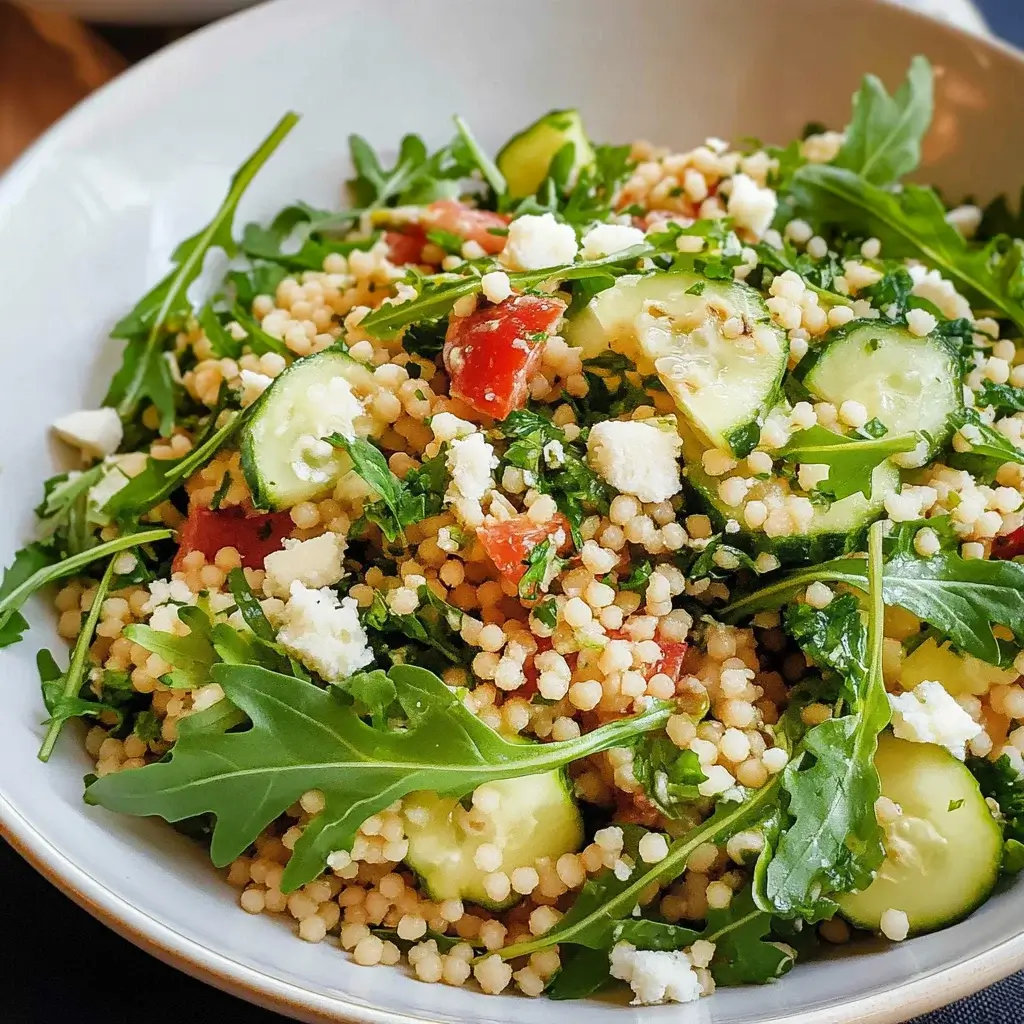

This Arugula Couscous Salad wasn’t born out of meticulous planning, but rather a happy accident on a busy weeknight. I had some leftover cooked couscous, a bag of peppery arugula threatening to wilt in the crisper drawer, and a desperate need for a quick, healthy side dish. Throwing caution to the wind, I tossed them together with a simple lemon vinaigrette, a handful of toasted almonds I found in the pantry, and some crumbled feta cheese. I wasn’t expecting much, honestly, just something to fill the plate next to grilled chicken. But the result? Absolutely spectacular. The fluffy couscous soaked up the bright dressing, the arugula provided a vibrant, peppery bite that cut through the richness of the feta, and the almonds added a crucial crunch. It was fresh, flavourful, satisfying, and unbelievably easy. My husband, initially skeptical about a “salad for dinner,” declared it the best part of the meal. Since that night, this Arugula Couscous Salad has become a fixture in our rotation. It’s infinitely adaptable, perfect for potlucks, picnics, light lunches, or as a sophisticated side. It’s proof that sometimes the simplest combinations, born from necessity, turn out to be the most enduringly delicious.
Ingredients for Vibrant Arugula Couscous Salad
Gathering fresh, quality ingredients is the foundation of this delightful salad. While adaptable, these components create a balanced and flavourful base.
For the Couscous:
- 1 cup (about 170g) Dry Couscous: You have choices here!
- Moroccan Couscous (Smallest Grain): Cooks in just 5 minutes by simply pouring boiling liquid over it. Very light texture.
- Israeli Couscous (Pearl Couscous): Larger, pearl-like balls with a slightly chewy texture. Needs simmering like pasta, about 8-10 minutes. This is my preferred type for this salad as it holds its shape well and adds a lovely textural element.
- Whole Wheat Couscous (Either Size): Offers more fiber and a nuttier flavour. Cooking times might be slightly longer.
- 1 ¼ cups (300ml) Vegetable Broth or Water: Using broth infuses the couscous with more flavour from the start. Use low-sodium broth if possible to control the saltiness. Water works perfectly fine too. The amount might vary slightly depending on the type of couscous (check package directions).
- 1 tablespoon Olive Oil (Optional): Adding a little oil to the cooking liquid can help prevent sticking and adds subtle richness.
- ½ teaspoon Salt (if using water): Omit if using salted broth.
For the Lemon-Herb Vinaigrette:
- ¼ cup (60ml) Extra Virgin Olive Oil: Use a good quality olive oil, as its flavour will shine through.
- 3 tablespoons Fresh Lemon Juice: Freshly squeezed lemon juice is essential for brightness. This is typically the juice of 1 large lemon.
- 1 teaspoon Dijon Mustard: Acts as an emulsifier to help bind the oil and lemon juice, and adds a subtle tang.
- 1 small clove Garlic, minced or pressed (optional): Adds a gentle savory depth. Use sparingly as raw garlic can be strong.
- ½ teaspoon Maple Syrup or Honey (Optional): A tiny touch of sweetness balances the acidity of the lemon and the bitterness of the arugula. Adjust to taste or omit entirely.
- ½ teaspoon Dried Oregano or Italian Seasoning (Optional): Adds herbaceous notes. Fresh herbs like minced parsley or mint could also be used.
- Salt and Freshly Ground Black Pepper to taste: Season assertively, as the couscous and arugula will absorb the flavours.
For the Salad Assembly:
- 5 oz (about 140g) Fresh Arugula: Choose fresh, vibrant arugula. Baby arugula is slightly milder, while mature arugula offers a more pronounced peppery bite. Ensure it’s washed and thoroughly dried.
- ½ cup (about 75g) Toasted Nuts or Seeds: Adds essential crunch and richness. Options include:
- Sliced or Slivered Almonds (my favourite)
- Walnuts, roughly chopped
- Pecans, roughly chopped
- Pine Nuts
- Pepitas (Pumpkin Seeds)
- Sunflower Seeds
(Toast nuts/seeds lightly in a dry skillet over medium heat or in a 350°F/175°C oven for 5-8 minutes until fragrant for enhanced flavour).
- ⅓ cup (about 50g) Crumbled Feta Cheese: Provides a salty, briny counterpoint. Goat cheese is another excellent option for creamy tang. Shaved Parmesan can also work for a nuttier, saltier profile. Use vegan feta for a plant-based version.
- ⅓ cup (about 50g) Dried Fruit (Optional): Adds pockets of sweetness and chewiness. Good choices include:
- Dried Cranberries
- Dried Cherries
- Golden Raisins
- Chopped Dried Apricots
- ½ cup Finely Chopped Fresh Herbs (Optional, Highly Recommended): Enhances freshness.
- Fresh Parsley (Flat-leaf)
- Fresh Mint
- Fresh Dill
- Fresh Chives
- Other Optional Add-ins:
- ½ cup Cherry Tomatoes, halved or quartered
- ½ cup Cucumber, diced
- ¼ cup Kalamata Olives, pitted and halved
- ¼ cup Roasted Red Peppers, chopped
- 1 can (15 oz) Chickpeas, rinsed and drained (adds protein and fiber)
Step-by-Step Instructions: Assembling Your Salad Masterpiece
This salad comes together quickly once the couscous is cooked. Follow these steps for optimal flavour and texture.
1. Cook the Couscous:
* Method for Moroccan Couscous (Small Grains): Bring the vegetable broth (or water with optional salt and olive oil) to a rolling boil in a medium saucepan. Once boiling, remove the pan from the heat. Immediately stir in the dry couscous. Cover the pan tightly and let it stand undisturbed for 5-7 minutes, or according to package directions, until all the liquid is absorbed.
* Method for Israeli (Pearl) Couscous: Heat the optional olive oil in a medium saucepan over medium heat. Add the dry pearl couscous and toast lightly for 1-2 minutes, stirring constantly, until fragrant (optional, but adds flavour). Carefully pour in the vegetable broth (or water with salt). Bring to a boil, then reduce the heat to low, cover, and simmer gently for 8-12 minutes, or until the couscous is tender and the liquid is absorbed. Check package directions as times can vary. Drain any excess liquid if necessary.
* Fluff the Couscous: Once the couscous has absorbed the liquid, remove the lid and gently fluff the grains with a fork. This separates the grains and prevents clumping.
* Cool Slightly: Spread the cooked couscous on a baking sheet or transfer it to a large bowl to cool slightly while you prepare the other components. Letting it cool prevents it from wilting the arugula immediately upon contact and helps it absorb the dressing better without becoming mushy. Room temperature or slightly warm is ideal.
2. Prepare the Vinaigrette:
* In a small bowl or liquid measuring cup, whisk together the extra virgin olive oil, fresh lemon juice, Dijon mustard, minced garlic (if using), maple syrup/honey (if using), and dried oregano/Italian seasoning (if using).
* Continue whisking vigorously until the mixture emulsifies – it should thicken slightly and look cohesive rather than separated oil and vinegar. Alternatively, combine all vinaigrette ingredients in a jar with a tight-fitting lid and shake well until emulsified.
* Season generously with salt and freshly ground black pepper. Taste and adjust seasonings if needed – it should taste bright, tangy, and well-seasoned. Remember the salad components will mellow the flavour.
3. Toast the Nuts/Seeds (if not already toasted):
* Place your chosen nuts or seeds in a dry skillet over medium heat.
* Toast, shaking the pan frequently, for 3-5 minutes, until they become fragrant and lightly golden. Watch carefully to prevent burning.
* Alternatively, spread them on a baking sheet and toast in a preheated oven at 350°F (175°C) for 5-8 minutes.
* Remove from heat and let cool slightly. If using larger nuts like walnuts or pecans, give them a rough chop.
4. Assemble the Salad:
* In a large salad bowl, combine the slightly cooled cooked couscous and the fresh arugula.
* Pour about two-thirds of the prepared vinaigrette over the couscous and arugula. Toss gently to coat everything evenly. Adding the dressing in stages prevents overdressing.
* Add the toasted nuts/seeds, crumbled feta cheese, dried fruit (if using), and any other optional add-ins like tomatoes, cucumber, chickpeas, or olives.
* Sprinkle in the chopped fresh herbs (if using).
* Toss everything together gently until just combined. Be careful not to overmix, which can bruise the arugula or break down the couscous.
* Taste the salad. If it seems dry or needs more flavour, add the remaining vinaigrette and toss again. Adjust salt and pepper if necessary.
5. Serve:
* Serve the Arugula Couscous Salad immediately for the best texture (crisp arugula, fluffy couscous). It can also be served at room temperature. If making ahead, see tips below.
Nutritional Information (Estimated)
Please note that these values are estimates and can vary significantly based on the specific type of couscous used (whole wheat vs. regular), the exact amounts and types of nuts, cheese, dried fruit, oil, and optional add-ins. This information is provided as a general guideline.
- Servings: 4 main course servings or 6-8 side dish servings.
- Calories per Serving (approximate, based on 6 side dish servings): 350-450 kcal
This salad offers a good balance of macronutrients. The couscous provides complex carbohydrates (especially if using whole wheat), the olive oil and nuts contribute healthy unsaturated fats, the cheese and nuts offer some protein, and the arugula is packed with vitamins and minerals. Adding chickpeas significantly boosts the protein and fiber content. It’s a relatively nutrient-dense salad, particularly compared to creamy pasta salads.
Time Commitment: Planning Your Salad Prep
This salad is relatively quick to assemble, especially if using quick-cooking Moroccan couscous.
- Preparation Time: 15-20 minutes (Chopping herbs/optional veggies, making vinaigrette, measuring ingredients, toasting nuts if needed)
- Cooking Time (Couscous):
- Moroccan Couscous: 5-7 minutes (plus time to boil liquid)
- Israeli (Pearl) Couscous: 10-15 minutes (including toasting/simmering)
- Cooling/Assembly Time: 10 minutes
- Total Time: Approximately 25 – 45 minutes (depending primarily on the type of couscous used)
The hands-on time is minimal, making it an excellent choice for weeknights or quick lunches.
How to Serve: Showcasing Your Arugula Couscous Salad
This versatile salad can be dressed up or down and pairs well with a variety of dishes and occasions.
- Serving Temperature: Best served immediately at room temperature or slightly chilled. Avoid serving it ice-cold straight from the fridge, as flavours are muted.
- Occasions:
- Light Lunch: Perfect on its own or with a cup of soup.
- Side Dish: An excellent accompaniment to grilled or roasted meats, poultry, or fish.
- Potlucks & BBQs: Travels well (keep arugula separate if transporting long distances) and is always a crowd-pleaser.
- Picnics: A fresh and satisfying alternative to heavier picnic fare.
- Meal Prep: Portions can be prepped for easy lunches (see tips for making ahead).
- Main Course Pairings:
- Grilled Chicken Breast or Thighs: Classic pairing.
- Pan-Seared Salmon or Shrimp: The lemon vinaigrette complements seafood beautifully.
- Grilled Lamb Chops or Kofta: Mediterranean flavours work harmoniously.
- Falafel: Serve alongside for a complete vegetarian Mediterranean meal.
- Roasted Vegetables: Pair with roasted eggplant, zucchini, or bell peppers.
- Halloumi: Grilled or pan-fried halloumi cheese adds a salty, satisfying element.
- Presentation:
- Serve in a large, attractive bowl for sharing.
- Garnish generously with extra crumbled feta, toasted nuts, and fresh herbs just before serving.
- For individual portions, mound the salad attractively on plates.
- A final drizzle of good quality extra virgin olive oil can add visual appeal and richness.
- Make it a Meal Bowl:
- Layer the arugula couscous salad in a bowl.
- Top with your choice of protein: grilled chicken strips, chickpeas, lentils, flaked salmon, shrimp, or hard-boiled egg slices.
- Add extra veggies like roasted sweet potato cubes or avocado slices.
- Drizzle with a bit more dressing or a dollop of hummus or tzatziki.
Salad Success Secrets: 5 Tips for the Best Arugula Couscous Salad
Take your salad from good to unforgettable with these simple yet effective tips:
- Don’t Overcook the Couscous (Especially Pearl): Mushy couscous is the fastest way to ruin the salad’s texture. Cook it until just tender (al dente, especially for pearl couscous) and immediately fluff it with a fork to separate the grains. Spreading it on a baking sheet to cool prevents residual heat from overcooking it further and stops clumping.
- Dry Your Arugula Thoroughly: Wet greens lead to a watery salad and prevent the vinaigrette from coating the leaves properly. Use a salad spinner or pat the arugula completely dry with clean kitchen towels after washing. This ensures the peppery flavour shines and the salad isn’t diluted.
- Toast Your Nuts/Seeds: This simple step takes only a few minutes but makes a huge difference. Toasting nuts and seeds deepens their flavour, makes them crunchier, and brings out their natural oils. Don’t skip it! Just watch them carefully to prevent burning.
- Dress the Couscous While Slightly Warm (Optional but Recommended): While you don’t want hot couscous wilting the arugula, adding the dressing while the couscous is still slightly warm allows the grains to absorb the flavours of the vinaigrette more effectively than when completely cold. Toss the warmish couscous with part of the dressing first, let it cool a bit more, then add the arugula and remaining ingredients.
- Balance Your Flavours and Textures: The magic of this salad lies in its contrasts. Ensure you have:
- Peppery: Arugula
- Salty/Briny: Feta, Olives (if using)
- Tangy/Acidic: Lemon Vinaigrette
- Sweet (Optional): Dried Fruit, Touch of sweetener in dressing
- Crunchy: Toasted Nuts/Seeds, Cucumber (if using)
- Chewy: Couscous (especially Pearl), Dried Fruit
- Soft/Creamy: Feta/Goat Cheese
Taste and adjust components based on your preference – more lemon? more salt? more sweetness? Add extra herbs for freshness.
Frequently Asked Questions (FAQ) About Arugula Couscous Salad
Here are answers to common questions about making and enjoying this versatile salad:
- Q: Can I make this salad ahead of time?
- A: Yes, with a slight modification for best results. Arugula is delicate and wilts relatively quickly once dressed. For maximum freshness and crunch, you can prepare the components separately: cook and cool the couscous (toss with a little olive oil to prevent sticking), make the vinaigrette, toast the nuts, and chop any add-ins. Store them in airtight containers in the refrigerator for up to 2-3 days. When ready to serve, combine the dressed couscous base, add-ins, nuts, and cheese. Toss in the fresh arugula and any remaining dressing just before serving. If you don’t mind slightly softer arugula, you can assemble the entire salad (minus the nuts, add those last) a few hours ahead and refrigerate.
- Q: How do I make this Arugula Couscous Salad gluten-free?
- A: Couscous is made from semolina wheat and is therefore not gluten-free. To make a gluten-free version, substitute the couscous with a naturally gluten-free grain like quinoa (use 1 cup dry quinoa cooked according to package directions, usually 1 part quinoa to 2 parts liquid), millet, or brown rice (use about 3 cups cooked). You could also use certified gluten-free pearl “couscous” made from alternative flours, often found in specialty stores. Ensure your broth is also certified gluten-free. All other typical ingredients in this recipe are naturally gluten-free.
- Q: Can I make this salad vegan?
- A: Absolutely! It’s very easy to adapt. Simply omit the feta cheese or replace it with a store-bought vegan feta alternative (many good ones are available now). If using honey in the vinaigrette, switch to maple syrup or agave nectar. Ensure your vegetable broth is vegan. All other standard ingredients are typically plant-based. Adding chickpeas or lentils is a great way to boost the protein content in a vegan version.
- Q: My couscous came out clumpy. How can I prevent this?
- A: Clumpy couscous usually happens for a few reasons:
- Too much liquid or insufficient absorption: Ensure you’re using the correct ratio of liquid to couscous specified on the package.
- Skipping the fluffing step: Gently fluffing the couscous with a fork immediately after it’s cooked is crucial for separating the grains.
- Letting it sit covered for too long after cooking: Steam can continue to cook the grains and make them stick together. Fluff and then let it cool slightly, uncovered or spread out.
- Adding dressing when too hot: Very hot couscous can sometimes get gummy when dressing is added. Let it cool slightly first.
- (Optional) Adding a small amount of olive oil to the cooking liquid or tossing the cooked couscous with a teaspoon of olive oil can also help keep the grains separate.
- A: Clumpy couscous usually happens for a few reasons:
- Q: What other greens can I use besides arugula?
- A: While arugula’s peppery bite is characteristic, you can definitely substitute other greens based on preference or availability. Good options include:
- Baby Spinach: Milder flavour, tender texture.
- Mixed Baby Greens: A blend of textures and mild flavours.
- Kale: Use Lacinato (dinosaur) or curly kale. Finely chop it and massage it with a little olive oil or dressing first to soften it.
- Romaine Lettuce: Add chopped romaine for extra crunch, though it’s less flavourful than arugula.
- Watercress: Similar peppery bite to arugula, but more delicate leaves.
You might need to adjust the amount of dressing slightly depending on the hardiness of the greens.
- A: While arugula’s peppery bite is characteristic, you can definitely substitute other greens based on preference or availability. Good options include:
This Arugula Couscous Salad is a vibrant, flavour-packed dish that proves healthy eating can be exciting and delicious. Its blend of textures and tastes – the fluffy couscous, peppery arugula, salty feta, crunchy nuts, and bright lemon dressing – creates a truly satisfying experience. Whether you need a quick weeknight side, a healthy lunch option, or a standout dish for your next gathering, this adaptable salad is sure to become a favourite. Enjoy experimenting with different additions and making it your own!
Print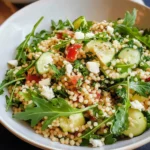
Arugula Couscous Salad recipe
Ingredients
- 1 cup (about 170g) Dry Couscous: You have choices here!
- Moroccan Couscous (Smallest Grain): Cooks in just 5 minutes by simply pouring boiling liquid over it. Very light texture.
- Israeli Couscous (Pearl Couscous): Larger, pearl-like balls with a slightly chewy texture. Needs simmering like pasta, about 8-10 minutes. This is my preferred type for this salad as it holds its shape well and adds a lovely textural element.
- Whole Wheat Couscous (Either Size): Offers more fiber and a nuttier flavour. Cooking times might be slightly longer.
- 1 ¼ cups (300ml) Vegetable Broth or Water: Using broth infuses the couscous with more flavour from the start. Use low-sodium broth if possible to control the saltiness. Water works perfectly fine too. The amount might vary slightly depending on the type of couscous (check package directions).
- 1 tablespoon Olive Oil (Optional): Adding a little oil to the cooking liquid can help prevent sticking and adds subtle richness.
- ½ teaspoon Salt (if using water): Omit if using salted broth.
For the Lemon-Herb Vinaigrette:
- ¼ cup (60ml) Extra Virgin Olive Oil: Use a good quality olive oil, as its flavour will shine through.
- 3 tablespoons Fresh Lemon Juice: Freshly squeezed lemon juice is essential for brightness. This is typically the juice of 1 large lemon.
- 1 teaspoon Dijon Mustard: Acts as an emulsifier to help bind the oil and lemon juice, and adds a subtle tang.
- 1 small clove Garlic, minced or pressed (optional): Adds a gentle savory depth. Use sparingly as raw garlic can be strong.
- ½ teaspoon Maple Syrup or Honey (Optional): A tiny touch of sweetness balances the acidity of the lemon and the bitterness of the arugula. Adjust to taste or omit entirely.
- ½ teaspoon Dried Oregano or Italian Seasoning (Optional): Adds herbaceous notes. Fresh herbs like minced parsley or mint could also be used.
- Salt and Freshly Ground Black Pepper to taste: Season assertively, as the couscous and arugula will absorb the flavours.
For the Salad Assembly:
- 5 oz (about 140g) Fresh Arugula: Choose fresh, vibrant arugula. Baby arugula is slightly milder, while mature arugula offers a more pronounced peppery bite. Ensure it’s washed and thoroughly dried.
- ½ cup (about 75g) Toasted Nuts or Seeds: Adds essential crunch and richness. Options include:
- Sliced or Slivered Almonds (my favourite)
- Walnuts, roughly chopped
- Pecans, roughly chopped
- Pine Nuts
- Pepitas (Pumpkin Seeds)
- Sunflower Seeds
(Toast nuts/seeds lightly in a dry skillet over medium heat or in a 350°F/175°C oven for 5-8 minutes until fragrant for enhanced flavour).
- ⅓ cup (about 50g) Crumbled Feta Cheese: Provides a salty, briny counterpoint. Goat cheese is another excellent option for creamy tang. Shaved Parmesan can also work for a nuttier, saltier profile. Use vegan feta for a plant-based version.
- ⅓ cup (about 50g) Dried Fruit (Optional): Adds pockets of sweetness and chewiness. Good choices include:
- Dried Cranberries
- Dried Cherries
- Golden Raisins
- Chopped Dried Apricots
- ½ cup Finely Chopped Fresh Herbs (Optional, Highly Recommended): Enhances freshness.
- Fresh Parsley (Flat-leaf)
- Fresh Mint
- Fresh Dill
- Fresh Chives
- Other Optional Add-ins:
- ½ cup Cherry Tomatoes, halved or quartered
- ½ cup Cucumber, diced
- ¼ cup Kalamata Olives, pitted and halved
- ¼ cup Roasted Red Peppers, chopped
- 1 can (15 oz) Chickpeas, rinsed and drained (adds protein and fiber)
Instructions
1. Cook the Couscous:
* Method for Moroccan Couscous (Small Grains): Bring the vegetable broth (or water with optional salt and olive oil) to a rolling boil in a medium saucepan. Once boiling, remove the pan from the heat. Immediately stir in the dry couscous. Cover the pan tightly and let it stand undisturbed for 5-7 minutes, or according to package directions, until all the liquid is absorbed.
* Method for Israeli (Pearl) Couscous: Heat the optional olive oil in a medium saucepan over medium heat. Add the dry pearl couscous and toast lightly for 1-2 minutes, stirring constantly, until fragrant (optional, but adds flavour). Carefully pour in the vegetable broth (or water with salt). Bring to a boil, then reduce the heat to low, cover, and simmer gently for 8-12 minutes, or until the couscous is tender and the liquid is absorbed. Check package directions as times can vary. Drain any excess liquid if necessary.
* Fluff the Couscous: Once the couscous has absorbed the liquid, remove the lid and gently fluff the grains with a fork. This separates the grains and prevents clumping.
* Cool Slightly: Spread the cooked couscous on a baking sheet or transfer it to a large bowl to cool slightly while you prepare the other components. Letting it cool prevents it from wilting the arugula immediately upon contact and helps it absorb the dressing better without becoming mushy. Room temperature or slightly warm is ideal.
2. Prepare the Vinaigrette:
* In a small bowl or liquid measuring cup, whisk together the extra virgin olive oil, fresh lemon juice, Dijon mustard, minced garlic (if using), maple syrup/honey (if using), and dried oregano/Italian seasoning (if using).
* Continue whisking vigorously until the mixture emulsifies – it should thicken slightly and look cohesive rather than separated oil and vinegar. Alternatively, combine all vinaigrette ingredients in a jar with a tight-fitting lid and shake well until emulsified.
* Season generously with salt and freshly ground black pepper. Taste and adjust seasonings if needed – it should taste bright, tangy, and well-seasoned. Remember the salad components will mellow the flavour.
3. Toast the Nuts/Seeds (if not already toasted):
* Place your chosen nuts or seeds in a dry skillet over medium heat.
* Toast, shaking the pan frequently, for 3-5 minutes, until they become fragrant and lightly golden. Watch carefully to prevent burning.
* Alternatively, spread them on a baking sheet and toast in a preheated oven at 350°F (175°C) for 5-8 minutes.
* Remove from heat and let cool slightly. If using larger nuts like walnuts or pecans, give them a rough chop.
4. Assemble the Salad:
* In a large salad bowl, combine the slightly cooled cooked couscous and the fresh arugula.
* Pour about two-thirds of the prepared vinaigrette over the couscous and arugula. Toss gently to coat everything evenly. Adding the dressing in stages prevents overdressing.
* Add the toasted nuts/seeds, crumbled feta cheese, dried fruit (if using), and any other optional add-ins like tomatoes, cucumber, chickpeas, or olives.
* Sprinkle in the chopped fresh herbs (if using).
* Toss everything together gently until just combined. Be careful not to overmix, which can bruise the arugula or break down the couscous.
* Taste the salad. If it seems dry or needs more flavour, add the remaining vinaigrette and toss again. Adjust salt and pepper if necessary.
5. Serve:
* Serve the Arugula Couscous Salad immediately for the best texture (crisp arugula, fluffy couscous). It can also be served at room temperature. If making ahead, see tips below.
Nutrition
- Serving Size: one normal portion
- Calories: 350-450