
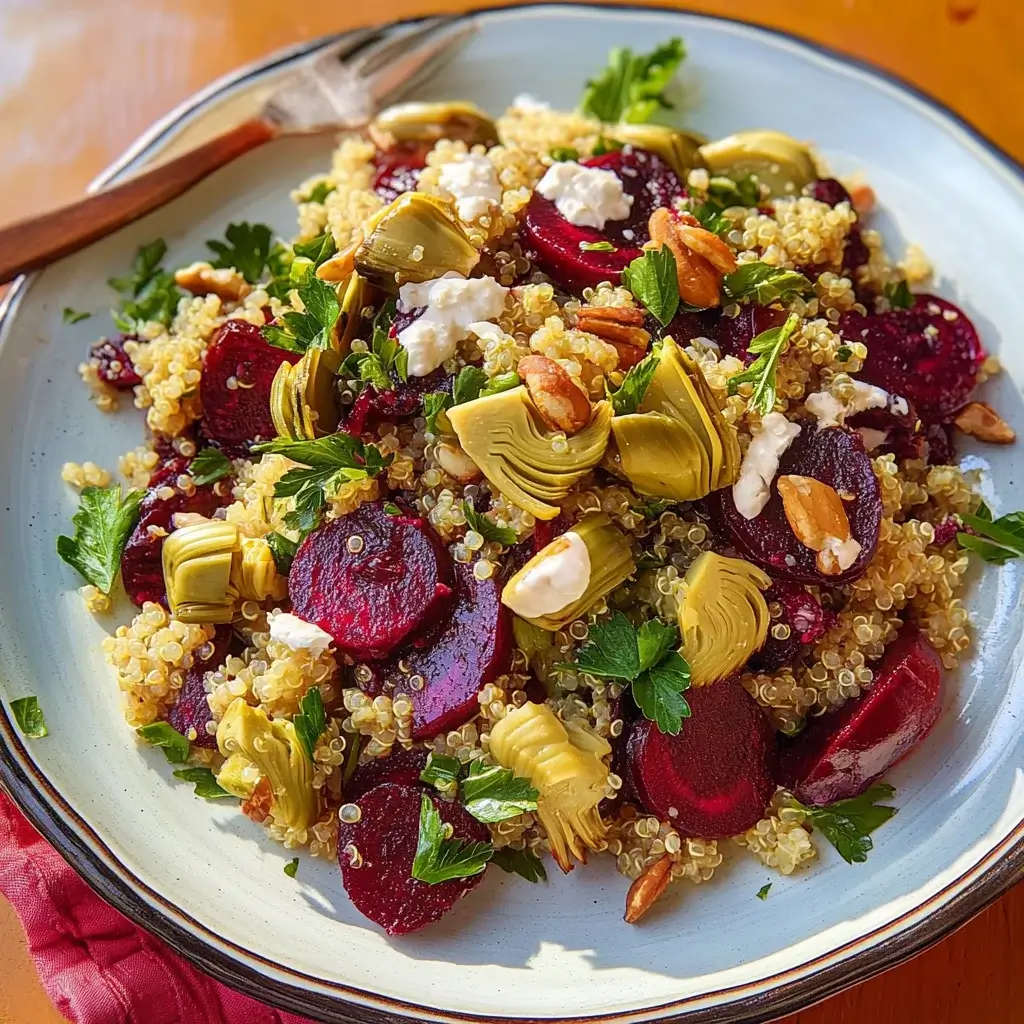

I’m always on the lookout for meals that are both healthy and bursting with flavor, and this Artichoke Beet and Quinoa Salad has become a staple in my kitchen. What started as an experiment with ingredients I had on hand quickly turned into a family favorite. The earthy sweetness of the roasted beets perfectly complements the tangy marinated artichoke hearts, while the fluffy quinoa provides a satisfying and protein-packed base. The bright lemon dressing ties everything together, creating a salad that is not only visually stunning with its vibrant colors but also incredibly delicious and nutritious. Even my kids, who can sometimes be picky eaters, are enthusiastic about this salad, especially when the feta cheese is involved! It’s become my go-to for quick lunches, light dinners, and potlucks – always a crowd-pleaser and a guaranteed conversation starter. If you’re searching for a salad that is anything but boring, look no further. This Artichoke Beet and Quinoa Salad is about to become your new favorite too.
Ingredients for a Refreshing Artichoke Beet and Quinoa Salad
The beauty of this Artichoke Beet and Quinoa Salad lies in the harmonious blend of simple, wholesome ingredients. Each component plays a vital role in creating a salad that is both nutritious and incredibly flavorful. Here’s what you’ll need to gather to bring this vibrant dish to life:
- 1 cup Quinoa, rinsed: Quinoa is the powerhouse base of our salad. It’s a complete protein, meaning it contains all nine essential amino acids, and it’s also a good source of fiber. Rinsing quinoa before cooking removes saponins, which can give it a slightly bitter taste. White or tri-color quinoa will both work beautifully in this recipe.
- 2 cups Water or Vegetable Broth: For cooking the quinoa. Using vegetable broth instead of water will infuse the quinoa with extra flavor, adding another layer of deliciousness to the salad. Low-sodium broth is recommended to control the salt content.
- 2 Medium Beets, scrubbed and trimmed: Beets bring an earthy sweetness and gorgeous color to the salad. You can use red, golden, or even Chioggia beets for visual variety. For this recipe, we will be roasting the beets to enhance their natural sweetness and tender texture.
- 2 tablespoons Olive Oil, divided: Olive oil is essential for roasting the beets and adding richness to the dressing. Extra virgin olive oil is preferred for its flavor and health benefits. We’ll use a portion for roasting and the rest for the dressing.
- Salt and Black Pepper, to taste: Seasoning is key! Salt and pepper enhance the flavors of all the ingredients. Freshly ground black pepper is recommended for its bolder taste.
- 1 (14-ounce) can Artichoke Hearts, marinated, drained and quartered: Marinated artichoke hearts are a star ingredient, providing a tangy, briny flavor that contrasts beautifully with the sweetness of the beets. Choose marinated artichoke hearts packed in oil and herbs for the best flavor. Drain them well and quarter them for easy eating.
- ½ cup Crumbled Feta Cheese (optional, for vegetarian version): Feta cheese adds a salty, creamy, and tangy element that perfectly complements the other flavors in the salad. If you’re vegan or dairy-free, feel free to omit the feta or substitute with a vegan feta alternative.
- ¼ cup Kalamata Olives, pitted and halved: Kalamata olives add a briny, salty, and slightly fruity flavor that enhances the Mediterranean profile of the salad. Pitted olives are easier to work with, and halving them releases more of their flavor.
- ¼ cup Red Onion, thinly sliced: Red onion provides a sharp, pungent bite that balances the sweetness and richness of the other ingredients. Thinly slicing the red onion mellows its sharpness slightly and makes it more pleasant to eat raw in the salad.
- ¼ cup Fresh Parsley, chopped: Fresh parsley adds a bright, herbaceous note and a pop of green color. Italian flat-leaf parsley is preferred for its stronger flavor, but curly parsley can also be used.
- ¼ cup Fresh Mint, chopped (optional, but highly recommended): Fresh mint adds a refreshing, cooling element that elevates the salad, especially in warmer months. The combination of mint and beets is a classic pairing.
For the Lemon Dressing:
- ¼ cup Fresh Lemon Juice: Freshly squeezed lemon juice is crucial for a bright and tangy dressing. It provides acidity that balances the richness of the olive oil and other ingredients.
- ½ cup Olive Oil: Forms the base of the dressing, adding richness and emulsification.
- 1 tablespoon Dijon Mustard: Dijon mustard adds a subtle tang and helps to emulsify the dressing, creating a smoother and more cohesive texture.
- 1 clove Garlic, minced: Garlic adds a pungent, savory flavor to the dressing. Mincing it finely ensures it disperses evenly throughout the dressing.
- 1 teaspoon Honey or Maple Syrup (optional, for a touch of sweetness): A touch of sweetness balances the acidity of the lemon juice and mustard. Honey or maple syrup are both excellent choices. For a vegan version, use maple syrup or agave nectar.
- Salt and Black Pepper, to taste: Season the dressing to your liking. Taste and adjust the seasoning as needed to achieve the perfect balance of flavors.
Step-by-Step Instructions for Making Artichoke Beet and Quinoa Salad
Creating this Artichoke Beet and Quinoa Salad is a straightforward process, broken down into manageable steps. Roasting the beets takes the longest, but the hands-on time is minimal, and the result is well worth the effort. Follow these instructions to bring this vibrant and flavorful salad to your table:
Step 1: Cook the Quinoa
- Rinse the quinoa thoroughly in a fine-mesh sieve under cold running water for about a minute. This removes saponins and ensures a better taste.
- In a medium saucepan, combine the rinsed quinoa with 2 cups of water or vegetable broth. Add a pinch of salt.
- Bring the mixture to a boil over medium-high heat. Once boiling, reduce the heat to low, cover the pot, and simmer for 15 minutes, or until all the liquid is absorbed and the quinoa is cooked through. The quinoa grains should look translucent and the germ ring should be visible.
- Remove the saucepan from the heat and let it stand, covered, for 5 minutes. This allows the quinoa to steam and become even fluffier.
- Fluff the cooked quinoa with a fork and set aside to cool completely. Cooling the quinoa before adding it to the salad prevents it from becoming mushy and helps maintain the salad’s fresh texture.
Step 2: Roast the Beets
- Preheat your oven to 400°F (200°C).
- Scrub the beets thoroughly under cold water to remove any dirt. Trim the tops and root ends, but do not peel them at this stage. Roasting beets with their skins on helps retain their moisture and flavor.
- Cut the beets into ½-inch cubes. Uniformly sized cubes will ensure even roasting.
- In a medium bowl, toss the cubed beets with 1 tablespoon of olive oil, salt, and black pepper. Ensure the beets are evenly coated with oil and seasoning.
- Spread the seasoned beets in a single layer on a baking sheet. Avoid overcrowding the baking sheet, as this can steam the beets instead of roasting them. Use two baking sheets if necessary.
- Roast in the preheated oven for 30-40 minutes, or until the beets are tender and easily pierced with a fork. Roasting time may vary depending on the size of the beet cubes and your oven.
- Once roasted, remove the baking sheet from the oven and let the beets cool slightly. While still warm but cool enough to handle, peel the beets. The skins should slip off easily. Peeling them while slightly warm makes the process easier.
- Set the peeled and roasted beets aside to cool completely.
Step 3: Prepare the Lemon Dressing
- In a small bowl or jar, whisk together the fresh lemon juice, olive oil, Dijon mustard, minced garlic, and honey or maple syrup (if using).
- Season with salt and black pepper to taste. Adjust the seasoning according to your preference. You might want to add a little more lemon juice for extra tang or a pinch more salt to enhance the flavors.
- Whisk or shake the dressing vigorously until it is well combined and emulsified. The dressing should be slightly thickened and creamy in texture.
- Set the dressing aside until ready to assemble the salad.
Step 4: Assemble the Artichoke Beet and Quinoa Salad
- In a large bowl, combine the cooled cooked quinoa, roasted beets, marinated artichoke hearts, Kalamata olives, and red onion.
- Pour the lemon dressing over the salad ingredients.
- Gently toss everything together to ensure the salad is evenly coated with the dressing. Be careful not to overmix, especially if you’ve added feta cheese, as it can crumble easily.
- Add the chopped fresh parsley and fresh mint (if using). Toss again to incorporate the herbs.
- If using feta cheese, gently crumble it over the top of the salad.
- Taste the salad and adjust seasoning if necessary. You may want to add a little more salt, pepper, or lemon juice to achieve the perfect balance of flavors.
Step 5: Serve and Enjoy!
- Serve the Artichoke Beet and Quinoa Salad immediately or chill in the refrigerator for later. Chilling the salad allows the flavors to meld together even further.
- This salad is delicious served at room temperature or chilled.
- Garnish with extra fresh herbs or a drizzle of olive oil before serving, if desired.
Nutrition Facts for Artichoke Beet and Quinoa Salad (Approximate, per serving)
- Servings: Approximately 6 servings (as a side dish) or 4 servings (as a main course)
- Calories per Serving (as side dish, without feta): Approximately 250-300 calories (This is an estimate and can vary based on ingredient brands, specific measurements, and additions like feta cheese.)
Detailed Nutritional Breakdown (Approximate, per serving, without feta):
- Protein: 7-9 grams
- Fat: 15-20 grams (primarily healthy fats from olive oil and artichoke marinade)
- Saturated Fat: 2-3 grams
- Cholesterol: 0 mg
- Sodium: 400-500 mg (can vary depending on broth, olives, and artichoke marinade used)
- Carbohydrates: 30-35 grams
- Fiber: 6-8 grams
- Sugar: 8-10 grams (natural sugars from beets and quinoa)
Key Nutrients (Approximate, per serving, without feta):
- Vitamin C: Good source (from lemon juice and parsley)
- Vitamin K: Excellent source (from parsley and mint)
- Folate (Vitamin B9): Good source (from quinoa and beets)
- Potassium: Good source (from beets and quinoa)
- Iron: Moderate source (from quinoa and beets)
- Manganese: Excellent source (from quinoa)
- Antioxidants: Rich in antioxidants from beets, artichokes, and olives.
Important Notes on Nutrition:
- These are approximate values and can vary. Adding feta cheese will increase the calorie, fat, and protein content, as well as sodium.
- This salad is naturally gluten-free and can be made vegan by omitting the feta cheese or using a vegan feta alternative.
- It is a good source of complex carbohydrates, fiber, healthy fats, and plant-based protein, making it a nutritious and balanced meal or side dish.
- Beets are known for their nitrates, which can be beneficial for heart health.
- Quinoa provides all nine essential amino acids, making it a complete protein.
Preparation Time for Artichoke Beet and Quinoa Salad
- Active Prep Time: Approximately 30-40 minutes (This includes chopping vegetables, cooking quinoa, preparing dressing, and assembling the salad.)
- Inactive Time (Roasting Beets): 30-40 minutes (While the beets are roasting, you can prepare other components of the salad.)
- Total Time: Approximately 1 hour to 1 hour 20 minutes
Tips to Speed Up Preparation:
- Use pre-cooked beets: To significantly reduce prep time, you can use pre-cooked beets that are often available in vacuum-sealed packages in the produce section of grocery stores. Just cube them and add them to the salad.
- Cook quinoa ahead of time: Quinoa can be cooked ahead of time and stored in the refrigerator for up to 3 days. This will save time on the day you plan to make the salad.
- Prepare the dressing in advance: The lemon dressing can also be made ahead of time and stored in the refrigerator for up to a week.
- Utilize marinated artichoke hearts: Using marinated artichoke hearts saves time and adds flavor directly to the salad.
How to Serve Your Vibrant Artichoke Beet and Quinoa Salad
This Artichoke Beet and Quinoa Salad is incredibly versatile and can be served in numerous ways, making it perfect for various occasions. Here are some serving suggestions to inspire you:
- As a Light Lunch: Enjoy a generous portion of the salad on its own for a satisfying and nutritious lunch. Its combination of protein, fiber, and healthy fats will keep you feeling full and energized.
- As a Side Dish: Serve alongside grilled chicken, fish, tofu, or lamb for a balanced and flavorful meal. The salad’s vibrant colors and refreshing flavors make it a perfect complement to heartier main courses.
- As a Vegetarian or Vegan Main Course: For a more substantial vegetarian or vegan main course, increase the portion size and consider adding extra protein sources.
- Add chickpeas or white beans: Toss in a can of rinsed and drained chickpeas or white beans to boost the protein and fiber content.
- Include roasted tofu or tempeh: Cubed and roasted tofu or tempeh can add a satisfying protein element to make it a heartier main dish.
- Top with nuts or seeds: Sprinkle toasted almonds, walnuts, pecans, or sunflower seeds for added crunch, healthy fats, and protein.
- For Potlucks and BBQs: This salad is an excellent choice for potlucks, picnics, and BBQs. It travels well and can be made ahead of time. Its vibrant colors and delicious flavors are always a crowd-pleaser.
- As part of a Mediterranean Mezze Platter: Include this salad on a Mediterranean-inspired mezze platter along with hummus, pita bread, olives, falafel, and other Mediterranean dips and appetizers.
- Stuffed in Pita Pockets: Fill pita pockets with the Artichoke Beet and Quinoa Salad for a portable and delicious lunch or snack.
- Over Greens: Serve a scoop of the salad over a bed of mixed greens for an even lighter and more refreshing salad option.
- With a Grain Bowl: Add the Artichoke Beet and Quinoa Salad to a grain bowl with other roasted vegetables, greens, and a tahini dressing for a complete and customizable meal.
Additional Tips for the Best Artichoke Beet and Quinoa Salad
To elevate your Artichoke Beet and Quinoa Salad and ensure it’s a culinary triumph every time, consider these five helpful tips:
- Don’t Overcook the Quinoa: Overcooked quinoa can become mushy and lose its pleasant texture. Follow the cooking instructions carefully and avoid simmering it for too long. The quinoa should be fluffy and slightly chewy, not mushy.
- Roast Beets Until Tender but Not Mushy: Roasting beets brings out their natural sweetness and tender texture. Roast them until they are easily pierced with a fork but still hold their shape. Over-roasting can make them mushy.
- Marinate the Red Onion (Optional): If you find raw red onion too pungent, you can quickly marinate it to mellow its sharpness. Soak the thinly sliced red onion in cold water with a splash of lemon juice or vinegar for about 10-15 minutes, then drain well before adding it to the salad.
- Taste and Adjust Dressing: The lemon dressing is the key to bringing all the flavors together. Taste the dressing before adding it to the salad and adjust the lemon juice, olive oil, mustard, sweetness, and seasoning to your liking. Personalizing the dressing to your taste preferences will make the salad even more enjoyable.
- Make it Ahead (But Dress Just Before Serving): You can prepare the individual components of the salad – cook quinoa, roast beets, and make the dressing – ahead of time and store them separately in the refrigerator. However, it’s best to assemble and dress the salad shortly before serving to maintain the freshness and texture of the ingredients. If making ahead entirely dressed, the quinoa may absorb some dressing, so you may need to add a little extra dressing before serving to freshen it up.
Frequently Asked Questions (FAQ) About Artichoke Beet and Quinoa Salad
Here are some common questions people ask when making Artichoke Beet and Quinoa Salad:
Q1: Can I make this salad vegan?
A: Yes, absolutely! To make this salad vegan, simply omit the feta cheese. The salad is delicious even without the feta, as the marinated artichoke hearts and olives provide plenty of flavor. You can also substitute the feta with a vegan feta cheese alternative if you desire that cheesy element.
Q2: Can I use different types of beets?
A: Yes, you can use different types of beets for this salad. Red beets are the most common and provide a beautiful vibrant color. Golden beets offer a milder, sweeter flavor and won’t bleed color as much as red beets. Chioggia beets (candy cane beets) are visually stunning with their striped interior and have a slightly milder flavor as well. Feel free to mix and match different types of beets for a colorful and flavorful salad.
Q3: Can I use fresh artichoke hearts instead of marinated canned artichoke hearts?
A: While you can use fresh artichoke hearts, it will significantly increase the preparation time as fresh artichokes require cleaning, trimming, and cooking. Marinated canned artichoke hearts are a convenient and flavorful option that works wonderfully in this salad. They are already cooked and marinated, saving you time and adding a tangy flavor component. If you do choose to use fresh artichoke hearts, you will need to cook them until tender (boiling or steaming) and then marinate them yourself to achieve a similar flavor profile.
Q4: How long does this salad last in the refrigerator?
A: Artichoke Beet and Quinoa Salad can be stored in an airtight container in the refrigerator for up to 3-4 days. The flavors actually tend to meld together and improve overnight. However, the texture of the quinoa and beets may soften slightly over time. It’s best to consume the salad within 2-3 days for optimal texture and freshness. If you are making it ahead of time for a specific event, consider dressing it closer to serving time for the best results.
Q5: Can I add other vegetables to this salad?
A: Yes, you can definitely customize this salad by adding other vegetables to suit your taste preferences and what you have on hand. Some great additions include:
- Cucumber: Diced cucumber adds a refreshing crunch.
- Bell peppers: Roasted or raw bell peppers in various colors will add sweetness and crunch.
- Cherry tomatoes: Halved cherry tomatoes add sweetness and juiciness.
- Carrots: Shredded or roasted carrots will add sweetness and texture.
- Spinach or Arugula: Adding a handful of fresh spinach or arugula will boost the nutritional value and add a slightly peppery note.
Feel free to experiment and create your own personalized version of this delicious and versatile salad!
Print
Artichoke Beet and Quinoa Salad recipe
Ingredients
- 1 cup Quinoa, rinsed: Quinoa is the powerhouse base of our salad. It’s a complete protein, meaning it contains all nine essential amino acids, and it’s also a good source of fiber. Rinsing quinoa before cooking removes saponins, which can give it a slightly bitter taste. White or tri-color quinoa will both work beautifully in this recipe.
- 2 cups Water or Vegetable Broth: For cooking the quinoa. Using vegetable broth instead of water will infuse the quinoa with extra flavor, adding another layer of deliciousness to the salad. Low-sodium broth is recommended to control the salt content.
- 2 Medium Beets, scrubbed and trimmed: Beets bring an earthy sweetness and gorgeous color to the salad. You can use red, golden, or even Chioggia beets for visual variety. For this recipe, we will be roasting the beets to enhance their natural sweetness and tender texture.
- 2 tablespoons Olive Oil, divided: Olive oil is essential for roasting the beets and adding richness to the dressing. Extra virgin olive oil is preferred for its flavor and health benefits. We’ll use a portion for roasting and the rest for the dressing.
- Salt and Black Pepper, to taste: Seasoning is key! Salt and pepper enhance the flavors of all the ingredients. Freshly ground black pepper is recommended for its bolder taste.
- 1 (14-ounce) can Artichoke Hearts, marinated, drained and quartered: Marinated artichoke hearts are a star ingredient, providing a tangy, briny flavor that contrasts beautifully with the sweetness of the beets. Choose marinated artichoke hearts packed in oil and herbs for the best flavor. Drain them well and quarter them for easy eating.
- ½ cup Crumbled Feta Cheese (optional, for vegetarian version): Feta cheese adds a salty, creamy, and tangy element that perfectly complements the other flavors in the salad. If you’re vegan or dairy-free, feel free to omit the feta or substitute with a vegan feta alternative.
- ¼ cup Kalamata Olives, pitted and halved: Kalamata olives add a briny, salty, and slightly fruity flavor that enhances the Mediterranean profile of the salad. Pitted olives are easier to work with, and halving them releases more of their flavor.
- ¼ cup Red Onion, thinly sliced: Red onion provides a sharp, pungent bite that balances the sweetness and richness of the other ingredients. Thinly slicing the red onion mellows its sharpness slightly and makes it more pleasant to eat raw in the salad.
- ¼ cup Fresh Parsley, chopped: Fresh parsley adds a bright, herbaceous note and a pop of green color. Italian flat-leaf parsley is preferred for its stronger flavor, but curly parsley can also be used.
- ¼ cup Fresh Mint, chopped (optional, but highly recommended): Fresh mint adds a refreshing, cooling element that elevates the salad, especially in warmer months. The combination of mint and beets is a classic pairing.
Instructions
Step 1: Cook the Quinoa
- Rinse the quinoa thoroughly in a fine-mesh sieve under cold running water for about a minute. This removes saponins and ensures a better taste.
- In a medium saucepan, combine the rinsed quinoa with 2 cups of water or vegetable broth. Add a pinch of salt.
- Bring the mixture to a boil over medium-high heat. Once boiling, reduce the heat to low, cover the pot, and simmer for 15 minutes, or until all the liquid is absorbed and the quinoa is cooked through. The quinoa grains should look translucent and the germ ring should be visible.
- Remove the saucepan from the heat and let it stand, covered, for 5 minutes. This allows the quinoa to steam and become even fluffier.
- Fluff the cooked quinoa with a fork and set aside to cool completely. Cooling the quinoa before adding it to the salad prevents it from becoming mushy and helps maintain the salad’s fresh texture.
Step 2: Roast the Beets
- Preheat your oven to 400°F (200°C).
- Scrub the beets thoroughly under cold water to remove any dirt. Trim the tops and root ends, but do not peel them at this stage. Roasting beets with their skins on helps retain their moisture and flavor.
- Cut the beets into ½-inch cubes. Uniformly sized cubes will ensure even roasting.
- In a medium bowl, toss the cubed beets with 1 tablespoon of olive oil, salt, and black pepper. Ensure the beets are evenly coated with oil and seasoning.
- Spread the seasoned beets in a single layer on a baking sheet. Avoid overcrowding the baking sheet, as this can steam the beets instead of roasting them. Use two baking sheets if necessary.
- Roast in the preheated oven for 30-40 minutes, or until the beets are tender and easily pierced with a fork. Roasting time may vary depending on the size of the beet cubes and your oven.
- Once roasted, remove the baking sheet from the oven and let the beets cool slightly. While still warm but cool enough to handle, peel the beets. The skins should slip off easily. Peeling them while slightly warm makes the process easier.
- Set the peeled and roasted beets aside to cool completely.
Step 3: Prepare the Lemon Dressing
- In a small bowl or jar, whisk together the fresh lemon juice, olive oil, Dijon mustard, minced garlic, and honey or maple syrup (if using).
- Season with salt and black pepper to taste. Adjust the seasoning according to your preference. You might want to add a little more lemon juice for extra tang or a pinch more salt to enhance the flavors.
- Whisk or shake the dressing vigorously until it is well combined and emulsified. The dressing should be slightly thickened and creamy in texture.
- Set the dressing aside until ready to assemble the salad.
Step 4: Assemble the Artichoke Beet and Quinoa Salad
- In a large bowl, combine the cooled cooked quinoa, roasted beets, marinated artichoke hearts, Kalamata olives, and red onion.
- Pour the lemon dressing over the salad ingredients.
- Gently toss everything together to ensure the salad is evenly coated with the dressing. Be careful not to overmix, especially if you’ve added feta cheese, as it can crumble easily.
- Add the chopped fresh parsley and fresh mint (if using). Toss again to incorporate the herbs.
- If using feta cheese, gently crumble it over the top of the salad.
- Taste the salad and adjust seasoning if necessary. You may want to add a little more salt, pepper, or lemon juice to achieve the perfect balance of flavors.
Step 5: Serve and Enjoy!
- Serve the Artichoke Beet and Quinoa Salad immediately or chill in the refrigerator for later. Chilling the salad allows the flavors to meld together even further.
- This salad is delicious served at room temperature or chilled.
- Garnish with extra fresh herbs or a drizzle of olive oil before serving, if desired.
Nutrition
- Serving Size: one normal portion
- Calories: 250-300
- Sugar: 8-10 grams
- Sodium: 400-500 mg
- Fat: 15-20 grams
- Saturated Fat: 2-3 grams
- Carbohydrates: 30-35 grams
- Fiber: 6-8 grams
- Protein: 7-9 grams