
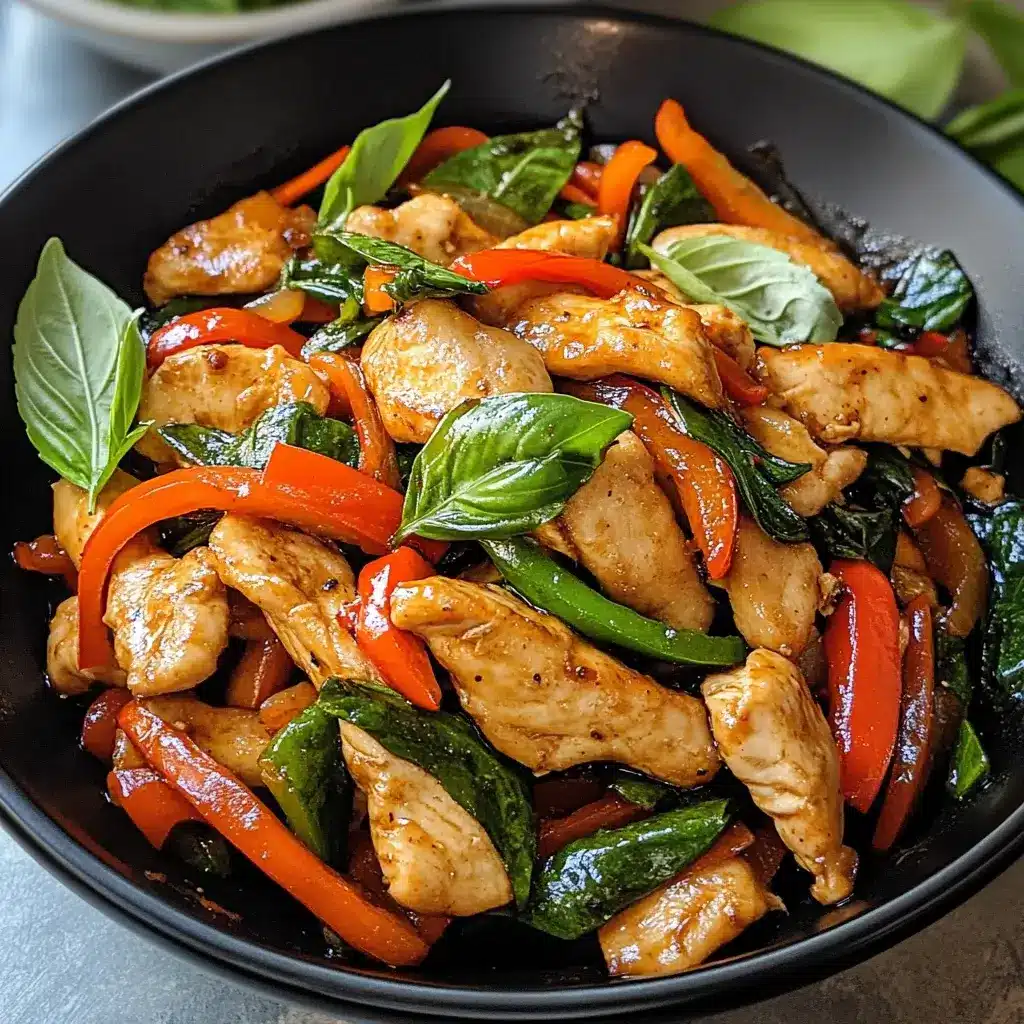

The first time the intoxicating aroma of Thai Basil Chicken (Pad Krapow Gai) hit my senses, I was wandering through a bustling night market in Bangkok. The sizzle of chicken in a hot wok, the pungent fragrance of holy basil, the fiery kick of chilies – it was an assault on the senses in the best possible way. I knew I had to recreate that magic in my own kitchen. My initial attempts were good, but it took some practice to nail that perfect balance of spicy, savory, and aromatic. Now, this recipe is a weeknight staple. My family absolutely adores it; the kids love the savory chicken (I adjust the spice for them), and my partner and I can’t get enough of that authentic, vibrant kick. It transports us straight back to Thailand with every bite. It’s surprisingly quick to make, incredibly flavorful, and the crispy-edged fried egg on top is non-negotiable in our house! It’s more than just a stir-fry; it’s an experience.
What Exactly is Thai Basil Chicken (Pad Krapow Gai)? Unveiling a Thai Street Food Classic
Before we jump into the wok, let’s delve into what makes Thai Basil Chicken, or “Pad Krapow Gai” (ผัดกะเพราไก่), such an iconic and beloved dish. “Pad” means stir-fried, “Krapow” (often spelled Kaphrao or Gra Prow) refers to Holy Basil, and “Gai” means chicken. So, quite literally, it’s “Stir-Fried Holy Basil Chicken.”
This dish is a cornerstone of Thai street food and a go-to for a quick, satisfying, and incredibly flavorful meal throughout Thailand. You’ll find it everywhere, from humble street-side vendors to sit-down restaurants. Its popularity stems from its simplicity, bold flavors, and the speed at which it can be prepared.
Key characteristics of authentic Pad Krapow Gai include:
- Holy Basil (Krapow): This is the star ingredient and what gives the dish its signature peppery, slightly clove-like, and uniquely aromatic flavor. It’s distinct from Thai Sweet Basil (Horapha) or Italian Basil.
- Chilies & Garlic: A generous amount of fresh chilies (often fiery bird’s eye chilies) and garlic are pounded or minced to form the aromatic and spicy base.
- Protein: While chicken is “Gai,” Pad Krapow can also be made with pork (Moo), beef (Neua), seafood (Talay), or tofu/mushrooms for a vegetarian version. Traditionally, the meat is often minced or roughly chopped, allowing it to absorb the sauce beautifully.
- Simple Sauce: The sauce is typically a straightforward but potent blend of soy sauce, oyster sauce, fish sauce, and a touch of sugar to balance the flavors. Dark soy sauce is often added for color and a hint of sweetness.
- Minimal Vegetables (Traditionally): Authentic Pad Krapow is primarily about the meat and basil. Some versions might include finely chopped long beans or bell peppers, but it’s not traditionally a veggie-heavy stir-fry.
- Served with Rice and a Fried Egg: It’s almost universally served over a bed of steamed jasmine rice with a crispy-edged, runny-yolk fried egg (Kai Dao – ไข่ดาว) on top. The creamy yolk mixing with the savory, spicy sauce is pure bliss.
Pad Krapow Gai is celebrated for its direct, unapologetic flavors. It’s not subtle, but it’s perfectly balanced. It’s the kind of dish that awakens your palate and leaves you wanting more.
Why You’ll Be Obsessed with This Thai Basil Chicken Recipe
There are countless reasons why this particular Thai Basil Chicken (Pad Krapow Gai) recipe will become a regular in your cooking rotation, just as it has in mine.
- Authentic Flavor Explosion: This isn’t a watered-down version. We’re aiming for that genuine Thai street food taste – spicy, savory, umami-rich, and bursting with the unique aroma of holy basil. It’s a complex flavor profile achieved with surprisingly few, well-chosen ingredients.
- Lightning Fast & Super Easy: From prep to plate, you can have this incredible meal ready in under 30 minutes, making it perfect for busy weeknights when you’re craving something exciting but don’t have hours to spend in the kitchen. Stir-frying is all about speed!
- Highly Customizable:
- Spice Level: You are in complete control of the heat. Add more chilies for a fiery kick or reduce them for a milder (but still flavorful) dish.
- Protein: While this recipe focuses on chicken, you can easily swap it for minced pork, beef, shrimp, or even firm tofu or mushrooms for a vegetarian option.
- Sweetness/Saltiness: The sauce can be tweaked to your preference. Like it a bit sweeter? Add a touch more sugar. Saltier? A dash more fish sauce or soy sauce.
- Uses Readily Available Ingredients (with a note on Basil): Most ingredients like chicken, garlic, soy sauce, and oyster sauce are easily found. The main challenge can be finding true Holy Basil. Thai Sweet Basil is a common and acceptable substitute, though the flavor profile will be slightly different. We’ll discuss this more!
- Way Better (and Cheaper) Than Takeout: Once you realize how easy it is to make authentic-tasting Thai Basil Chicken at home, you’ll think twice about ordering takeout. You control the quality of ingredients, the spice level, and it’s much more budget-friendly.
- It’s Simply Satisfying: There’s something incredibly gratifying about this dish. The combination of tender chicken, the fragrant basil, the rich sauce soaking into the jasmine rice, and that perfect fried egg on top – it hits all the right notes.
Get ready to impress yourself and anyone you cook for with this vibrant, aromatic, and utterly delicious Thai Basil Chicken. It’s a true taste of Thailand in your own kitchen!
Complete Ingredients for Authentic Thai Basil Chicken (Pad Krapow Gai)
Here’s what you’ll need to create this classic Thai stir-fry. This recipe serves 2-3 people generously. You can easily double it for a larger group.
For the Chicken & Aromatics:
- 1 lb (450g) boneless, skinless chicken thighs or breasts, minced or very thinly sliced (see note)
- 4-8 Thai bird’s eye chilies (prik kee noo suan), or to taste, roughly chopped (see note)
- 4-6 cloves garlic, roughly chopped
- 1 tablespoon vegetable oil (or other high smoke point oil like canola or peanut oil)
- 1/2 small onion, thinly sliced (optional, adds sweetness)
- 1/4 cup sliced long beans or green beans, cut into 1-inch pieces (optional)
For the Stir-Fry Sauce:
- 1 tablespoon oyster sauce
- 1 teaspoon light soy sauce (or regular soy sauce)
- 1 teaspoon dark sweet soy sauce (kecap manis can be a substitute, or see note for DIY)
- 1 teaspoon fish sauce
- 1 teaspoon granulated sugar (or palm sugar, finely shaved)
- 1-2 tablespoons water or chicken broth (optional, for a slightly saucier dish)
The Star of the Show:
- 1.5 – 2 cups fresh Holy Basil leaves (Bai Krapow), loosely packed (see note)
For Serving (Highly Recommended):
- Steamed jasmine rice
- 2-3 eggs, for frying (Kai Dao)
- Extra vegetable oil for frying eggs
- Optional garnishes: Sliced cucumber, extra fresh chilies, lime wedges.
Ingredient Notes:
- Chicken: Traditionally, chicken is often minced by hand for a better texture than store-bought ground chicken, which can sometimes be too fine and mushy. Slicing it very thinly against the grain is also a great option. Chicken thighs are more flavorful and forgiving than breasts, but breasts work too.
- Chilies: Thai bird’s eye chilies are very spicy! Adjust the quantity based on your heat preference. You can deseed them for less heat. If unavailable, use serrano or other hot red chilies.
- Garlic & Chilies Prep: For the most authentic flavor, pound the garlic and chilies together in a mortar and pestle until roughly bruised and combined. If you don’t have one, finely mincing them is fine.
- Dark Sweet Soy Sauce: This adds color and a touch of molasses-like sweetness. Brands like Healthy Boy Brand (thin black soy sauce or sweet soy sauce) are good. If you can’t find it, you can mix 1/2 tsp regular soy sauce with 1/2 tsp molasses or brown sugar, or use Indonesian Kecap Manis (which is sweeter, so you might reduce the granulated sugar).
- Holy Basil (Krapow): This is key! It has a peppery, slightly clove-like, anise flavor, distinct from other basils. Look for it in Asian markets. Leaves are often smaller, slightly fuzzy, with serrated edges.
- Best Substitute: Thai Sweet Basil (Bai Horapha). It has a more anise/licorice-forward flavor but is still delicious.
- Avoid: Italian basil, as its flavor profile is very different and won’t yield an authentic Pad Krapow taste.
- Optional Vegetables: Long beans add a nice crunch. Some add bell peppers or onions. Keep additions minimal to let the basil and chicken shine.
Step-by-Step Instructions for Perfect Pad Krapow Gai
Follow these simple steps to create an authentic and delicious Thai Basil Chicken stir-fry:
1. Prepare Your Ingredients (Mise en Place):
* Chicken: If not using pre-minced, mince your chicken by hand by slicing it thinly, then chopping it repeatedly until it’s roughly minced. Alternatively, slice it very thinly against the grain.
* Aromatics: Roughly chop the garlic and chilies. For best results, pound them together in a mortar and pestle. Thinly slice the onion (if using) and cut long beans (if using).
* Sauce: In a small bowl, whisk together the oyster sauce, light soy sauce, dark sweet soy sauce, fish sauce, and sugar. Add water or broth if using. Set aside.
* Basil: Pick the holy basil leaves from the stems. Wash and gently pat them dry if needed. Have them ready to go.
* Rice: Start cooking your jasmine rice so it’s ready when the stir-fry is done.
2. Stir-Fry the Aromatics and Chicken:
* Place a wok or a large, heavy-bottomed skillet over high heat. Allow it to get very hot – you should see a slight shimmer or wisps of smoke.
* Add the 1 tablespoon of vegetable oil. Swirl to coat the bottom of the wok.
* Add the pounded/chopped garlic and chilies (and sliced onion, if using). Stir-fry vigorously for about 15-30 seconds until fragrant. Be careful not to burn them (this happens quickly!).
* Add the minced or sliced chicken to the wok. Spread it out in a single layer and let it sear for a minute without stirring to get some browning.
* Then, begin to stir-fry, breaking up the chicken (if minced) until it’s mostly cooked through and no longer pink (about 3-5 minutes).
3. Add Vegetables (if using) and Sauce:
* If using long beans or other optional vegetables, add them now and stir-fry for another 1-2 minutes until they are tender-crisp.
* Pour the prepared stir-fry sauce over the chicken and vegetables. Stir well to coat everything evenly. Continue to cook for another 1-2 minutes, allowing the sauce to thicken slightly and caramelize a bit.
4. Add the Holy Basil:
* Turn off the heat (or reduce to very low). Add the fresh holy basil leaves to the wok.
* Quickly toss and fold the basil into the hot chicken mixture for just 15-30 seconds, until it’s just wilted but still vibrant green. Do NOT overcook the basil, or it will lose its fragrance and turn dark. The residual heat will do most of the work.
5. Fry the Eggs (Kai Dao) – Optional but Highly Recommended:
* While the stir-fry is resting briefly, heat about 1-2 tablespoons of oil in a separate small non-stick skillet or wok over medium-high heat until very hot.
* Carefully crack an egg into the hot oil. It should sizzle immediately.
* Spoon some of the hot oil over the egg white to help it cook and get crispy edges. Cook until the whites are set and golden brown and crispy around the edges, but the yolk is still runny (about 1-2 minutes).
* Remove with a slotted spoon and drain briefly on a paper towel. Repeat for the remaining eggs.
6. Serve Immediately:
* Scoop a generous portion of steamed jasmine rice onto each plate.
* Spoon the Thai Basil Chicken stir-fry alongside or partially over the rice.
* Top with a crispy fried egg (Kai Dao).
* Garnish with extra fresh chilies, cucumber slices, or lime wedges, if desired.
Enjoy your incredibly flavorful and authentic homemade Pad Krapow Gai!
Nutrition Facts
- Servings: This recipe serves 2-3 people.
- Calories per serving (approximate, without rice or egg): Around 350-500 calories.
- Calories per serving (with 1 cup rice and 1 fried egg): Around 650-850 calories.
Important Disclaimer: Nutritional information is an estimate and can vary significantly based on:
* Specific Ingredients: Type of chicken (thighs are higher in fat than breast), amount of oil used, specific brands of sauces (sugar/sodium content varies).
* Portion Size: The calorie counts assume the recipe is divided into 2-3 servings.
* Serving Accompaniments: The type and quantity of rice, and the method of frying the egg (amount of oil) will significantly impact the total.
General Nutritional Profile (Stir-fry itself):
- Protein: High, from the chicken.
- Fat: Moderate, from chicken and cooking oil.
- Carbohydrates: Relatively low in the stir-fry itself (mainly from sugar in the sauce and any added vegetables). The rice contributes the most carbs.
- Sodium: Can be high due to soy sauce, fish sauce, and oyster sauce. Using low-sodium soy sauce can help.
This dish provides excellent protein and a burst of flavor. Pairing it with rice makes for a complete and satisfying meal.
Preparation Time
Thai Basil Chicken is renowned for its speed, making it an ideal weeknight meal.
- Prep Time (Mise en Place): 10-15 minutes
- This includes: Mincing/slicing chicken, chopping garlic/chilies/onions, measuring sauces, picking basil leaves.
- If you buy pre-minced chicken, this can be even faster.
- Cook Time: 8-10 minutes
- Stir-frying is very quick!
- Frying eggs will take an additional few minutes per egg, but can be done concurrently or just after.
- Total Time: Approximately 20-25 minutes (excluding rice cooking time, which can be done simultaneously).
Key to Speed:
- Mise en Place is CRUCIAL: Have absolutely everything prepped and within arm’s reach before you turn on the heat. Stir-frying happens too fast to be chopping things on the fly.
- High Heat: A properly heated wok or skillet ensures quick cooking and a good sear.
This dish truly exemplifies fast, fresh, and flavorful cooking.
How to Serve Authentic Thai Basil Chicken (Pad Krapow Gai)
Serving Pad Krapow Gai authentically enhances the entire experience. Here’s how to do it right:
- The Holy Trinity: Rice, Stir-fry, Fried Egg:
- Steamed Jasmine Rice: This is the classic foundation. Its fragrant aroma and fluffy texture perfectly complement the bold flavors of the stir-fry. Serve a generous mound on each plate.
- Pad Krapow Gai: Spoon the freshly made Thai Basil Chicken stir-fry alongside or slightly overlapping the rice. Ensure a good ratio of chicken, sauce, and basil.
- Crispy Fried Egg (Kai Dao – ไข่ดาว): This is non-negotiable for many! A perfectly fried egg with crispy, lacy edges and a runny yolk placed on top is iconic. The yolk, when broken, creates an even richer sauce.
- Traditional Garnishes & Accompaniments (use lists and bullet points):
- Prik Nam Pla (น้ำปลาพริก): This is a ubiquitous Thai condiment made from fish sauce, fresh chilies (often bird’s eye), garlic, and lime juice. A small bowl on the side allows diners to add extra salty, spicy, and sour notes to their liking.
- Simple Prik Nam Pla: Thinly slice 2-3 bird’s eye chilies and 1 clove garlic. Mix with 2 tbsp fish sauce and 1 tbsp lime juice, plus a pinch of sugar if desired.
- Fresh Cucumber Slices: Cool, crisp cucumber slices offer a refreshing contrast to the spicy stir-fry.
- Extra Fresh Basil Leaves: A few fresh holy basil leaves can be added as a garnish for extra aroma.
- Lime Wedges: A squeeze of fresh lime juice can brighten up the flavors just before eating.
- Prik Nam Pla (น้ำปลาพริก): This is a ubiquitous Thai condiment made from fish sauce, fresh chilies (often bird’s eye), garlic, and lime juice. A small bowl on the side allows diners to add extra salty, spicy, and sour notes to their liking.
- Presentation:
- Serve immediately while everything is hot and fragrant.
- The dish is inherently rustic and appealing. No need for overly fussy plating.
- Drink Pairings:
- Thai Iced Tea (Cha Yen): The sweet, creamy tea is a perfect counterpoint to the spicy food.
- Cold Lager Beer: A light, crisp beer like Singha or Chang is a common and refreshing choice.
- Water: Plenty of cold water is always a good idea with spicy food!
By serving Pad Krapow Gai with these traditional accompaniments, you’ll elevate it from a simple stir-fry to an authentic Thai culinary experience.
Additional Tips for Pad Krapow Gai Perfection
Mastering Thai Basil Chicken is within reach! Here are five additional tips to ensure your stir-fry is as delicious as any found on the streets of Bangkok:
- Holy Basil is King (But Know Your Options):
- Prioritize Holy Basil (Krapow): Its unique peppery, clove-like aroma is what defines authentic Pad Krapow. Seek it out at Asian markets.
- Thai Sweet Basil (Horapha) as a Good Second: If you absolutely cannot find Holy Basil, Thai Sweet Basil is the next best thing. It has a more anise/licorice flavor but still yields a delicious (though different) Thai stir-fry.
- Add Basil LAST and Briefly: Whichever basil you use, add it at the very end, off the heat or on very low heat. Toss just until wilted (15-30 seconds). Overcooking destroys its delicate aroma and color.
- Embrace High Heat & Don’t Overcrowd:
- Hot Wok (or Skillet): Get your wok smoking hot before adding oil. This allows for a quick sear, developing “wok hei” (breath of the wok) – a subtle smoky flavor characteristic of great stir-fries.
- Cook in Batches if Necessary: If you double the recipe or have a smaller wok, cook the chicken in batches to ensure it sears rather than steams. Overcrowding lowers the temperature, leading to soupy, grey chicken.
- Mise en Place is Non-Negotiable:
- Stir-frying is a rapid cooking process. Once you start, there’s no time to stop and chop. Have every single ingredient – chicken, aromatics, pre-mixed sauce, basil – prepped, measured, and within easy reach before you turn on the stove. This is the secret to a stress-free and successful stir-fry.
- Balance is Key in the Sauce:
- Thai cooking is all about balancing sweet, salty, spicy, and sour flavors. Taste your pre-mixed sauce before adding it to the wok (if you’re comfortable tasting raw components like oyster sauce). You can adjust the sugar, fish sauce, or soy sauce to your preference. Remember that different brands of sauces can vary in saltiness and sweetness.
- The Crispy Fried Egg (Kai Dao) Technique:
- Don’t underestimate the importance of a good Kai Dao! For those coveted crispy, lacy edges and runny yolk:
- Use enough oil (about 1/4 to 1/2 inch in a small skillet or wok).
- Get the oil very hot before cracking in the egg (it should sizzle aggressively).
- Spoon hot oil over the egg whites as they cook to help them puff up and crisp.
- Cook quickly until edges are deeply golden and whites are set, but the yolk remains liquid gold.
- Don’t underestimate the importance of a good Kai Dao! For those coveted crispy, lacy edges and runny yolk:
Follow these tips, and you’ll be whipping up restaurant-quality Thai Basil Chicken that will transport your taste buds straight to Thailand!
Frequently Asked Questions (FAQ) about Thai Basil Chicken (Pad Krapow Gai)
Here are answers to some common questions that might arise when you’re making this iconic Thai dish:
1. Q: What’s the real difference between Holy Basil (Krapow) and Thai Sweet Basil (Horapha)? Can I use Italian Basil?
* A: They are distinct:
* Holy Basil (Krapow/Tulsi): This is the authentic choice for Pad Krapow. It has a spicy, peppery, clove-like, and slightly minty aroma. The leaves are often smaller, slightly fuzzy, with jagged edges, and can have a reddish-purple tinge.
* Thai Sweet Basil (Horapha): This basil has a pronounced anise or licorice-like flavor and aroma, with smooth, shiny green leaves and often purple stems/flowers. It’s delicious and commonly used in Thai green curry or pho, and is the best substitute if Holy Basil is unavailable for Pad Krapow, though the flavor profile will be different.
* Italian Basil: This has a sweet, slightly peppery flavor, very different from Asian basils. It is not recommended for Pad Krapow as it will result in a dish that doesn’t taste authentically Thai.
2. Q: How can I make Pad Krapow Gai less spicy or more spicy?
* A: You have full control:
* Less Spicy: Reduce the number of Thai bird’s eye chilies significantly (e.g., use 1-2). For even less heat, remove the seeds and membranes from the chilies before chopping. You can also use a milder chili like a large red chili (deseeded).
* More Spicy: Increase the number of Thai bird’s eye chilies. Leave the seeds and membranes in. You can also add a pinch of dried chili flakes or a dash of chili oil for extra heat. Remember, you can always add more spice, but it’s hard to take it away!
3. Q: Should I use minced/ground chicken or sliced chicken?
* A: Traditionally, Pad Krapow Gai often features chicken (or pork) that is hand-minced or roughly chopped. This texture allows the meat to absorb the sauce beautifully and provides a pleasant mouthfeel.
* Hand-Minced: This is considered best by many purists. Slice chicken thinly, then chop repeatedly.
* Store-Bought Ground Chicken: This is convenient but can sometimes be too fine and result in a mushier texture. If using, try not to overwork it.
* Thinly Sliced Chicken: This is also a popular and perfectly acceptable option, especially in Western adaptations. Slice thinly against the grain for tenderness.
Ultimately, it comes down to personal preference and convenience.
4. Q: Can I add other vegetables to Pad Krapow Gai?
* A: Authentic Pad Krapow is primarily about the chicken and basil. However, it’s common to see variations, especially outside Thailand:
* Common Additions: Finely chopped long beans (or green beans) are a frequent and acceptable addition, adding a nice crunch. Sliced onions are also common for sweetness.
* Less Traditional but Okay: Some people add bell peppers (red or green), carrots, or mushrooms.
* Keep it Simple: If you do add vegetables, keep them minimal and ensure they are cut into small, quick-cooking pieces so they don’t overshadow the main flavors or make the dish too “busy.”
5. Q: How do I store and reheat leftover Thai Basil Chicken?
* A: Store leftovers in an airtight container in the refrigerator for up to 2-3 days. The basil will darken and lose some of its vibrancy upon reheating, but it will still be tasty.
* Reheating: The best way is to gently reheat in a skillet over medium-low heat, stirring occasionally, until warmed through. You can add a tablespoon of water or broth if it seems dry. Microwaving also works, but be careful not to overcook the chicken.
* It’s best to cook the rice and fried egg fresh for leftovers if possible, though leftover rice can also be reheated.
Enjoy your Thai culinary adventures!
Print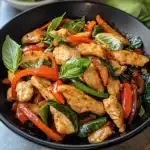
Thai Basil Chicken Stir Fry recipe
Ingredients
For the Chicken & Aromatics:
-
- 1 lb (450g) boneless, skinless chicken thighs or breasts, minced or very thinly sliced (see note)
-
- 4–8 Thai bird’s eye chilies (prik kee noo suan), or to taste, roughly chopped (see note)
-
- 4–6 cloves garlic, roughly chopped
-
- 1 tablespoon vegetable oil (or other high smoke point oil like canola or peanut oil)
-
- 1/2 small onion, thinly sliced (optional, adds sweetness)
-
- 1/4 cup sliced long beans or green beans, cut into 1-inch pieces (optional)
For the Stir-Fry Sauce:
-
- 1 tablespoon oyster sauce
-
- 1 teaspoon light soy sauce (or regular soy sauce)
-
- 1 teaspoon dark sweet soy sauce (kecap manis can be a substitute, or see note for DIY)
-
- 1 teaspoon fish sauce
-
- 1 teaspoon granulated sugar (or palm sugar, finely shaved)
-
- 1–2 tablespoons water or chicken broth (optional, for a slightly saucier dish)
The Star of the Show:
-
- 1.5 – 2 cups fresh Holy Basil leaves (Bai Krapow), loosely packed (see note)
For Serving (Highly Recommended):
-
- Steamed jasmine rice
-
- 2–3 eggs, for frying (Kai Dao)
-
- Extra vegetable oil for frying eggs
-
- Optional garnishes: Sliced cucumber, extra fresh chilies, lime wedges.
Instructions
1. Prepare Your Ingredients (Mise en Place):
* Chicken: If not using pre-minced, mince your chicken by hand by slicing it thinly, then chopping it repeatedly until it’s roughly minced. Alternatively, slice it very thinly against the grain.
* Aromatics: Roughly chop the garlic and chilies. For best results, pound them together in a mortar and pestle. Thinly slice the onion (if using) and cut long beans (if using).
* Sauce: In a small bowl, whisk together the oyster sauce, light soy sauce, dark sweet soy sauce, fish sauce, and sugar. Add water or broth if using. Set aside.
* Basil: Pick the holy basil leaves from the stems. Wash and gently pat them dry if needed. Have them ready to go.
* Rice: Start cooking your jasmine rice so it’s ready when the stir-fry is done.
2. Stir-Fry the Aromatics and Chicken:
* Place a wok or a large, heavy-bottomed skillet over high heat. Allow it to get very hot – you should see a slight shimmer or wisps of smoke.
* Add the 1 tablespoon of vegetable oil. Swirl to coat the bottom of the wok.
* Add the pounded/chopped garlic and chilies (and sliced onion, if using). Stir-fry vigorously for about 15-30 seconds until fragrant. Be careful not to burn them (this happens quickly!).
* Add the minced or sliced chicken to the wok. Spread it out in a single layer and let it sear for a minute without stirring to get some browning.
* Then, begin to stir-fry, breaking up the chicken (if minced) until it’s mostly cooked through and no longer pink (about 3-5 minutes).
3. Add Vegetables (if using) and Sauce:
* If using long beans or other optional vegetables, add them now and stir-fry for another 1-2 minutes until they are tender-crisp.
* Pour the prepared stir-fry sauce over the chicken and vegetables. Stir well to coat everything evenly. Continue to cook for another 1-2 minutes, allowing the sauce to thicken slightly and caramelize a bit.
4. Add the Holy Basil:
* Turn off the heat (or reduce to very low). Add the fresh holy basil leaves to the wok.
* Quickly toss and fold the basil into the hot chicken mixture for just 15-30 seconds, until it’s just wilted but still vibrant green. Do NOT overcook the basil, or it will lose its fragrance and turn dark. The residual heat will do most of the work.
5. Fry the Eggs (Kai Dao) – Optional but Highly Recommended:
* While the stir-fry is resting briefly, heat about 1-2 tablespoons of oil in a separate small non-stick skillet or wok over medium-high heat until very hot.
* Carefully crack an egg into the hot oil. It should sizzle immediately.
* Spoon some of the hot oil over the egg white to help it cook and get crispy edges. Cook until the whites are set and golden brown and crispy around the edges, but the yolk is still runny (about 1-2 minutes).
* Remove with a slotted spoon and drain briefly on a paper towel. Repeat for the remaining eggs.
6. Serve Immediately:
* Scoop a generous portion of steamed jasmine rice onto each plate.
* Spoon the Thai Basil Chicken stir-fry alongside or partially over the rice.
* Top with a crispy fried egg (Kai Dao).
* Garnish with extra fresh chilies, cucumber slices, or lime wedges, if desired.
Nutrition
- Serving Size: one normal portion
- Calories: 650-850